Public health expert calls for probe into 400 Air Corps deaths
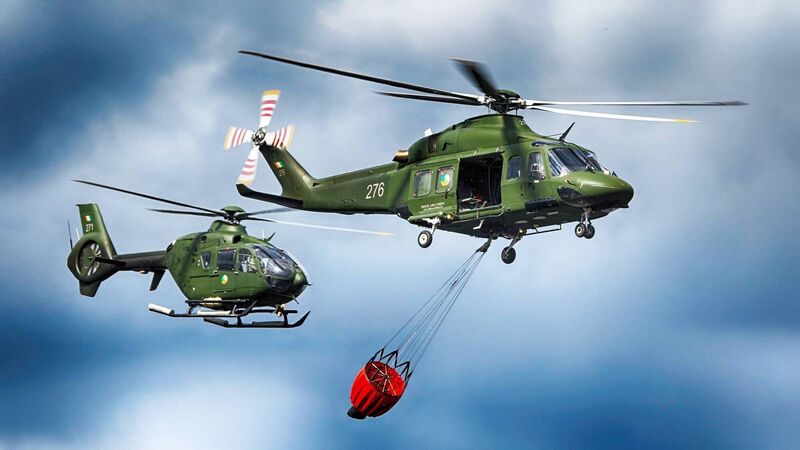
Professor Anthony Staines said: 'You have to understand that people who joined the Air Corps would be among the fittest, and would have to pass many sorts of tests.'
One of Ireland’s leading public health experts has said there are grounds for an in-depth examination into the deaths of more than 400 serving and retired Air Corps personnel.
Professor Anthony Staines believes there are indications that the death rates among the personnel — around 200 of whom died under the age of 65 between 1980 and 2026 — appear to be “excessively high”.
Around 20 men are taking cases against the State amid claims they were exposed to hazardous chemicals while working for the Air Corps and were not provided with personal protective equipment (PPE) or training in the use of hazardous chemicals. Many worked with chemicals used to clean engine parts.
“The data raises some questions which merit a more in-depth examination," Mr Staines said. “You have to understand that people who joined the Air Corps would be among the fittest, and would have to pass many sorts of tests.
“Given the number of men who have died prematurely, there are — in my view — enough suspicious indications that there is something, or was something, going on. This might be due to errors in the data collected, but it could represent a real problem.”
Some of the data includes information relating to 115 premature deaths collated by Gavin Tobin, who has been campaigning for health care and other support for Air Corps personnel who were exposed to toxic chemicals when they served.
A former member of the Air Corps himself, Mr Tobin has struggled with ill-health since he left. A number of those who have died were either colleagues or people he met during his time serving.
The rest of the data has been collated by the from a trawl through death notices. While it is estimated that since 1980 around 700 to 800 serving and former personnel have died, it was only possible to verify information in relation to 411 of them.
Around 48% of the 411 deaths relate to men who were aged in their 70s, 80s and 90s when they died. But the rest are men who died before they reached the age of 65.
The biggest number of those who died prematurely were men who served in what were known as the engineering, and the administrative wings. They were among those who worked as fire crews, spray painters, refuellers, and personnel who worked in the catering complex.
Most of the premature deaths were from cancer or heart disease, according to the details on their death certificates.
Professor Staines was invited to meet Air Corps officers in July 2024 to discuss conclusions from his work on a much smaller list of names of those who had died.
After being asked by the , he agreed to take another look at the deaths after he learned that more Air Corps personnel had died prematurely.
“I would not expect to see the level of premature deaths in what would be expected to be such a healthy population,” Professor Staines said. “However, it does have to be said that there are caveats, and this quick analysis is in no way definitive.
“To give this a proper look, it requires knowing the full age and sex distribution over the years in the Air Corps work force, of those who did not die as well as those who did. There is a standard way of doing this and it is known as an occupational cohort study.”
The Defence Forces were given a report which Professor Staines gave the based on its figures. Army chiefs were also given extensive spreadsheets detailing the age and year of death of each person on the anonymised list of 411 deaths.

CONNECT WITH US TODAY



Be the first to know the latest news and updates