Maritime security strategy aims to restore sight to Ireland's 'seablindness'
Maritime security strategy aims to restore sight to Ireland's 'seablindness'

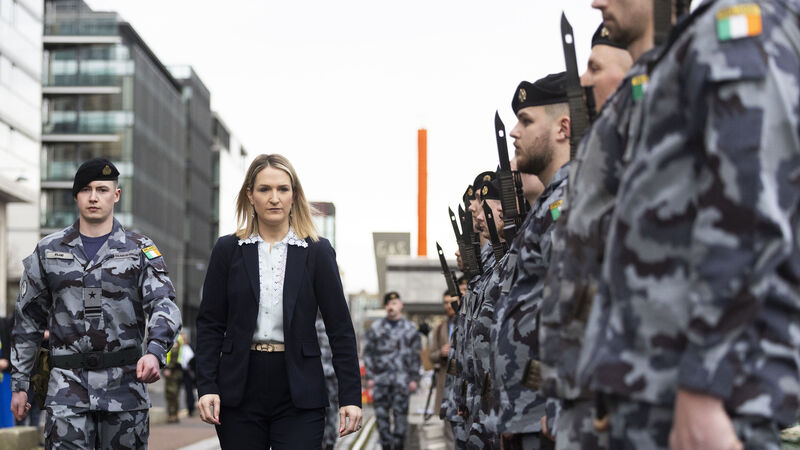
Defence minister Helen McEntee at the launch of the maritime defence strategy at the LÉ Samuel Beckett. Picture: Sam Boal/Collins

Ireland’s first ever maritime security strategy is receiving a general welcome from various defence and security experts.

They complement the ambition of the strategy, measures to drive co-ordination among Ireland’s numerous maritime agencies, and formal declarations of the need to enhance military co-operation with neighbours.

Indeed, the strategy and public comments by defence minister Helen McEntee could not emphasise any more how Ireland is pushing for — and, consequently, dependent on — the military assistance of our neighbours.

But in their welcome, the experts do have the usual caveats: The need for political leadership to drive implementation, and the pressing requirement of sustained — and increased — investment in the Defence Forces.

The plan

The country’s National Maritime Security Strategy 2026-2030 comes to us before Ireland has published a national security strategy. The former should logically flow from the latter.

However, the country has waited more than four years for the national strategy to be published. Despite repeated statements of its imminent release, the Department of Taoiseach continues, inexplicably, to sit on it.

The Department of Defence, which churns out documents at a fair click, deserves some credit, not least due to the work of the strategy’s main driver, Margaret Stanley.
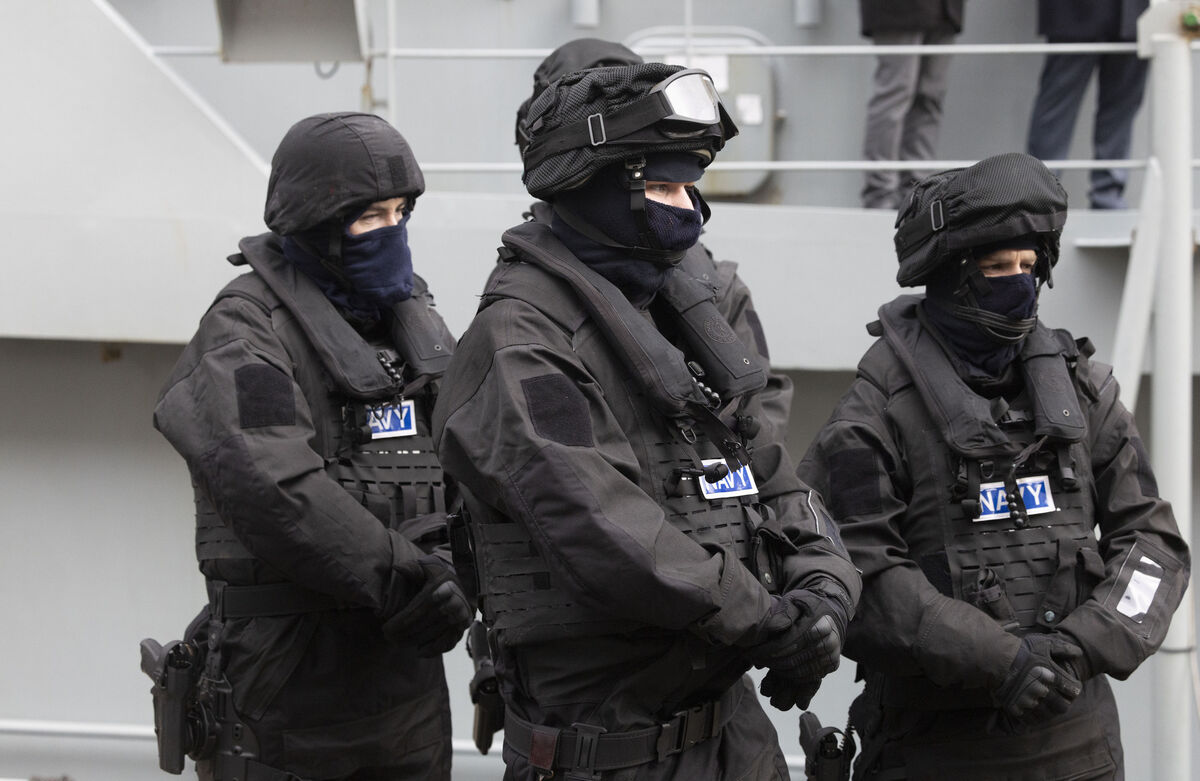
Irish Navy personnel at the launch. Picture: Sam Boal/Collins Photos

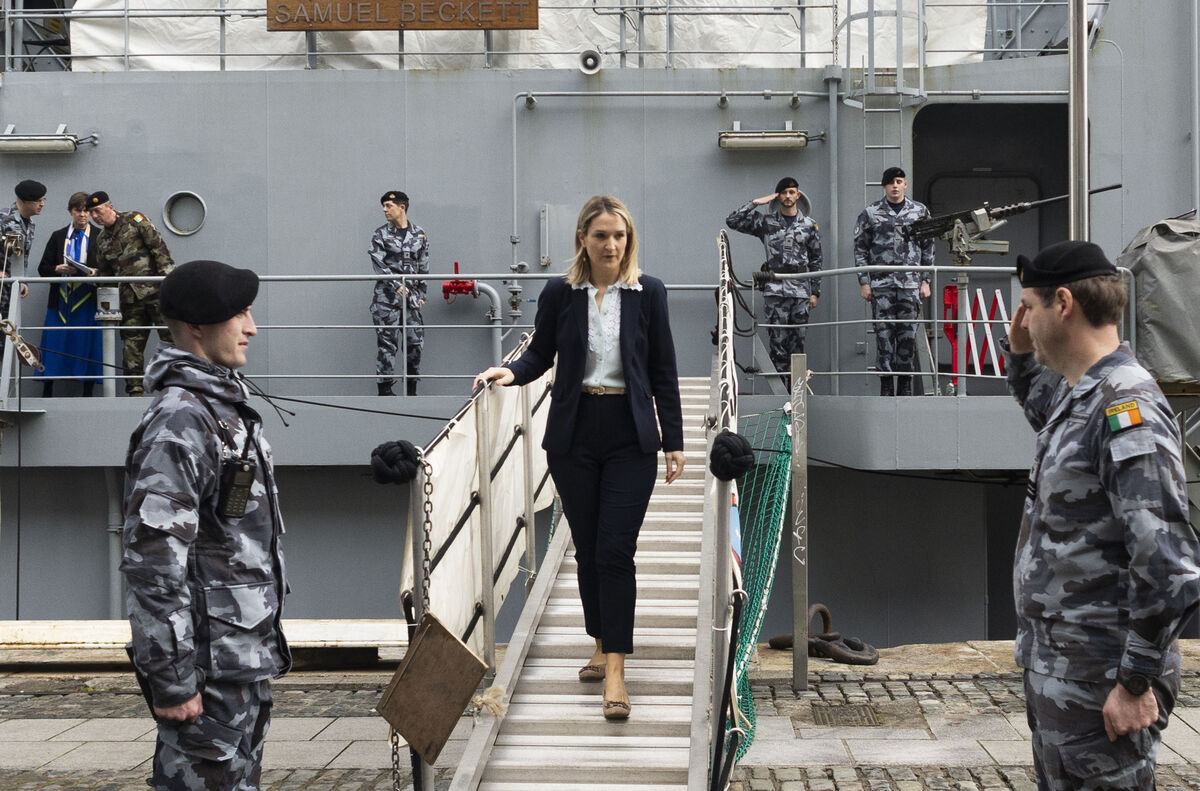
The strategy, formally launched on board the LÉ Samuel Beckett at Dublin’s docklands, reminds its readers of the sheer scale of Ireland’s maritime area.

On top of territorial waters — out to 12 nautical miles from the coast — Irish-controlled waters (exclusive economic zone) stretches to 200 nautical miles. That’s seven times Ireland’s land mass.

The strategy outlines the key risks to Ireland’s maritime security as:

  • Damage to undersea infrastructure (such as data cables);
  • Disruption to oil supply (which comes by sea into Irish ports);
  • Disruption to electricity or gas supply (comprising of two electricity interconnectors from Britain and two gas pipelines from Britain, the latter supplying 80% of Ireland’s gas needs);
  • Malicious cyber activity on critical infrastructure;
  • Maritime incident involving mass casualties.

It added that the presence of significant communication and cloud infrastructure in Ireland, along with subsea infrastructure in the exclusive economic zone, exposed Ireland to added risk.

Further highlighting the importance of Irish ports, and of sea routes, the strategy said that 90% of Ireland’s trade by volume is transported by sea.

It states there are “growing concerns” about the threats posed by Russia’s shadow fleet, mainly used to transport sanctioned oil but also suspected, as the strategy points out, of being used for “espionage and sabotage” — including by deploying drones on the border of, or inside, another country’s airspace.

Praise

Brendan Flynn, a lecturer in political science at the University of Galway and a specialist on maritime security, said: “It’s an excellent document and a really historic moment — the Irish State is giving real attention to the maritime domain in a way that historically it hasn’t.”
He said the naval service had been “left in decline” in more recent years, with its remaining capabilities focused on fishery protection and, to some extent, counter-narcotics operations, with a “very limited” role in maritime security.

“This document shows a major change in mindset, there is higher ambition,” Mr Flynn said, particularly commending the inclusion of climate change as a maritime security threat.

He welcomed the suggestion of a national maritime security centre, which he said, if up and running, could be an “engine for delivery” similar to the National Cyber Security Centre.

He said that “one of the best ideas” is the concept of “forward operating bases” beyond naval service HQ in Haulbowline in Cork to the East and West coasts.

“The main reason for that is recruitment, retention, career flexibility, and forging deep connections with local communities,” he said.

“It would be great if what comes out of this is our navy has a permanent presence in maybe Dún Laoghaire [Dublin] and Ros a’ Mhíl [Galway].”

Professor of law at Queen’s University Richard Collins said there were “a lot of positives” in the strategy, mentioning the consideration of new naval bases and more assertive enforcement powers for the naval service.

He welcomed the action plan with timelines, but said many of the actions are in the form of “giving consideration to something or exploring something”.

Defence minister Helen McEntee at the launch of the maritime defence strategy at the LÉ Samuel Beckett. Picture: Sam Boal/Collins

Like his academic colleague, he mentioned the national maritime security centre. He stated he believed this was “critical” to achieving a whole-of-government approach at operational level.

He also welcomed the suggestion, albeit vague, of setting up a “regional monitoring hub” for the EU.

Mr Collins welcomed what he said appeared to be a “fairly firm commitment” to partnering up with other countries in the joint expeditionary force.

The joint expeditionary force comprises of 10 northern European countries, and it specifically targets the movements of the shadow fleet and threats to subsea infrastructure.

Mark Mellett, a former Defence Forces chief of staff and vice-admiral of the naval service, said: “Ireland’s Maritime Security Strategy 2026-2030 is a pragmatic, whole-of-government blueprint to build maritime domain awareness rapidly, prioritising the protection of critical undersea infrastructure. The strategy points to the actions and partnership required.”

Kenneth McDonagh, an associate professor of international relations at DCU, said the strategy was a welcome step forward: “The strategy rightly highlights the vulnerabilities Ireland faces in relation to critical maritime infrastructure with an emphasis on undersea cables and power connections. The strategy also acknowledges the clear gaps in Ireland’s capabilities and, although detail is absent, points to the capability development plan that will address these gaps.”

He said the strategy “tries to walk a narrow line” between recognising the need to co-operate with international partners, in both bilateral and multilateral frameworks, while maintaining Ireland’s military neutrality.

Caveats

Mr Flynn said the key qualification to his positive comments is to what extent the strategy “will be implemented or delivered”.
He expressed concern that what he sees as a good initiative, the national maritime security centre, is only “mooted”.

However, his greatest concern centred around the prospects of the naval service: “My main worry is that, in reality, so much depends on the regeneration plan for our navy and also the air corps/air force.

“It’s our navy that will do most of the heavy lifting for this strategy — albeit in partnership with many national and international stakeholders. So, I guess Ireland can’t afford to drop the ball on that core capacity building task.”

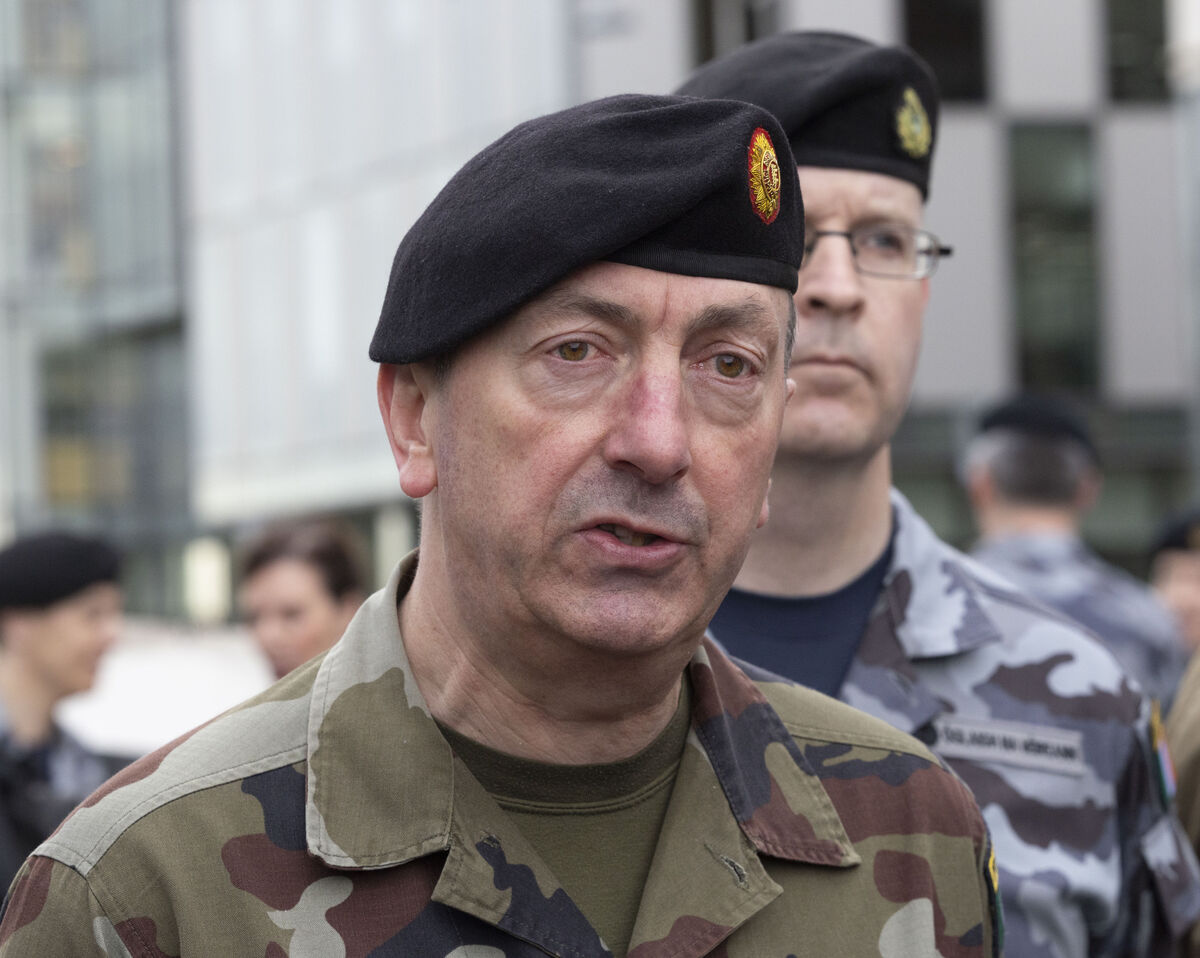
At Wednesday’s launch, the chief of staff, Lieutenant General Rossa Mulcahy, said the regeneration plan would be with the minister soon and would outline a “multi-annual plan to rebuild the strength and capacity” of the naval service.

Mr Collins said the establishment of the maritime security working group, which brings together seven departments and four agencies, needs to be made a “permanent oversight body” in order to drive a whole-of-government approach.

Lt Gen Rossa Mulcahy said a plan would be with the minister soon. Picture: Sam Boal/Collins Photos

He said the national maritime security centre, while critical, was still just an aspiration: “There is a lot still to do to get that off the ground tough.”

Mr Collins said the positive suggestion of possibly establishing a regional monitoring hub for the EU “remains quite speculative at this stage”.

However, he said such a hub could ease the concerns of EU states that Ireland was not doing enough in the security domain.

Mr Collins said the fundamental issues of capacity and capability of Ireland’s Defence Forces were still “dependent both on enhanced resourcing and on regional and local — bilateral — co-operation”.

He said details were needed of the co-operation agreements with Britain and France.

“It would be good to have had some concrete ideas in here around, for example, personnel exchanges, joint exercises, sharing of resources and assets, where feasible. The detail on Ireland-France co-operation is also somewhat vague,” he said.

Concerns over resourcing of the Defence Forces were again detailed in the Irish Examiner on Monday, with former army ranger officer and ex-TD Cathal Berry saying that the recently published updated implementation plan for government-agreed Defence Forces investment was “only half-funded”.

He said the Department of Defence had sought capital funding of €3.4bn between 2026 and 2030 to implement the Defence Forces’ investment plan, but had only received €1.7bn from the Department of Public Expenditure.

Mr Mellett said securing the necessary investment was crucial.

“It now needs sustained resourcing and delivery discipline to turn ambition into enduring capability if we are to move from a century of seablindness to an era of maritime domain awareness,” he said.

x

More in this section

Lunchtime News

Newsletter

Keep up with stories of the day with our lunchtime news wrap and important breaking news alerts.

Cookie Policy Privacy Policy Brand Safety FAQ Help Contact Us Terms and Conditions

© Examiner Echo Group Limited