Pregnancies later in life and obesity rates partially account for rise in caesarean sections, committee told
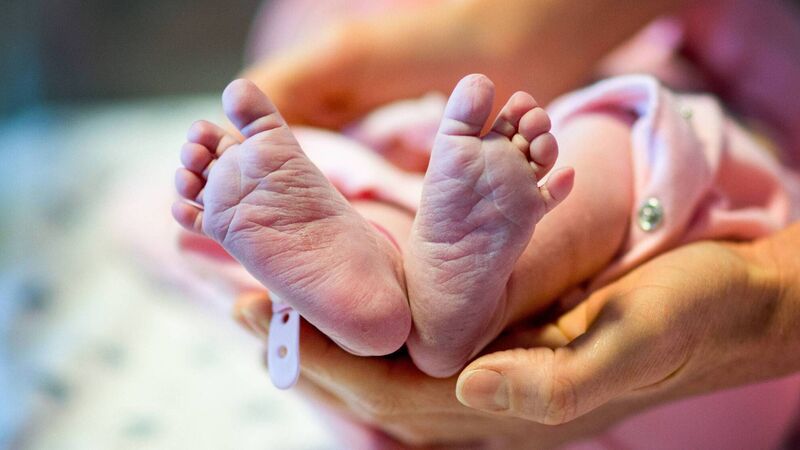
The Oireachtas health committee heard that the average age of first-time mothers is 33 compared to 25 in the 1970s. File picture: Thinkstock/PA
Ireland’s high caesarean section rate is partly linked to more older mothers and obesity rates but the rates are also rising in other countries, a senior HSE obstetrician has said.
Dr Cliona Murphy, National Women and Infants Health Programme (NWIHP) clinical director, told the Oireachtas health committee there are many factors behind the high rate in Ireland.
“Some of the reasons are demographic, we know our population has changed,” she said, pointing to the average age of first-time mothers as 33 compared to 25 in the 1970s. She added: “We now have over 400 women a year over the age of 45."
She said age and being overweight and obese are reasons for increased rates of caesarean sections. This is “a societal problem”, she said, adding: “Unfortunately that will sometimes reduce the chance of having an unassisted delivery and will increase caesarean section rates.”
Asked by committee chair Colm Burke if Irish rates are likely to continue rising, she said: “It’s hard to know.” Plans can be made to reduce this, she said, but cautioned that a balanced approach is needed.
“In some countries where they’ve seen low rates of caesarean section, they’ve actually seen slightly higher cerebral palsy and adverse incident rates,” she said. “So you have to look at it in its entirety to be honest.”
HSE chief clinical officer Dr Colm Henry said: “There has been a 15% drop across the country in terms of deliveries over the last 10 years.”
He acknowledged “tragedies at every individual level” to Senator Nicole Ryan in terms of pregnancy loss but added: “Our perinatal mortality rates are actually falling in the past 10 years.”
Killian McGrane, NWHIP director, mentioned gaps in bereavement care, highlighted last week by Feileacain pregnancy loss charity, and the Pregnancy Loss Research Group.
“What we saw last week was when it’s not done right, the impact lasts forever,” he said.
Maternity units have an “extraordinarily strong” commitment to providing bereavement care, he added.
The State’s 2015 policy to move maternity hospitals, including in Limerick, next to acute hospitals was defended by Tracey Conroy, assistant secretary at the Department of Health. Sinn Féin health spokesman David Cullinane described the policy as “dead in the water”.
Labour health spokeswoman Marie Sherlock said it is not clear if the Rotunda maternity hospital will ever move. This follows a row over a planning refusal of an extension for the Rotunda. It offers 25% of Ireland’s neonatal capacity, the committee heard.
Ms Conroy insisted: “It is government policy, is what I’m saying.” However she said the Rotunda move is considered “a medium- to long-term” plan compared to moving the National Maternity Hospital (NMH) and University Maternity Hospital Limerick.
“The timeframe in terms of co-location is we started with the NMH and that’s in process,” she said. “The timeline we had in mind was for Limerick to follow that and that’s at appraisal stage.
"Specifically on the Rotunda that’s some distance into the future, that’s down the line after the NMH and Limerick.”

CONNECT WITH US TODAY



Be the first to know the latest news and updates