Advocacy groups threaten High Court action over delayed spinal care inquiry
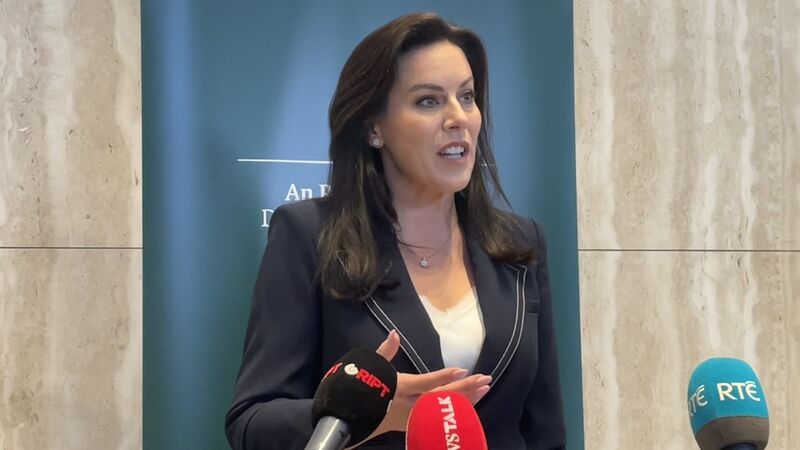
Health minister Jennifer Carroll MacNeill. Picture: Grainne Ni Aodha/PA Wire
Scoliosis and spina bifida advocacy groups have threatened to take a case in the High Court against health minister Jennifer Carroll MacNeill over delays to a statutory inquiry into spinal care at Children’s Health Ireland.
The Spina Bifida and Hydrocephalus Paediatric Advocacy Group and Scoliosis Advocacy Network sent a letter to the minister saying they are considering High Court action.
In 2025, the Government confirmed it would launch a statutory inquiry into scoliosis and spina bifida care at Children’s Health Ireland, following meetings between Tánaiste Simon Harris, Ms Carroll MacNeill and the parents of Harvey Morrison Sherratt.
However, the inquiry has not yet got underway.
This week, 62 children were recalled for spinal care at Children’s Health Ireland as part of a review into the work of an orthopaedic consultant at CHI and at the National Orthopaedic Hospital in Cappagh.
Selvadurai Nayagam established the review following the death of 10-year-old Dollceanna Carter in September 2022 after a series of surgeries.
Ms Carroll MacNeill has been urged to progress the public inquiry.
In a message to families on Friday, Amanda Coughlan Santry, Úna Keightley and Clare Cahill confirmed they were considering legal action.
“As we have always said, the inquiry must work for all families, be independent and set up properly from the get go, anything else is wholly unacceptable for us,” they wrote.
The trio said taking legal action is “massively daunting for us and comes with substantial risk to us on a financial level”.
“We remain steadfast in our approach to do right by all children affected and although this is a huge step we are committed to see it through to the end,” they said.
Ms Coughlan Santry told the the two advocacy groups were “not happy” with how Ms Carroll MacNeill appointed a facilitator to scope out the inquiry’s terms of reference.
She said families would have preferred a mediator and insisted they should lead the drafting of the terms of reference rather than the department of health.

CONNECT WITH US TODAY



Be the first to know the latest news and updates