'The X-minute city': Reshaping urban life for a more sustainable future
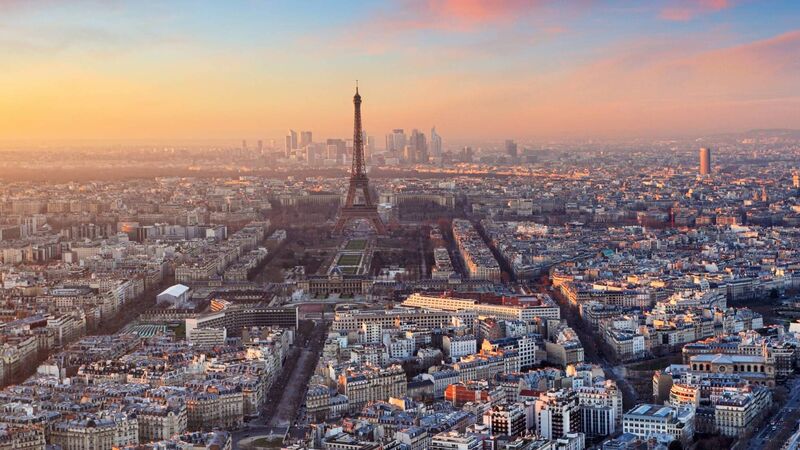
According to Professor Carlos Moreno, Paris itself is a good example of the reality of introducing the 15-minute city, as well as its originating spark. File picture
A conversation with Carlos Moreno can only open in one way, really.
Read More
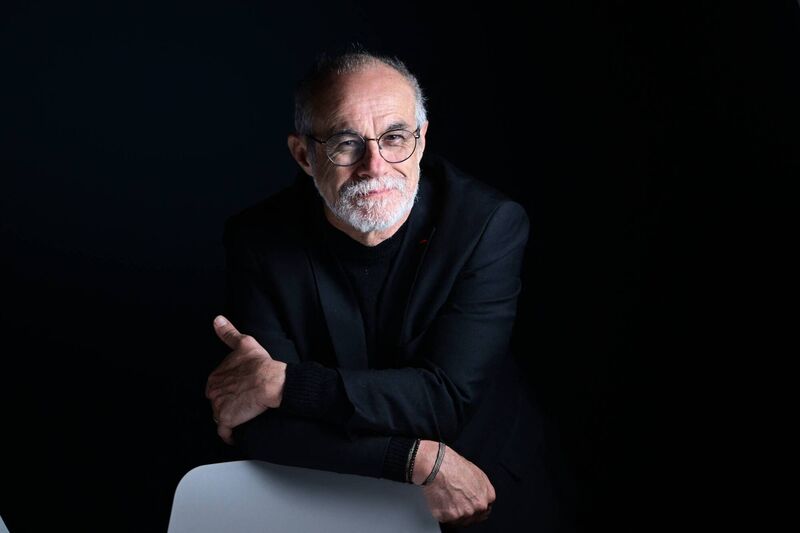
What is the future for the 15-minute city concept? Its originator, Moreno stresses the need for local government to lead the way.
“We need to avoid the 15-minute city becoming just part of a new marketing presentation for private developers, part of a plan which separates people, one driven by money.
“If the 15-minute city is to be for the common good, then that needs to be led by local government. That’s very important to avoid a form of the 15-minute city which is driven by private entrepreneurs, who are looking to develop housing and facilities based on high prices per square metre, which means facilities that are suitable only for those on high incomes.
“For that reason, we want to continue to work with local governments to develop new urban plans in a city or region.
“National governments are also involved: The Scottish parliament voted in 2024 a framework for the 20-minute neighbourhood; Spain is to make an announcement soon on 30-minute territories; South Korea the same.”
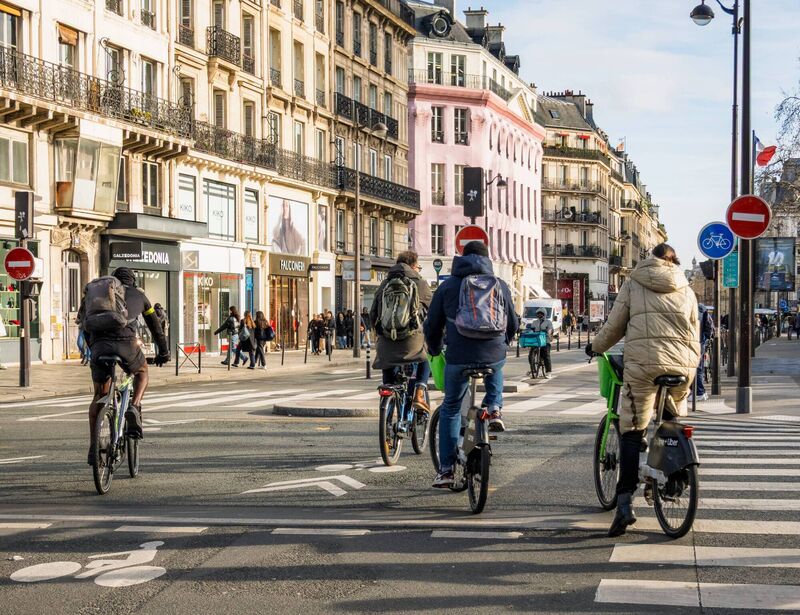
These are laudable aims and achievements, but one objection presents itself immediately. Even if local government is a driver of the 15-minute city, surely the private real estate and development sectors need to be involved?
Prof Moreno advocates that combination of public and private sectors, particularly to develop multi-function purposes for buildings.
“We are still dealing with the legacy of 20th-century urban planning, the ideas of people like Le Corbusier; some of those ideas focused on having a district for residential living, another for administrative services, another for cultural activities, and so on.
“That was an essential point of Le Corbusier’s thinking, but those districts led to people travelling long distances from home to work, to the primacy of cars; to the transformation of people, almost, in to half-human, half-cars.
“Now that is becoming a new business model for private actors in real estate, retail, and other sectors.”
That old system, of distinct quarters being used for specific purposes, is still “very visible” in places such as Prof Moreno’s home base in Paris, he says.
“Take La Défense, in the west of Paris, which was unveiled as a working area for 400,00 workers, who would be concentrated in the different towers built there.
“But many of those workers lived at the opposite end of Paris, towards the east of the city. For that reason, the banks of the Seine had to be converted to a double highway for cars to accommodate those workers, many of whom were driving to their offices.
“Inevitably, that led to huge traffic jams, which led, in turn, to various terrible consequences: Huge air pollution, time wasted sitting in traffic, and so on.
“Today, after the pandemic, the business model of La Défense has collapsed. Many of those big towers, which were intended for hundreds of thousands of workers, are empty. The occupation rate has plummeted.
“That business model is also under pressure, because younger workers, aged from their 20s to their 40s, say, want to work form home, or want hybrid work. They don’t want to go to an office block five days a week.
“Those consequences are visible, and real estate companies have taken notice of that.”
Prof Moreno points to similar lessons in the retail sector, which has responded swiftly to large-scale changes in behaviour, such as the working-from-home phenomenon.
“In the past, the large stores, like Ikea, big supermarkets, were located in the outskirts of Paris, which led to people devoting their weekends to travelling out to make purchases.
“That model is also in decline now. We have city markets. We have much smaller versions of Ikea; little shops, not the huge warehouses. We have smaller versions of the supermarkets: Carrefour City, for instance. Combined with online shopping, which is obviously very popular, retail is also changing hugely in Paris.”
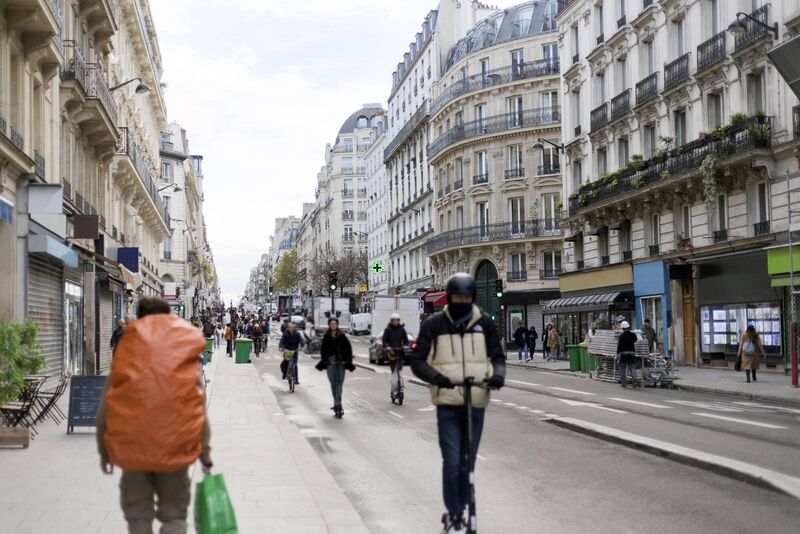
Prof Moreno describes this as “a new form of economic geography, where we need to reshape the economy of the world according to our activities”.
He and his team are working to that end by joining the 15-minute city idea with the spread of this new economic geography through cities, and, last September, they held a conference at the Sorbonne on how that combination of ideas expresses itself: Sustainable proximity.
“We had representatives of local governments from five different continents sharing their best practices, and we also had scientists from different disciplines — urbanists, economists, architects, mathematicians, and so on — and we have created the Global Observatory on Sustainable Proximities [UCLG Decalogue].
“This organisation aims to work on the different initiatives worldwide — with all those different names, the ‘X-minute city’, the ‘X-minute territory’ —with a view to sustainable proximities.
“That ‘X-minute city’ term is important for avoiding the restrictions when it comes to the number, not getting fixated on it being a 10-, 15-, 20-minute city, even for me.
“Different cities have different densities, so parts of Copenhagen could be a five-minute city, parts of London a 20-minute city.”
Developing sustainable proximities has its own challenges, such as gathering data.
“We have up to 9m people in the Île-de-France region and 2m in Paris itself: Young people, old people, women on their own, women on their own with children, and so on. We therefore need to know what kind of people are in the city, and how they are living.
“That is different in different cities: In Africa, many cities have a huge proportion of young people. Along the Mediterranean, many cities have a large proportion of older people.
“The profiles are different, and so are the needs: For younger people, the priorities for proximity may be a bar, a disco, restaurants, sports facilities. For older people, we need a doctor, pharmacies, medical services.
“We need a global picture of the different profiles in order to work out the different proximities, and that means going from a city for all to a city for everyone.
"The city for all has a lot of services for all people, while the city for everyone offers services for the different profiles of inhabitants."
A wider, more recent context introduces yet another element.
Prof Moreno says: “We must understand the role of cities when nation states are in a fragile situation: With the USA, with the difficulties with Europe’s relationships with China and Russia.
“We have global difficulties and instability, from climate change and all the associated problems, to pandemics, which makes accessibility of services the best guarantee of safety and stability.
“For that reason, proximity is the best form of resilience, and the term I have coined is ‘proxilience’, which mixes proximity and resilience. When we have extreme events and abnormalities, proximity is our best option, our best possibility.
“In the US, when ICE is present in a neighbourhood, then that neighbourhood, that community, organises itself to offer solidarity with immigrants, to watch out for ICE, and so on. So a very powerful movement is at work in the US, a very localised movement, to deal with these difficulties, where the federal government is confronting cities such as Miami, Minneapolis, Seattle, and so on. The key element in that dynamic is proximity.”
As the key element in the 15-minute city, proximity is the obvious mechanism to drive the concept to the next level.

CONNECT WITH US TODAY



Be the first to know the latest news and updates