CAO Choices 2026: Alternative routes to consider
For any students who don't get their preferred CAO option, the range of apprenticeships, internships and other alternative pathways to careers continues to grow each year.
Now, more than ever there are more pathways to a career available outside of the so-called ‘points race’.
Here are some of the alternatives you might consider.
Originally launched in 2023, tertiary courses have grown rapidly. Entry to these courses is not based on points and often involves an interview or portfolio as the application process is entirely outside of the CAO.
On these courses, students start their studies in Education and Training Boards (ETBs), before transitioning to the relevant higher education institution. Studying in the ETB means students pay no college fees for two years.
Crucially, students who enter through this pathway graduate with the same recognised full degree as their classmates who came through the traditional CAO route.
There are a wide range of courses available in high-demand areas such as nursing, IT and applied sports science. More information can be found on NTO.ie
Students who cannot sign-up to a four-year programme right now may be interested in Post Leaving Cert (PLC) courses. PLC courses typically run full-time for one or two years and qualify students with a Level 5 or Level 6.
In general, PLC courses tend to include a blend of practical and academic work as well as work experience.
PLC courses allow you to get a feel for a particular area of study before deciding on a longer-term course. They also provide alternative entry routes into certain Level 8 courses.
PLC courses are available across a wide range of subjects like business, childcare, community care, e-commerce, horticulture, multimedia production, sport and leisure and tourism.
Closing dates tend to vary between each course, so keep an eye on the deadlines to apply. The full range of PLC and further education courses can be researched on www.fetchcourses.ie
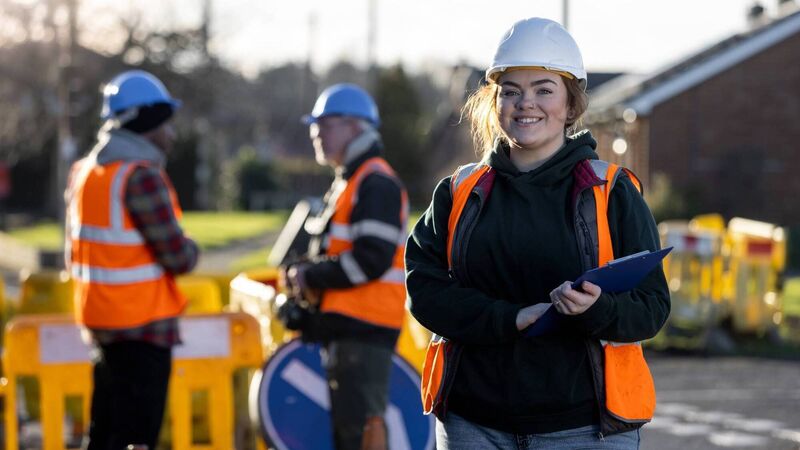
With a focus on practical skills, apprenticeships give students the chance to earn as they learn as they are paid for on-the-job training.
These programmes combine structured education and training alongside learning in the workplace and in training.
Often more so associated with ‘trades’ there are now lots of different options available catering to a wide variety of interests in areas like accounting, insurance, engineering, logistics, hospitality, and motoring.
There are almost 60 ‘earn and learn’ options to choose from, as well as more than 6,500 employers approved to train apprentices.
More information can be found on www.apprenticeship.ie. Deadlines to apply and eligibility criteria vary depending on the apprenticeship, so students should take note.
Like apprenticeships, a traineeship combines learning in the classroom along with learning on the job.
Developed and delivered with the ETBs, 75 programmes are available nationally in a range of industries.
Usually, traineeships run between 6 to 20 months, and include at least 30% of learning on-the-job. More information can be found on www.solas.ie/programmes/traineeship
It's not widely known that more and more European universities are offering degrees through English. Not only can students study these full degree programmes across a full range of subjects, but these universities are also actively looking for Irish students to take up a place with them.
In most countries, the entry requirements are also lower than they are here or in the UK. The cost of fees in many European universities is also often much lower than here or in the UK. Given the cost of college accommodation, students may find their rent budget goes further in cities like Warsaw or Bucharest than at home.
Of course, it goes without saying that students will need to do careful research about these course options. You’ll also need to consider if your degree will be recognised if you want to work in Ireland, or pursue further education here. Several professions are highly regulated, such as doctors, teachers and those working in social care.
See www.eunicas.ie for more information, application details and timelines.
Another annual garda recruitment campaign is expected to open again in 2026, as it has in previous years. There is no requirement to have a degree prior to entering An Garda Siochana as a trainee, but you need to be at least 18 years old.
Applicants must pass a multistage fitness test, also known as the beep test, as well as multiple interview phases. Garda Trainees attest after 36 weeks and begin on a salary of €38,694, rising incrementally to €59,736 per annum after 8 years.
While attending the Garda College in Templemore, accommodation and food is provided by An Garda Síochána. Keep in mind, a garda recruitment campaign for 2026 has not yet been confirmed, although it is expected. The selection process is also rigorous. Students should keep an open mind in regard to other options.
CONNECT WITH US TODAY



Be the first to know the latest news and updates