National Security Strategy still unfinished four years after deadline, experts warn
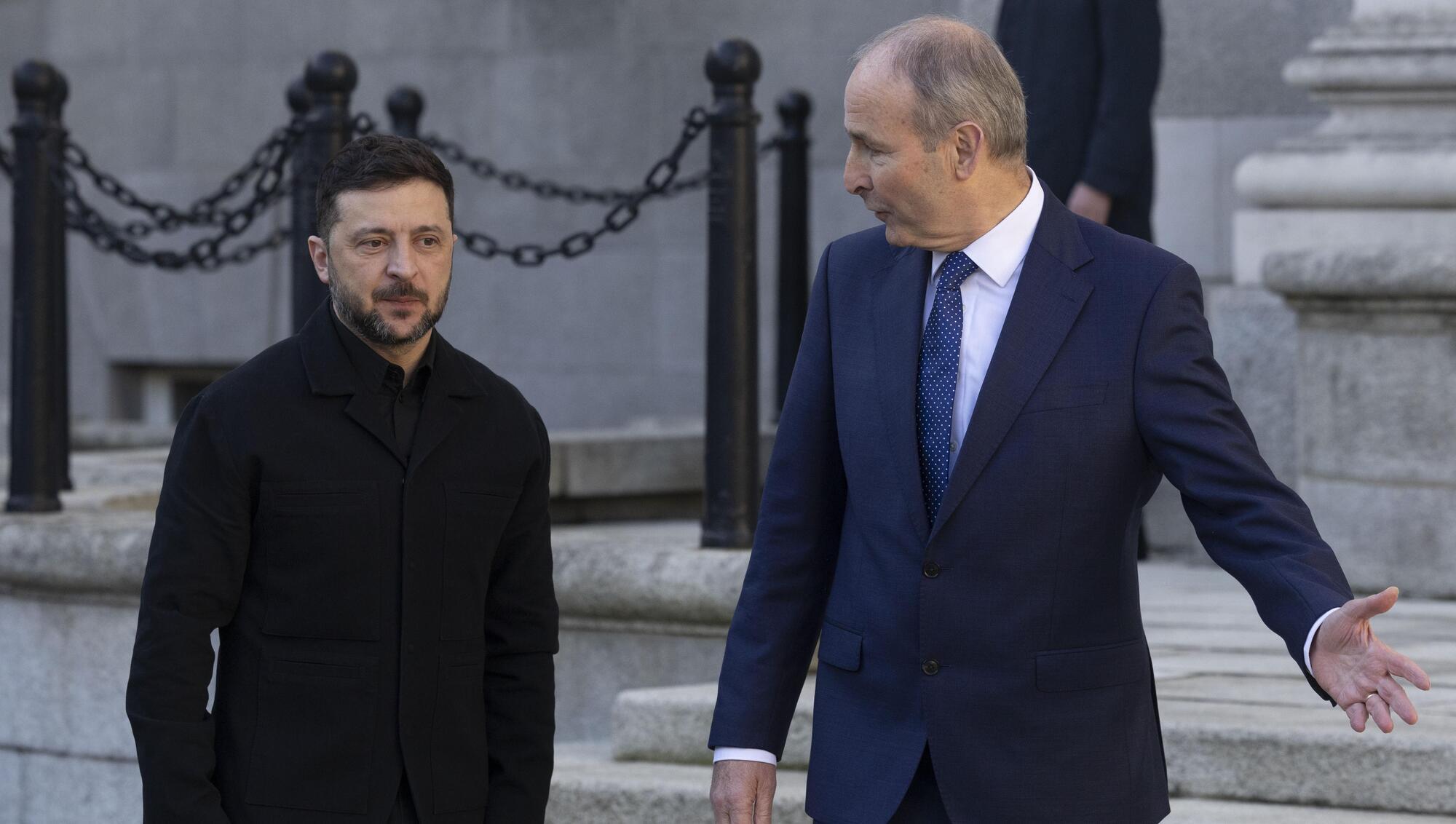
President of Ukraine Volodymyr Oleksandrovych Zelenskyy and Taoiseach Micheál Martin at Government Buildings last month. One expert said: 'Divergent briefings to the media over problems relating to the security operation for the visit of president Zelenskyy to Dublin highlight the need for much greater day-to-day co-ordination of national security strategy and operational planning.' File photo: SAM BOAL/Collins Photos
The finalisation of Ireland’s National Security Strategy — first due over four years ago — should be an “urgent” priority for the Government, experts have said.
The strategy would analyse international and domestic security threats, set out security priorities and detail the mechanisms and agencies tasked with carrying out those objectives.
The strategy, Ireland's first, was initially expected to be completed by the end of 2021 and was meant to cover the period 2020-2025.
It was the responsibility of the National Security Analysis Centre (NSAC), set up in the Department of Taoiseach in 2019. NSAC was downgraded in 2025 to the National Security Secretariat.
“The lacuna of an overarching National Security Strategy with the Ukraine war now entering its fifth year is both stark and disconcerting,” Rory Finegan, deputy director, Centre for Military History & Strategic Studies at Maynooth University, said.
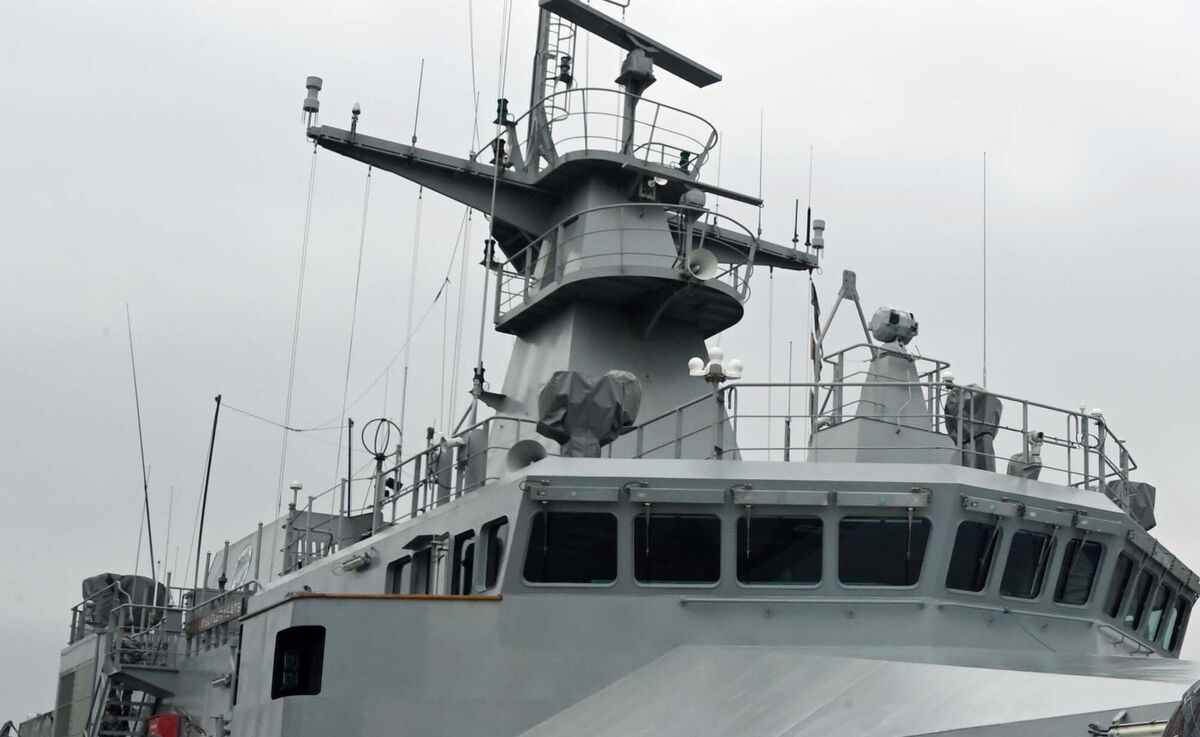
He said the security and geopolitical environment was in a constant state of flux.
“This is not only through the lens of the ongoing war in Ukraine fomented by Russian aggression but also recent events in the 'Western Hemisphere', the US operation in Venezuela and the increasingly irredentist attitude of the Trump Administration in respect of Greenland that threatens to 'de-couple' the Transatlantic alliance, which Ireland benefited from.”
Edward Burke, Assistant Professor in the History of War at UCD, said: "The finalisation and publication of a National Security Strategy is now very urgent. The development of coherent mechanisms for the identification and direction of national security priorities at the top of government must be an absolute priority for any state.”
He said leadership and accountability for national security “has to come from the top”, the Department of the Taoiseach.
“Recent confusion over counter-intelligence operations, contradictory communications over the threat of industrial espionage from China, and divergent briefings to the media over problems relating to the security operation for the visit of president Zelenskyy to Dublin highlight the need for much greater day-to-day co-ordination of national security strategy and operational planning.”
Professor Ben Tonra, UCD School of Politics and International Relations, said: “It is just extraordinary that this is not an immediate and urgent priority. At a moment of acute geopolitical instability and obvious security threats, the government is flying blind.”
In a statement, the Department of Taoiseach said: “The Government is committed to the delivery of a National Security Strategy, and work is ongoing in finalising [it].”
It said the preparation of a draft strategy covers a broad range of national security issues, from Ukraine to cyber and hybrid threats.
It added: “There is also necessarily a focus on the State’s internal security, including the evolving challenges we face from terrorism and extremism and from cyber threats, and a focus on the need to increase our investment in security and to modernise our legislation in the security field, notably in the investigatory powers available to our services.”
Prof Andrew Cottey, department of government and politics at UCC said: “The delays with the National Security Strategy seem to be endless, particularly as it is not clear why the publication of the strategy is repeatedly delayed.”
He said the continued delay in the strategy had two particular negative consequences: “First, rightly or wrongly, it sends a signal to Ireland’s European partners that the country is not serious about national security.
“Second, for those within government departments, the Defence Forces and state agencies it means that there is a lack of strategic level guidance to help shape the implementation of day-to-day policy.”
Separately, the Department of Defence said the minister “will shortly” receive the National Maritime Security Strategy and that a “decision on its publication" will be made soon after.


CONNECT WITH US TODAY



Be the first to know the latest news and updates