Gardaí hit out at motorists who drive dangerously as driver clocked doing 237km/h
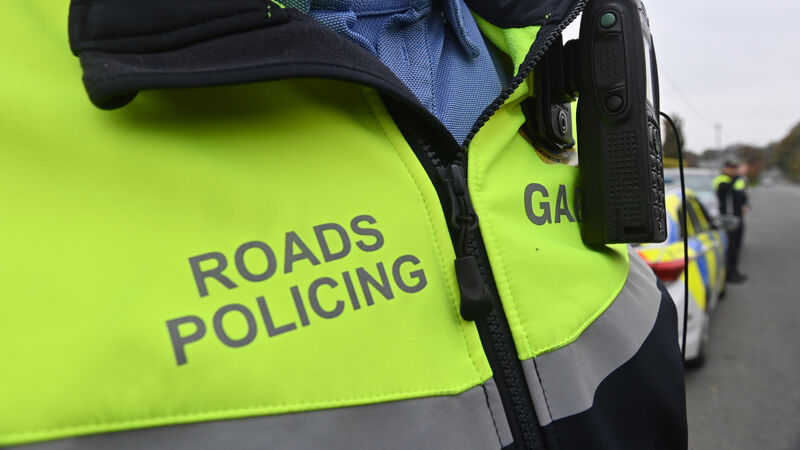
Gardaí carried out nearly 10,000 checkpoints, while almost 26,500 drivers were detected for speeding offences Picture: Dan Linehan.
Twenty-six people died on Irish roads over the Christmas period, as gardaí hit out at motorists who "made a choice to drive after consuming alcohol and/or drugs".
Gardaí said during a road traffic enforcement operation that ran from December 1, 2025, to January 5, 2026, some 765 people were arrested for driving under the influence of an intoxicant.
Fifty six per cent of those arrested had primarily alcohol in their system, while 44% tested positive primarily for drugs.
During the operation, there were more than 70 serious collisions that resulted in a number of people receiving serious and life-threatening injuries.
Gardaí carried out nearly 10,000 checkpoints, while almost 26,500 drivers were detected for speeding offences. One motorist was caught travelling at 237km/h in a 100km/h zone in Co Kildare.
Other notable speeds recorded by gardaí included:
- 119km/h in a 50km/h zone on the Drummartin Link Road, Dublin 14;
- 107km/h in a 50km/h zone on the N20 in Cork City;
- 140 km/h in a 60km/h zone on the N15 in Stranorlar, Co Donegal;
- 122km/h in a 60km/h zone in Oola, Co Limerick;
- 192km/h in a 100km/h zone on the N25, Kilmeaden, Co Waterford;
- 201km/h in a 120km/h zone on the M18, Kinvara, Co Galway.
A Garda spokesperson said: "Gardaí seized nearly 3,000 vehicles for a range of offences under the Road Traffic Act, 1961, 59% primarily for no insurance.
"In addition, nearly 1,700 fixed charge notices were issued for the offence of using a mobile phone while driving and over 450 fixed charge notices to vehicle users for non-wearing of seatbelts."
The Garda statement hit out at those who drove while intoxicated, or who drove in excess of the speed limit, saying that overall in 2025, 190 people lost their lives in road traffic collisions.
"In doing so, these drivers put themselves, their passengers and all other road users at serious risk of death or injury. These drivers did not think of any consequences.
"The 190 people who died on Irish roads left behind grieving families, friends, colleagues and traumatised communities.
"The drivers who chose to drive while under the influence of an intoxicant and in excess of the speed limit also live in our communities and have families, friends, work colleagues who can influence them.
"As a community working together, we have shown before that we can reduce road deaths on Irish roads."
The statement added: "We need to change attitudes to road traffic offences such as driving while intoxicated and speeding and make them unacceptable in our society."
Garda National Roads Policing Bureau Chief Superintendent David Harrington said it needed to be made culturally unacceptable to take risky actions on roads.
“A driver may not feel that drinking a cup of coffee while they’re travelling to work is a distraction,” he said.
“It is a distraction, you shouldn’t be doing it. 100% of your attention should be on your driving.”
He urged members of the public to contact gardaí if they see what could be dangerous behaviour on the roads.
“If a member of the public sees a potential offence taking place or about to take place, yes, they should call An Garda Síochána and we will respond.
“There is an obligation on us all, and that’s why I reference a community obligation.
“Enforcement alone is not enough — it’s a really important part of it, and that is our core obligation is enforcement — but there’s a community piece in this.
“We must make risky behaviour on the roads unacceptable — culturally unacceptable, socially unacceptable.”
He said that a traffic truck is still being used to monitor driver behaviour, and has been used for prosecutions, and gardaí are still carrying out 30 minutes of roads policing as part of their shifts.
He said an increase in speed cameras “could be very helpful”, and said the 12 cameras rolled out last year had been effective in increasing the detection of speeding vehicles “significantly”.
“At this stage, that we’re still talking about people in cars (not) wearing seatbelts, after all the awareness campaigns, after all of the information put out there about the injuries that are caused and maybe some of the injuries that could be reduced by wearing your seat belts, I also find it baffling.”
Asked about people who continue to offend despite road warnings, he said: “There’s possibly a sense of invincibility, possibly downright disrespect for the law and therefore their fellow citizens and road users, and it’s unacceptable.
“I agree that we’ll say awareness brings us so far, as I mentioned, enforcement brings us so far but for behaviour of that nature, it’s detection and prosecution.”


CONNECT WITH US TODAY



Be the first to know the latest news and updates