EU ‘monitoring’ if water charges introduced in Ireland
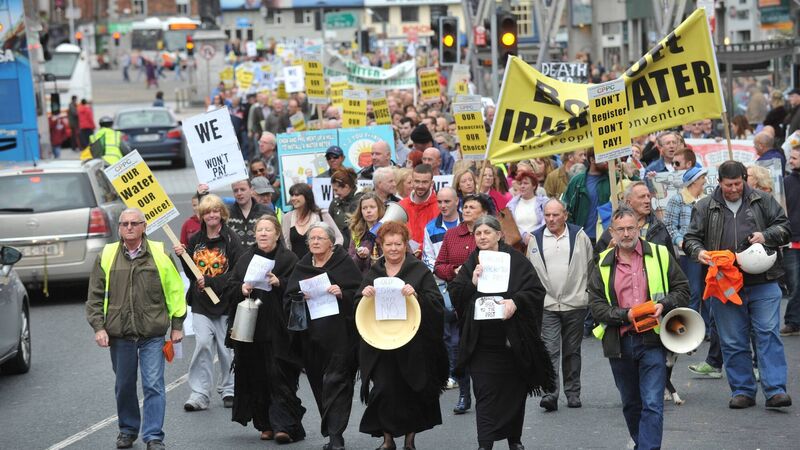
Members of the public march through Cork City in a protest against water charges in 2015. Picture: Dan Linehan.
The European Union (EU) had been “monitoring” the introduction of excess water use charges in Ireland, according to a Department of Housing official.
It had been reported earlier this year that plans were under way to introduce charges for excess water use, which Sinn Fein leader Mary Lou McDonald had criticised as water charges “by the back door”.
The Government said its position to upgrade Ireland’s ailing water systems through general taxation remained unchanged.
Taoiseach Micheal Martin said there would be “no return to water charges” while Housing Minister James Browne said he was not considering bringing in excessive use charges “at this time”.
Documents released under a Freedom of Information request show that civil servants in the Department of Housing were preparing the groundwork to introduce regulations that would allow for exemptions to excess water use charges.
The correspondence shows civil servants had earlier this year engaged with the Office of the Data Protection Commissioner (ODPC) in relation to what their data protection obligations were for processing the data of people who would be exempt from excess water use charges.
The FOI documents also show a civil servant from the water services department said the EU were “monitoring” the charge and had asked about it in January: “It should be also noted that the EU are monitoring the introduction of this charge with the query below from January 2025:
“Are IE authorities finally implementing the ‘excessive use’ charges for domestic users of water services? Can they explain why there has been such a long delay in implementing this?” The response to the query, sent between housing officials on the morning of March 11, stated that two draft statutory instruments allowing for exemptions for water charges “are near completion and await consideration by the new minister and Government in due course”.
The correspondence was sent the same day the Irish Independent broke the news that water charges were “on the way back as wastage targeted”.
A briefing prepared for Mr Browne, who was appointed housing minister on January 23, contained high-level priorities for the department, including the excess water charges, and had been released under FOI that month.
The day after the Irish Independent article was published, a draft media response sent between officials suggested the work to progress the statutory instruments had been dropped.
“This measure is not in the programme for government and there are no plans to introduce it. There is no further work being done on these regulations,” it said.
A senior official at the Department of Housing had said the charge aimed to encourage water conservation that would “ensure” Ireland’s compliance with the EU water framework directive.
They said it was “not intended as a revenue-raising measure”.
A legal provision for charging people for excess use of water is already contained in the Water Services Act 2017, called the household water conservation charge.
The regulations underpinning exemptions to the charges were updated in 2023 and examined again in 2025.
The exemptions would be for households with more than four people and for people who have medical needs that would likely require more than the average use of water.
In a note dated February 12 2025, it was stated that once the regulations for exemptions are in place, they “can proceed with implementing household water conservation charge”.
An estimated 83,000 households, or around 9.4% of all domestic customers, use more than 213,000 litres a year, according to a briefing note.
The island of Ireland is the only part of the EU that does not have metered water charges.
A working group on water conservation was set up in 2025 and the first meeting took place in June.