Covid delays ‘had no lasting impact’ on cancer survival rates, new NCRI report finds
Covid delays ‘had no lasting impact’ on cancer survival rates, new NCRI report finds

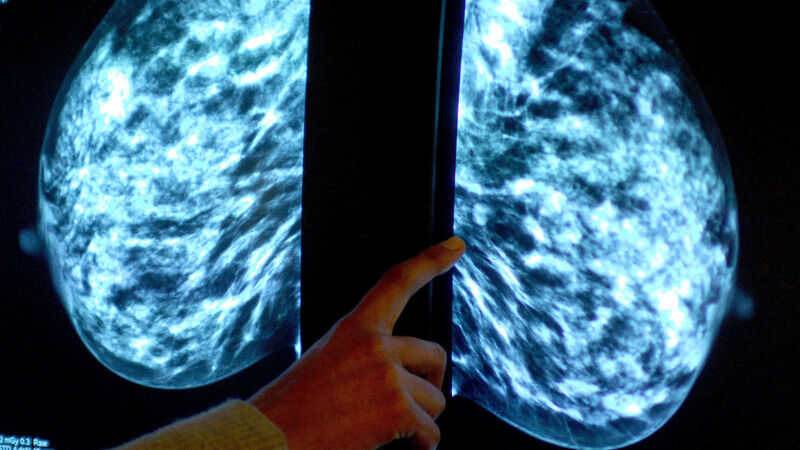
NCRI director Professor Deirdre Murray said: 'The worry was that because of the initial drop in detection, people would present later with more advanced disease. This did not happen.' File picture

The National Cancer Registry Ireland has found “no evidence” delays to diagnosis during 2020 had a lasting impact on early cancer survival rates or deaths.

This follows years of concern that the limits on service during the early months of the pandemic meant cancer patients missed out on care or diagnosis.


“While covid severely disrupted cancer detection during 2020, Ireland’s cancer outcomes remained stable overall, and there is no clear evidence to date of lasting harm to early survival or mortality,” the NCRI said in a report published on Wednesday.

It found no consistent rise in late-stage cancers after the pandemic. 

Survival rates for all cancer sites in 2020–2021 remained in line with previous years.

The NCRI acknowledged cancer diagnoses dropped sharply by 27% in early 2020, saying the pandemic “severely disrupted” services.

However it said: “The system reconfigured quickly during the pandemic, and recovered quickly after. By 2022m the number of diagnosed cases had returned to expected levels.” 

The report shows although cases registered during the pandemic were 2% below average for the pre-pandemic times, this rose comparatively by 9% after it. 

There were “no significant increases” in cancer deaths.

NCRI director Professor Deirdre Murray said this was reassuring for patients and families.

“Some may have feared, for example, that the pause in screening programmes, and the fact that all GP appointments were now phone calls rather than face-to-face visits, would lead to a sharp rise in late-stage diagnoses, cancers that had progressed, post-pandemic,” she said.

“There is, however, no evidence of this in the data.” 

She added: "The worry was that because of the initial drop in detection, people would present later with more advanced disease. 

"This did not happen." 

The NCRI said while longer-term effects could not be entirely ruled out, the evidence indicated cancer patients were protected. 

A slight increase in cancer deaths during 2020 to 2022 was in line with population changes, and was not a pandemic-specific effect, it said.

x

More in this section

Lunchtime News

Newsletter

Keep up with stories of the day with our lunchtime news wrap and important breaking news alerts.

Cookie Policy Privacy Policy Brand Safety FAQ Help Contact Us Terms and Conditions

© Examiner Echo Group Limited