'No reports of fish mortalities' following leak into River Lee from water treatment plant
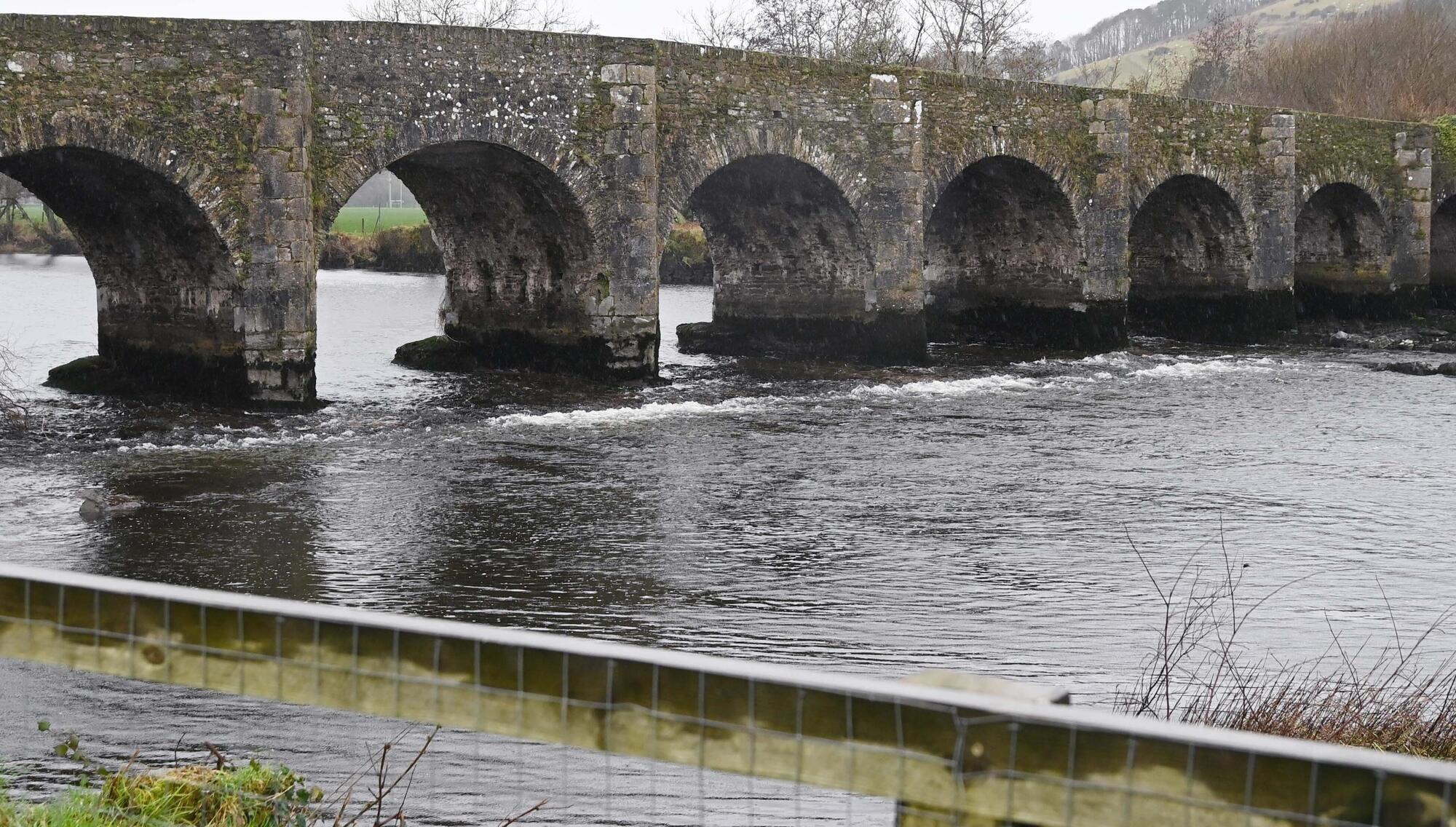
Inniscarra Bridge near Ballincollig, Cork. The EPA recommended that the automatic shutdown of the sludge treatment facility should operate regardless of whether the valve is opened in automatic or manual mode. Picture: Denis Minihane
There were no reports of any fish kills as a result of the accidental discharge of an estimated 100 cubic metres of sludge into the River Lee from a treatment plant at Inniscarra, Co Cork, according to a report by the State environmental watchdog.
An audit by the Environmental Protection Agency (EPA) of the incident, which occurred on October 15, revealed that turbidity levels — a measure of the cloudiness of the water caused by suspended particles — as a result of the discharge of the sludge were up to 100 times the recommended level.
However, the EPA said records showed that there was no deterioration in raw water quality as a result of the incident, according to monitors based at the Lee Road treatment plant located over 10km further downstream.
Operation of the drinking water treatment processes at the Inniscarra plant were also unaffected.
The incident occurred on the network of the Cork Harbour and City public water supply which serves a population of over 143,500.
It was estimated that the amount of sludge discharged was approximately 100m³ from a system which provides a daily average of 64,135m³ of drinking water.
EPA inspectors found that the discharge of the sludge occurred over a 40-minute period between 4pm and 4.40pm into the River Lee at a point about 400 metres downstream of Inniscarra Dam.
The audit stated that the discharge was immediately stopped once the operator had become aware of what had happened.
Turbidity levels were recorded at up to 100 NTU (nephelometric turbidity units).
The recommended level is a maximum of 1 NTU in terms of the “visual acceptability” of water leaving a treatment plant.
The EPA said thickened sludge was being temporarily stored in one of the backwash water holding tanks at the treatment plant in Inniscarra due to operational issues.
It found an incorrect valve was opened while the contents of the tank were being pumped across to the usual sludge holding tank to be transported away from the site.
The error resulted in the sludge being discharged directly into the river.
The EPA said the automatic shutdown that would be triggered when turbidity levels would reach over 10 NTU were not activated because the valve was being operated in “manual” mode at the time.
The audit noted that Inland Fisheries Ireland were notified about the incident on the same day.
“There were no reports of fish mortalities,” it added.
Uisce Éireann said it was undertaking a review of the incident and operations at the sludge treatment plant at Inniscarra.
The company said it was also investigating the feasibility of installing a turbidity probe with an automatic shutdown when high turbidity levels were detected at the discharge point into the River Lee as well as other corrective actions.
The EPA recommended that the automatic shutdown of the sludge treatment facility should operate regardless of whether the valve is opened in automatic or manual mode.
It also called on Uisce Éireann to review the current capacity and operations of the sludge treatment plant at Inniscarra and identify any improvements required.
CONNECT WITH US TODAY



Be the first to know the latest news and updates