Destruction of sand dunes at beach near Donald Trump's Clare hotel caused by visitors, wildlife inspector says
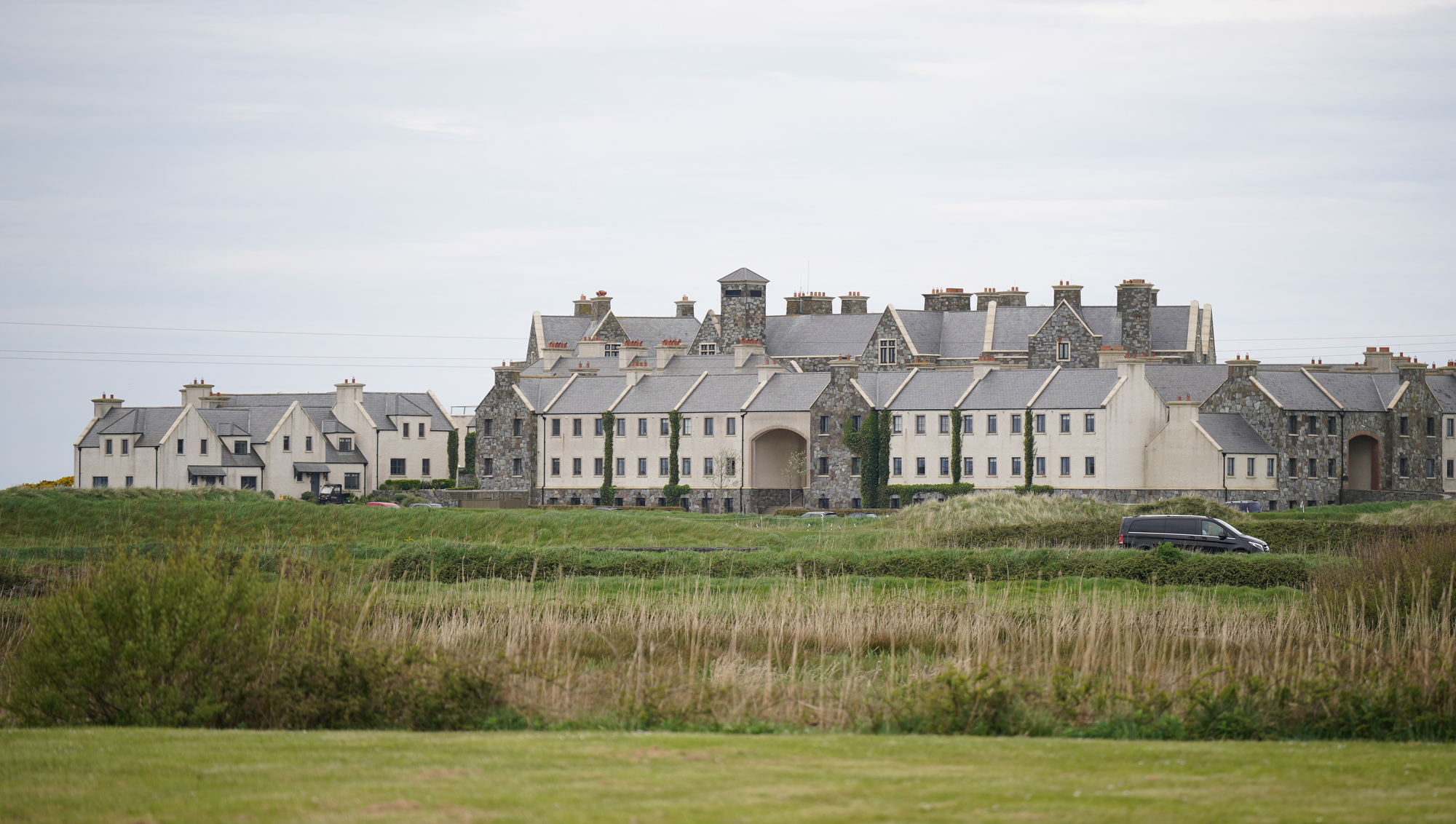
Wildlife inspector said the destruction of sand dunes at a beach beside Donald Trump’s luxury Irish hotel was unlikely to be halted by a simple fencing project.
A wildlife inspector said the destruction of sand dunes at a beach beside Donald Trump’s luxury Irish hotel was unlikely to be halted by a simple fencing project.
The National Parks and Wildlife Service agreed to a €3,500 trial for temporarily erecting a chestnut fence at two locations at Doughmore Beach in Doonbeg, Co Clare.
It said it was working with the Trump Doonbeg resort and locals to try and combat erosion and plant marram grass to hold sand together.
However, in internal discussions, a senior wildlife inspector said fencing as a “single one-off action” was not recommended because it would not address the underlying cause of damage.
An email said problems with sand dunes were usually caused by beach visitors or grazing animals and fencing could only be temporary or short-term.
It said fencing was unlikely to deter visitors from climbing dunes and any project needed to be backed up by communication for “changing people’s behaviour".
The message said: “Well-designed positive signage can be helpful, but in practice, it seems like the most effective approach is to have a physical presence on the beach at peak times.
“A part-time warden or education officer at peak times can help people to use the beach in a more sustainable way.”
It also said fencing could create its own problems by trapping sand, where it could pile up while doing nothing to support the dunes.
The email continued: “If people have developed a habit of accessing specific locations, they are likely to find a way to continue their normal activities in spite of the fencing … or they might move on to another spot, so the impact is simply diverted.”
It said the Doonbeg beach would need a particularly good communications plan so local people understood why access was being restricted.
The email said there were tracks running through the dunes parallel to the shore that represented a “serious vulnerability to … stability".
“The important message is to encourage people to walk and sit on the beach, rather than in or near the fore dunes, and to bring their own beach shelters if they need them,” the email said.
The wildlife inspector said particular care would need to be taken with one section of dune and fencing there could make things worse.
An email said: “The foot traffic in this area seems pretty consistent, and it could be that the erosion was exacerbated by the loss of the foredune due to trampling.
“Keeping people off the area is the first step to take. The question is, if you erect a fence at the base, is sand going to build up there?”
Asked about the conservation work at Doughmore Beach, the NPWS said it had been working closely with the landowner and the local community to protect an important ecological site.
A spokesperson said: “A plan was developed which involves the temporary seasonal erection of chestnut fencing at two locations of concern along the beach. This will be complemented by marram [grass] planting at the two locations.
“Labour for the project will be provided by the landowner, and members of the local community will assist in the marram planting.”


CONNECT WITH US TODAY



Be the first to know the latest news and updates