Research indicates high levels of confidence in Irish electoral system
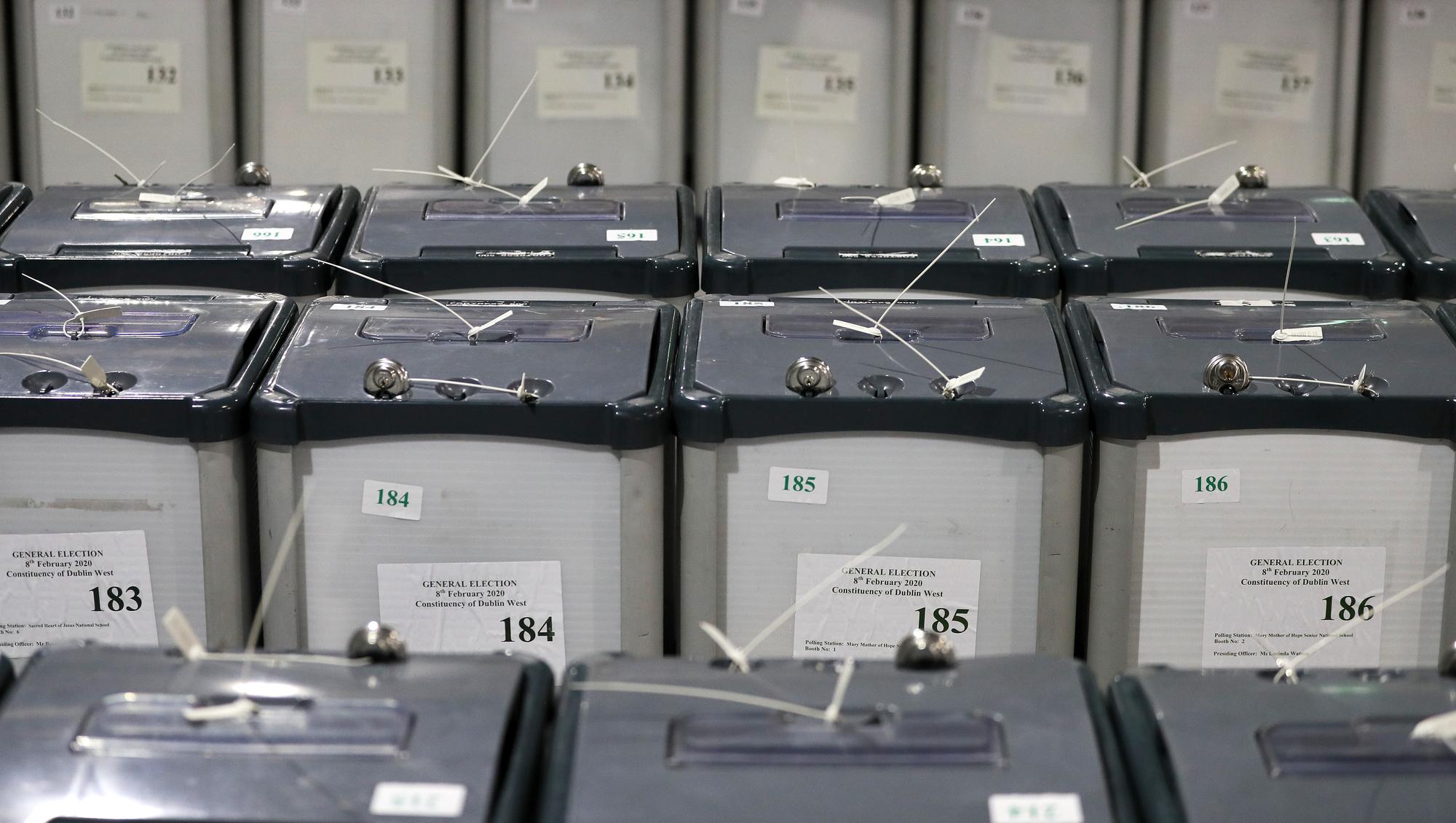
Ballot boxes in a warehouse in Dublin. Picture: Brian Lawless/PA
High levels of confidence in Ireland’s electoral system have been indicated in new research.
Some 94% of respondents agreed that elections are conducted in accordance with the law, and 88% said that elections are well managed and that election officials are fair while 96% of voters claimed that they are confident that their ballot papers were secret once they put then in the ballot box.
The General Election 2024, National Election And Democracy Study was conducted by An Coimisiún Toghcháin, Ireland’s independent electoral commission, and the National Election and Democracy Study (NEDS) Management Board.
The study also suggested that Irish voters are knowledgeable about aspects of the voting and democratic process, but there is also further work to be done.
It found that 90% of respondents understood that every one of their preferences has the potential to count, 76% knew that they did not need to express a preference for each candidate on the ballot paper, 36% agreed that information about voting procedures is not widely available and 51% mistakenly thought they needed their polling card to vote.
Other findings of this face-to-face study of just under 1,500 randomly selected respondents are that for first time voters, the influence of their friends, family, school or work was key to encouraging them to get on the electoral register with 27% citing this as important.
Meanwhile, 24% were prompted by social media, newspaper, TV or radio ads which were a focus for An Coimisiún Toghcháin during the election campaign.
The highest reasons given by registered people for not voting on November 29 were being away on the day (30%), work commitments (27%), with 12% pointing to disinterest in politics, indecision at 11% and 6% who said their vote did not matter.
Thirty-seven percent of those who did not vote were not on the register.
This data is to be used to benchmark An Coimisiuú’s performance and guide its future initiatives.
A key priority for An Coimisiún is to understand the reasons why people do not vote so the sample includes 324 non-voters.
Welcoming the data, Art O’Leary, chief executive of An Coimisiún Toghcháin said it highlights the value of An Coimisiún Toghcháin’s National Election and Democracy Study to learn more about the experience and perspectives of current and potential voters as well as contributing to academic scholarship about democracy and elections.
“We simply have to understand more about who non-voters are and why they are staying away from the polls, and so this data will feed into other research projects we are advancing through our broader Research Programme and our public campaigns and engagement,” he said.