Department's military law report in wake of soldier's trial for assault on Natasha O’Brien costs €130k
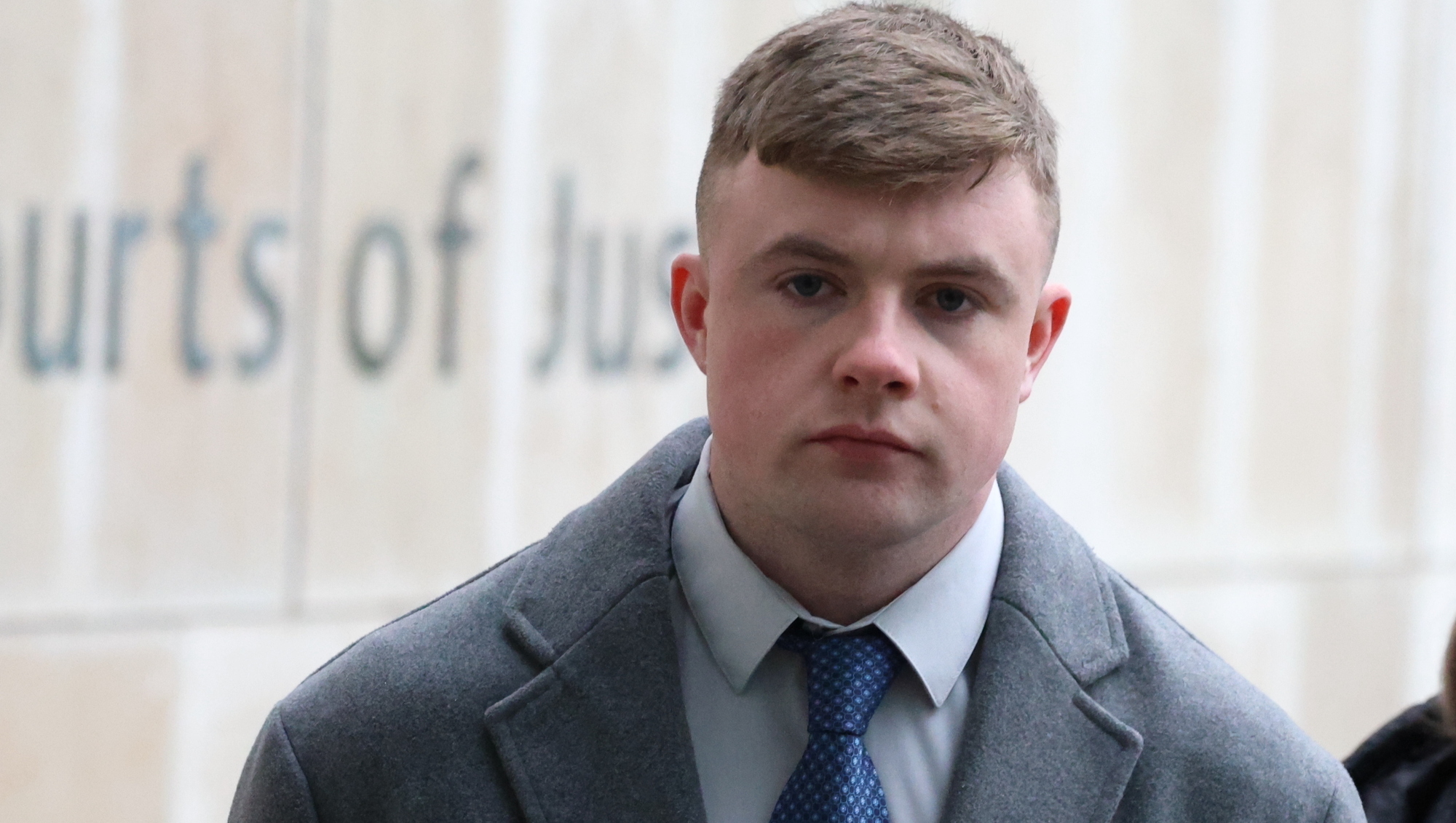
Cathal Crotty was jailed for two years last January after the Court of Appeal overturned his suspended sentence as unduly lenient. File picture: Collins Courts
The Department of Defence spent more than €130,000 on a report analysing military law in cases where members of the Defence Forces have been convicted of serious offences.
The department commissioned the report, compiled by senior counsel Peter Ward, in June 2024 after a serving Irish soldier received a fully suspended sentence for beating Natasha O’Brien unconscious on a Limerick street in May 2022. Cathal Crotty had never met her before that.
The report had been demanded by the Taoiseach Micheál Martin in his previous role of Minister for Defence. It was delivered to the department last October before being officially published in December.
Cathal Crotty, aged 23, was subsequently jailed for two years last January after the Court of Appeal overturned his suspended sentence as unduly lenient.
He had been discharged from the Defence Forces last July following a public outcry at the leniency of his initial sentence. The initial trial judge Tom O’Donnell having declared that a custodial sentence would have rendered Crotty’s career “over”.
The Department of Defence said that Mr Ward’s report, delivered to the Taoiseach last December, had cost €126,002 – split between a fee of €82,502 for Mr Ward’s work on the review and associated costs of €43,500.
In a parliamentary question response to Social Democrats TD Aidan Farrelly earlier this month, the department stipulated that the final cost of the review – described as a “high-level analysis of the application of military law in circumstances where personnel have been convicted of serious offences in the civil courts” had been €130,349.25.
A spokesperson said the terms regarding the fees for Mr Ward had been agreed in advance and that given the review’s scope “and the very tight deadline... the cost of the report was considered appropriate”.
Mr Ward’s report had concentrated on Defence Forces members who had been accused of serious crimes. At the time of Cathal Crotty’s initial trial there had been 68 serving members of the Defence Forces who had been either convicted of a serious crime in the three years preceding or who were at that time before the courts in an ongoing action.
The report found that data protection rules had historically prevented the sharing of convictions with the Defence Forces by State bodies such as the gardaí and the Courts Service.
It also found there was no power to suspend serving members accused of crimes or who are before the courts within Ireland’s military system.
Mr Ward made 35 recommendations, including the introduction of a ‘rapid response protocol’ to assess and process the cases of Defence Forces members charged with serious offences.
All told, the Department of Defence spent more than €318,000 on external legal consultations between 2021 and 2024, according to the response to Mr Farrelly.
CONNECT WITH US TODAY



Be the first to know the latest news and updates