US multinationals unlikely to 'uproot themselves overnight' if Trump enacts tariffs
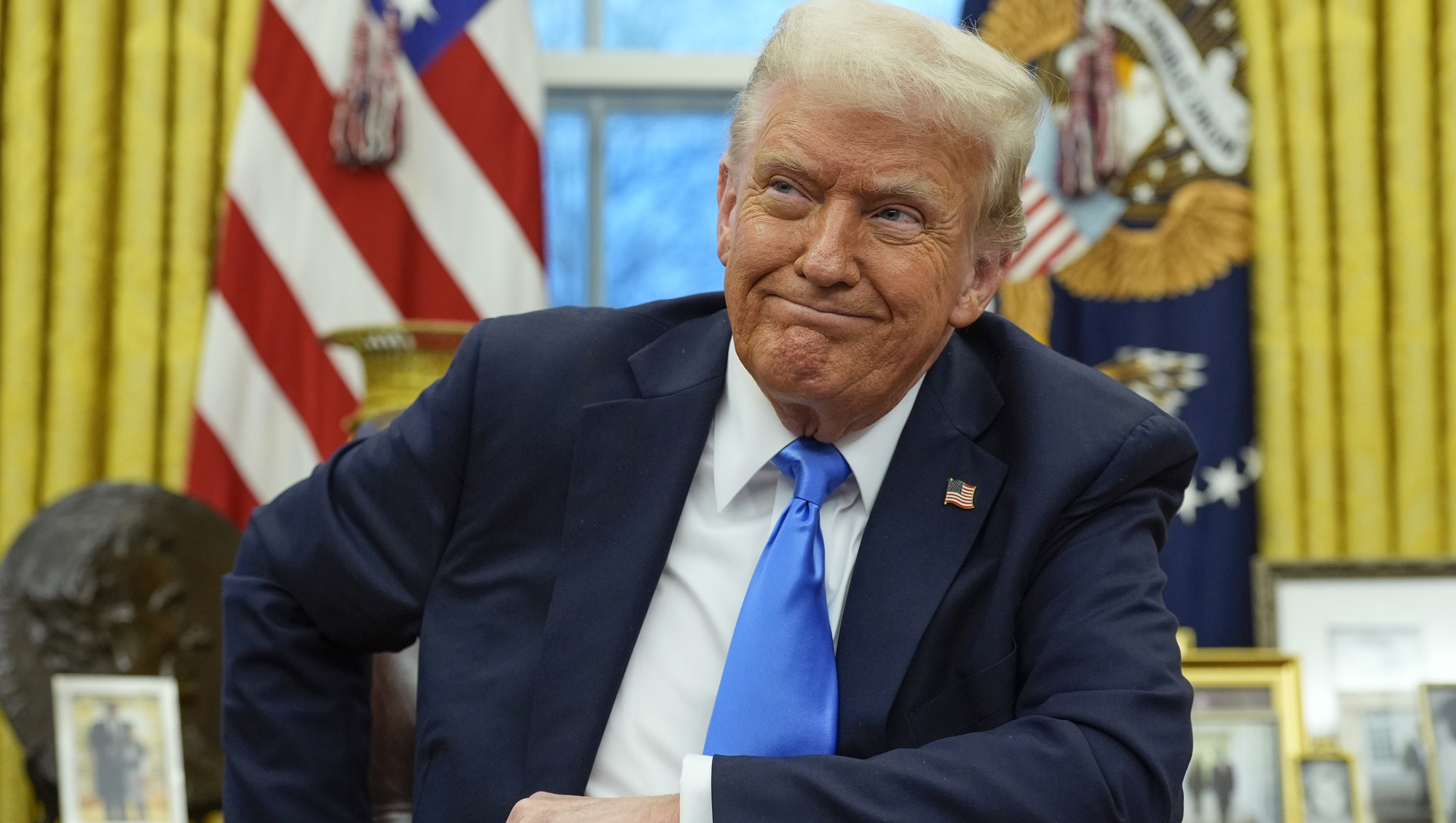
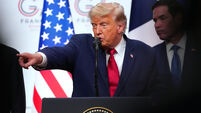
US president Donald Trump could use St Patrick's Day to raise the Occupied Territories Bill or Gaza or even Ireland’s defence spend. Picture: Alex Brandon
Most major US multinationals are unlikely to “uproot themselves overnight” from Ireland if US president Donald Trump slaps tariffs on goods and services from Ireland, according to a global economic expert.
Mike O’Sullivan, who studied at University College Cork before serving on national and international economic bodies, did caution that growing EU regulation — such as the Digital Services Act and the AI Act — are more likely “points of vulnerability” for the sector.
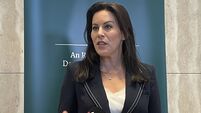
Professor Andrew Cottey of the university’s department of government and politics expressed concerns that the size of the US multinational sector in Ireland could become smaller over the coming five to 10 years, adding that the Government has some “serious thinking to do” about replacing that.
Both speakers at an event at UCC did flag the possibility that Mr Trump might sanction Ireland if the Dáil goes ahead and passes the Occupied Territories Bill, which would end Ireland’s trade with illegal Israeli settlements — making it the first country to do so.
Mr Cottey said it is “conceivable, maybe even likely” that Mr Trump will warn Ireland against doing so, and that he could even raise the matter during the Taoiseach’s visit to the White House for St Patrick’s Day.
The UCC event, involved a discussion around the danger of US tariffs affecting American tech and pharma multinationals in Ireland.
Mr O’Sullivan, who has worked for over 20 years in global financial markets and is a member of the World Economic Forum, said that while many of the US corporations may have initially chosen Ireland for its generous tax regime, their decision to remain and expand in the country is more to do with “regulation, labour, and the ease of doing business”.
Commenting on the impact of potential US tariffs, he said: “I personally don’t think that a lot of these businesses will uproot themselves overnight.”
But he said there are “other points of vulnerability”, one being regulation.
“A lot of the social media firms are in Ireland because we, up until now, have regulated them. I think 75% of the regulatory judgments passed by the Irish regulator on the likes of Twitter and Facebook have to be changed.
"Their homework has to be corrected, and they got tougher by the EU regulator, and a lot of that stops now with the Digital Services Act and the EU AI act.
So that's, in my view, probably a slightly more vulnerable point than tariffs on pharmaceuticals.”
Prof Cottey raised the medium term implications for Ireland.
He said Apple, a huge investor in Cork, recently announced a €500bn deal in the US, resulting in 20,000 jobs.
“Now that’s not immediately taking anything away from Ireland; Apple hasn’t announced any changes in relation to its operation in Ireland, but from a five- to 10-year perspective will the footprint of American multinationals become smaller in Ireland?”
Prof Cottey said it is “conceivable, maybe even likely” that Mr Trump will impose “some kind of diplomatic or economic or financial sanctions” on Ireland if it passes the Occupied Territories Bill.
He said while the St Patrick’s visit to Washington could provide positive publicity for Taoiseach Micheál Martin, it is also possible that Mr Trump could use the opportunity to raise the bill or Gaza or even Ireland’s defence spend.
Mr O’Sullivan said Mr Trump’s administration “doesn’t really see long standing allies as allies” in that they see Europe as a “drain on resources” and the EU as an “economic competitor”.
He said Mr Trump wants “to build a kind of new world order” and there is “a plan” behind it, one that involves people from wealthy families in both the private equity sector and the tech/social media industries.
“There is a vision of prosecuting this for at least 12, maybe 16, years as a sort of political agenda,” he said.
Prof Cottey said the world has to “consider the possibility that America may no longer be a democracy” in that democratic protections and institutions, the rule of law, the separate of powers, are being seriously eroded.
“I think there is a real danger. I’m not saying that America will turn into Nazi Germany in 1933 or 1937, but we could see what we would call an ‘electoral autocracy’.”


CONNECT WITH US TODAY



Be the first to know the latest news and updates