Reduced speed limits on national secondary and local roads from Friday
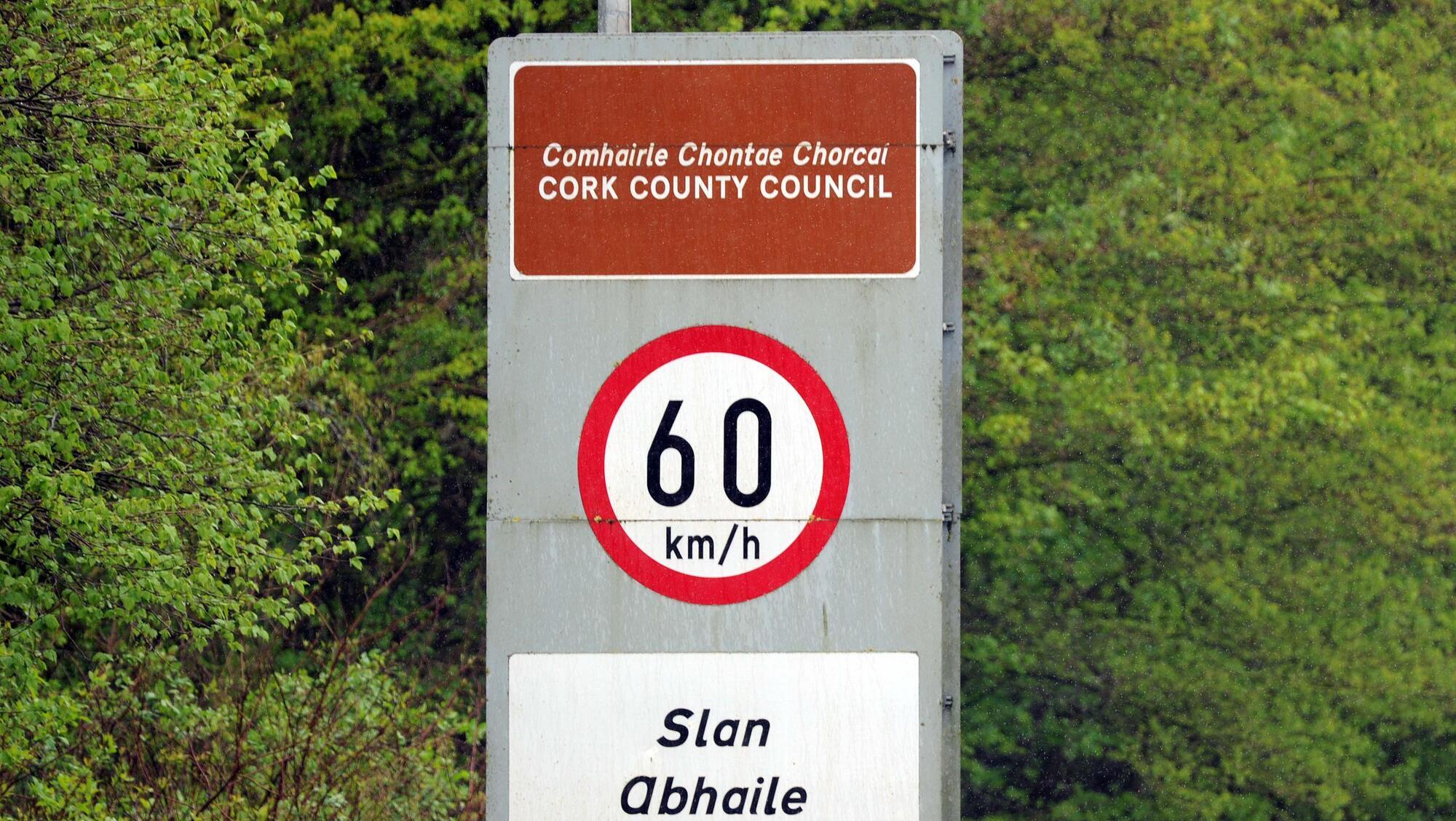
Local roads will see speed limits reduced to 60km/h from 80km/h. Picture: Denis Minihane.
Speed limits on national secondary roads and local roads are being reduced on a phased basis from Friday, as part of a Government strategy to cut road deaths and injuries in half by 2030.
Going forward, the default speed limit on national secondary roads will be reduced from 100km/h to 80km/h. On local roads, the limit will be reduced to 60km/h from 80km/h.
New speed limit signs have been put up to replace existing ones and reflect the changes.
Later this year, the speed limit in urban areas — including built-up areas, housing estates, and town centres — will be reduced from 50km/h to 30km/h.
The reductions are being implemented as part of the Government's Road Safety Strategy 2021-2030, the aim of which is to tackle "the disproportionate number of fatalities and serious injuries occurring on rural roads".
Some 174 people lost their lives on Irish roads last year. So far this year, there have been 16 road deaths countrywide.
According to the Department of Transport, 73% of road deaths from 2020 to 2024 occurred on a rural road with a speed limit of 80km/h or greater, while 47% of all serious injuries also occurred on such roads.
To support enforcement of the new limits, gardaí say they will continue to carry out speed checks and leverage extra static speed cameras, new unmarked vehicles and other pieces of "advanced speed detection technology".
Commenting on the new reduced limits, Road Safety Authority chief executive Sam Waide said speed was "one of the most critical factors in road safety — both in the likelihood of a crash occurring and the severity of the outcome".
“Nine out of 10 pedestrians struck at 80km/h will not survive, while at 60km/h, that number drops to five out of 10," he said.
However, one mother who lost her son in a crash on a rural road does not believe new reduced speed limits alone will help reduce fatalities and injuries.
Caroline Ginnelly lost her 21-year-old son Martin on July 7, 2018, when the car in which he was a passenger was involved in a collision just minutes from his home in Gibbstown, Co Meath.
"I remember the doorbell going and looking at my watch to see it was 6.12am. I looked out the window and saw the Garda car," she said.
"Then the garda told us Martin was dead and my life, my whole world collapsed before me."
Caroline believes cutting speed is not a panacea for the problem of road deaths, especially in rural areas.
"Maybe all cars should have limiters. Maybe the families of those killed or survivors could give students a talk about how their lives have changed irrevocably and the devastation speed or careless driving can have."
She added it only took a split second of a motorist taking their eyes off the road to lead to "that knock on the door that no parent wants".

CONNECT WITH US TODAY



Be the first to know the latest news and updates