CSO predicts population rise of at least 10% for Cork and Kerry over next 20 years
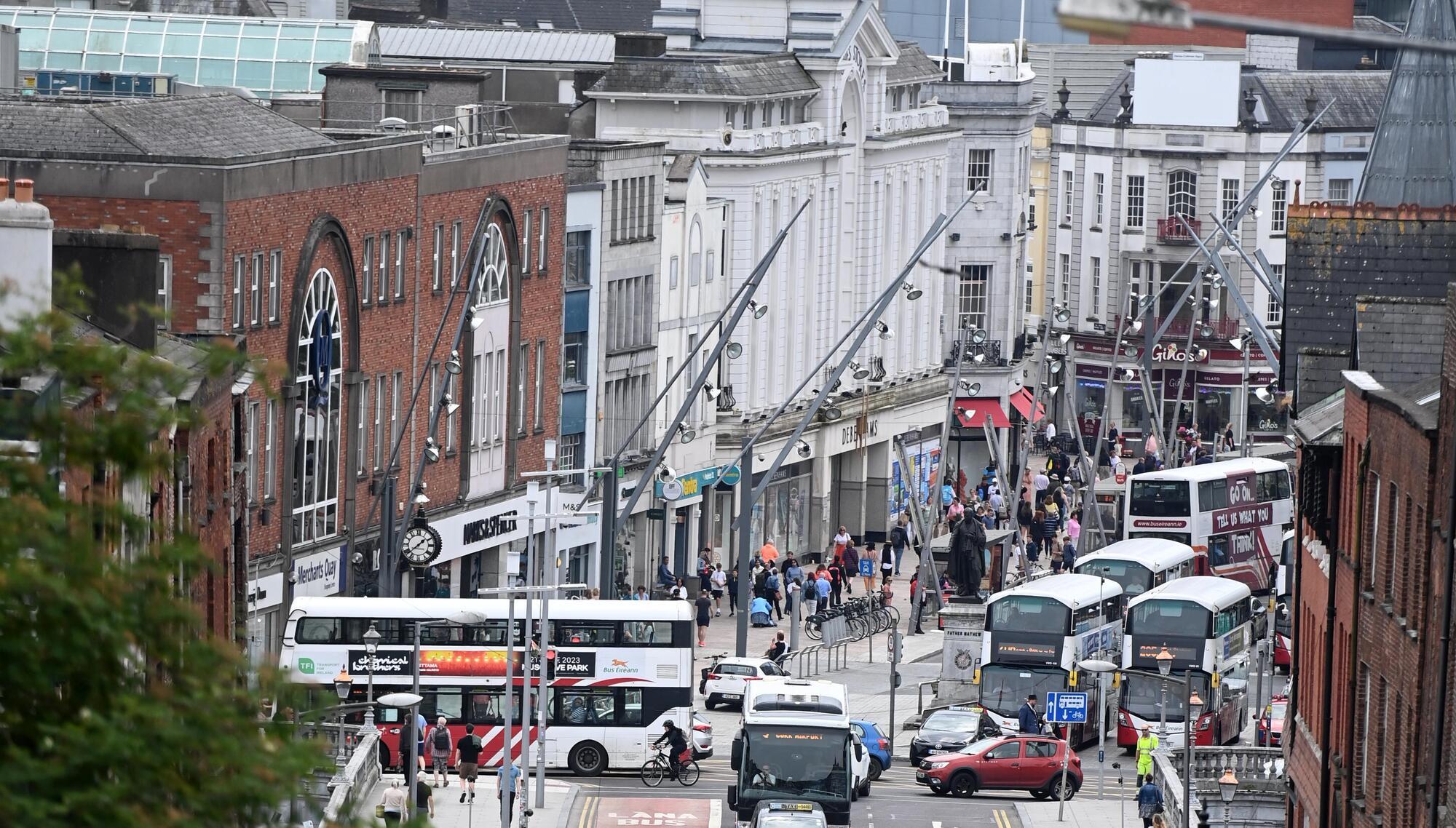
By 2042, the population in the region of Cork and Kerry could rise as high as 20% to 898,200 under the high net international migration scenario or by just 10% to 816,500 under the low migration scenario. File picture: Larry Cummins
The population of Cork and Kerry could rise by as much as 155,000 people within the next two decades, according to new projections.
The Central Statistics Office (CSO) published its regional breakdown on Wednesday for how the population of Ireland could change through to 2042, saying it could rise as high as 6.4 million people by then from 5.18 million in 2022.
Furthermore, the number of people aged 65 and over is set to increase significantly over this time period across a range of projections. Hitting one million people by 2030, this section of the population could increase by as much as 62% in some parts of the country by 2042.
The CSO projections make a range of assumptions around how the population could change and move over the coming years. One is that there will be continued outflows of people moving out of Dublin to live in other parts of the country, following on from recent trends.
Annually, it said that Dublin could have a net annual migration of 4,600 people to other parts of the country.
The area that will see most of the Dubs head for is the mid-east of the country, which includes Kildare, Louth, Meath, Wicklow. It will see the largest regional growth in the coming decades, according to the CSO and could account for 16% of the total population by 2042.
The Mid-East region is expected to experience the highest regional population growth by 2042https://t.co/V8l8SXZ8jr#CSOIreland #Ireland #Population #PopulationEstimates #Migration #MigrationEstimates pic.twitter.com/tpW56SFJaL
— Central Statistics Office Ireland (@CSOIreland) January 29, 2025
How population changes in different areas is highly dependent on factors such as international migration in the coming years. “The population growth levels in Dublin are highly correlated with international migration levels,” the CSO said.
“Under the M1 (high international migration) scenario, Dublin is expected to grow by 25.0%, the second highest level of growth after the Mid-East, however under the M3 (lower international migration) scenario Dublin shows only an 8.0% growth, which is the lowest level of growth of any region.”
A similar pattern is seen in Cork and Kerry. In the 2022 Census, its population was 743,000 — the highest of any region behind Dublin and the mid-east.
By 2042, its population could rise as high as 20% to 898,200 under the high net international migration scenario or by just 10% to 816,500 under the low migration scenario.
Separately, births are expected to decline over the coming years under all scenarios. From the period 2016 to 2022 when there was an annual average of 59,014 births this could fall as low as 47,900 a year by 2037-2042.
On the other hand, while the younger population may decline, the number of older people will increase.
The CSO said: “By 2042, the older population will grow to between 1.38 and 1.42 million people, depending on the migration scenario chosen. In 2022, the older population accounted for 15.1% of the total population, this will grow to between 22.2% and 23.9% (for M1 and M3 respectively) of the total population by 2042.”
It said the older dependency ratio, the population aged 65 and over as a percentage of those of working age, was 23.1% nationally in 2022.
The CSO added that this is projected to increase steadily over the course of the next two decades. By 2042, this ratio will have grown to between 34.4% and 38% depending on the different scenario.
Previously, reports have highlighted how current Government proposals won’t be enough to address the “pensions time bomb” that is looming as the proportion of older people increases, and the State Pension age remains at 66. One call came from the Parliamentary Budget Office, which remarked in a report that "deeper reforms of the pension system are still required".
CONNECT WITH US TODAY



Be the first to know the latest news and updates