Forecasters to blacklist names of past storms that were fatal or highly destructive
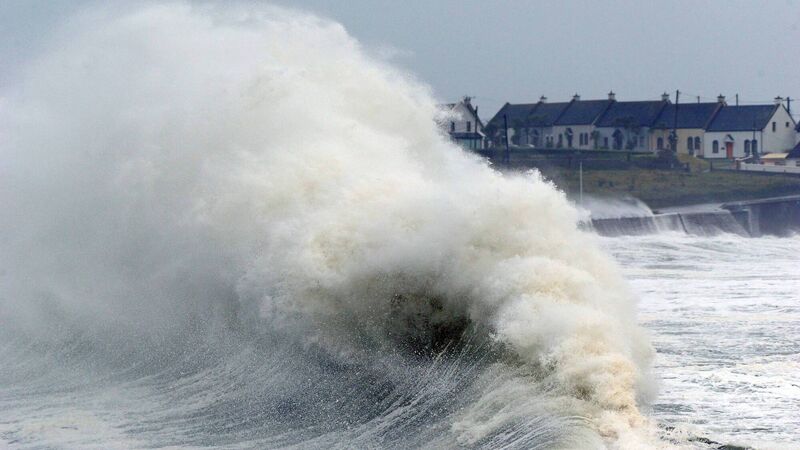
Huge waves pounding the shore at Garrettstown, Co Cork, during Storm Agnes in 2023. Agnes is a retired name for storms according to one email within Met Eireann. Picture: Denis Minihane
Met Éireann is working on a project to create a “blacklist” of certain storm names if they were used in the past for weather disasters that led to loss of life or widespread destruction.
In discussions over this year’s storm season, there was debate over whether it might be better if certain names chosen, including from social media polls in Ireland, were dropped.
In emails this summer, a Met Éireann staff member said that while they shared concerns over the history of some names, it was going to “be very hard for us and disappointing for the Irish public”.
Met Éireann said they would also support the creation of a more permanent “blacklist” that could be used from next year onwards.
The names identified as having potential to cause controversy were ‘Fran’, ‘Harvey’, ‘Hugo’ and ‘Ingrid’, according to records released under Freedom of Information law.
One email said: “We're hitting three of these names with our final list. Last year, I think we used at least one retired name (Agnes, that I can recall). Could anyone confirm that we can still go ahead with the list as is?”
All four names are tied to highly destructive storms with emails between Met Éireann and colleagues in the UK and the Netherlands suggesting certain names should be permanently ‘retired’.
Following discussions, Hugo did end up being kept on the list despite its close association with a catastrophic hurricane that hit the Caribbean and United States in 1989.
However, a decision was instead made that an agreed list would be created for the 2025/26 storm season to avoid any further chance of conflict.
In earlier discussions, Met staff also said an earlier move from an alternating “male/female list” to something more fluid that would include “gender-neutral names” had worked out well and should continue.
“[It] gave us more options when pulling the final list across three partners,” said an email.
There was also discussion over how to pronounce certain names with ‘Naoise’ from the Irish list and ‘Otje’ from the Dutch list considered especially likely to cause confusion.
Asked about the records, Met Éireann said the practice of naming storms was a yearly project done in partnership with their counterparts in the UK and the Netherlands.
A spokesperson said: “[It] is an established practice that increases the level of public safety and preparedness, as members of the public and communities are more likely to remember and respond to warnings when a storm has been given a name.
“In selecting the names, several considerations are taken into account for each country, such as cultural significance, awareness of the name, potential sensitivities, pronunciation and spelling, to name a sample.”


Check out the Irish Examiner's WEATHER CENTRE for regularly updated short and long range forecasts wherever you are.
CONNECT WITH US TODAY



Be the first to know the latest news and updates