Gardaí arrested motorist seven times last year on suspicion of driving while intoxicated
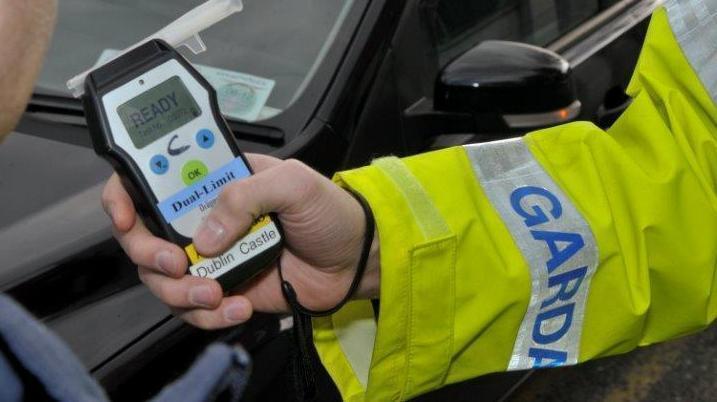
The numbers who were breath-tested last year totalled 3,734 which was down 87 on the 3,821 total for 2022. File picture
One driver was arrested seven times by gardaí in 2023 on suspicion of driving while intoxicated, according to the 2023 annual report for the Medical Bureau of Road Safety.
The report also reveals the youngest male driver arrested on suspicion of driving under the influence was aged 13 and the oldest driver was aged 90.
The report also shows that the highest alcohol level found in blood in 2023 was 439mg/100ml which is almost nine times over the legal limit of 50 mg of alcohol per 100ml of blood for driving.
In his foreword to the report, Director of the Medical Bureau of Road Safety, Professor Denis Cusack has stated that “the issue of repeat and high-risk intoxicated driving offenders remains to be addressed legislatively, in the prosecutorial process and also in medical rehabilitation”.
In figures included in the bureau's 2023 annual report, they show that two drivers were arrested five times by gardaí on suspicion of driving under the influence of an intoxicant while six drivers were arrested four times and 22 drivers arrested three times during the 12-month period.
The report states that “the level of recidivism detected remains significant with 243 drivers arrested twice in 2023”.
All samples are sent by gardaí to the Medical Bureau of Road Safety for analysis and Prof Cusack said that the number of blood and urine specimens received in 2023 for alcohol analysis by the bureau “continued at a high level of 5,464 specimens”.
The 5,464 specimens analysed was a 3% decrease on the 5,622 specimens tested in 2022.
The number of toxicology blood and urine specimens analysed last year totalled 3,873 which was an increase on 80 on the 3,793 specimens analysed for drugs in 2022. The numbers who were breath-tested last year totalled 3,734 which was down 87 on the 3,821 total for 2022.
Prof Cusack said: “Alcohol remained the most frequently detected intoxicant in drivers. The median alcohol level in blood was 153mg/100ml and in urine was 196mg/100ml when specimens with no trace of alcohol were excluded.
“These figures have sadly changed very little over the past 10 years. Alcohol-intoxicated driving thus remains a very significant danger on Irish roads with many drivers driving when several times over the legal limits for the different categories of driver, including the lower limits set for the specified drivers.”
Prof Cusack said that for drug intoxicants other than alcohol, the three most commonly detected drugs in 2023 were again cannabis, cocaine and benzodiazepines.
He said that the mean levels of cocaine, cannabis types and benzoylecgonine in positive samples were “significantly in excess of the legal limits reflecting the high levels found in drug-intoxicated drivers which, like alcohol intoxication, are a major contributory factor to road traffic collisions”.
Prof Cusack said that “the frequent finding of combinations of drugs and drugs with alcohol remains of enormous concern”. The report shows that the most prevalent time for taking specimens was between 12am and 2am accounting for 17% of all specimens taken.
The report also shows that in 2023, six specimens were forwarded to the bureau for analysis following blood taken from unconscious drivers compared to nine specimens for unconscious drivers received in 2022.
The statistics show that driving while under the influence is predominantly a male problem as they account for 86% of blood and urine samples in 2023 and females account for 14%. Of the arrested male drivers, 80% are aged under 45 with the largest cohort at 31% aged between 25 to 34.
The figures show that 57% of blood and urine specimens had no trace of alcohol in 2023. Prof Cusack said that the approval of a number of Alcohol Ignition Interlock devices will be completed in 2024.
He said: “The system when installed in a motor vehicle will prevent it from starting if the driver tests positive for alcohol and is already in place on a voluntary basis in several bus and truck fleets in the country.
“This may well be one of the most significant developments in road safety in decades when rolled out on a statutory basis as in the region of 30% of road traffic crashes have alcohol as a contributory factor.”

CONNECT WITH US TODAY



Be the first to know the latest news and updates