Ireland's population projected to exceed seven million in just 30 years
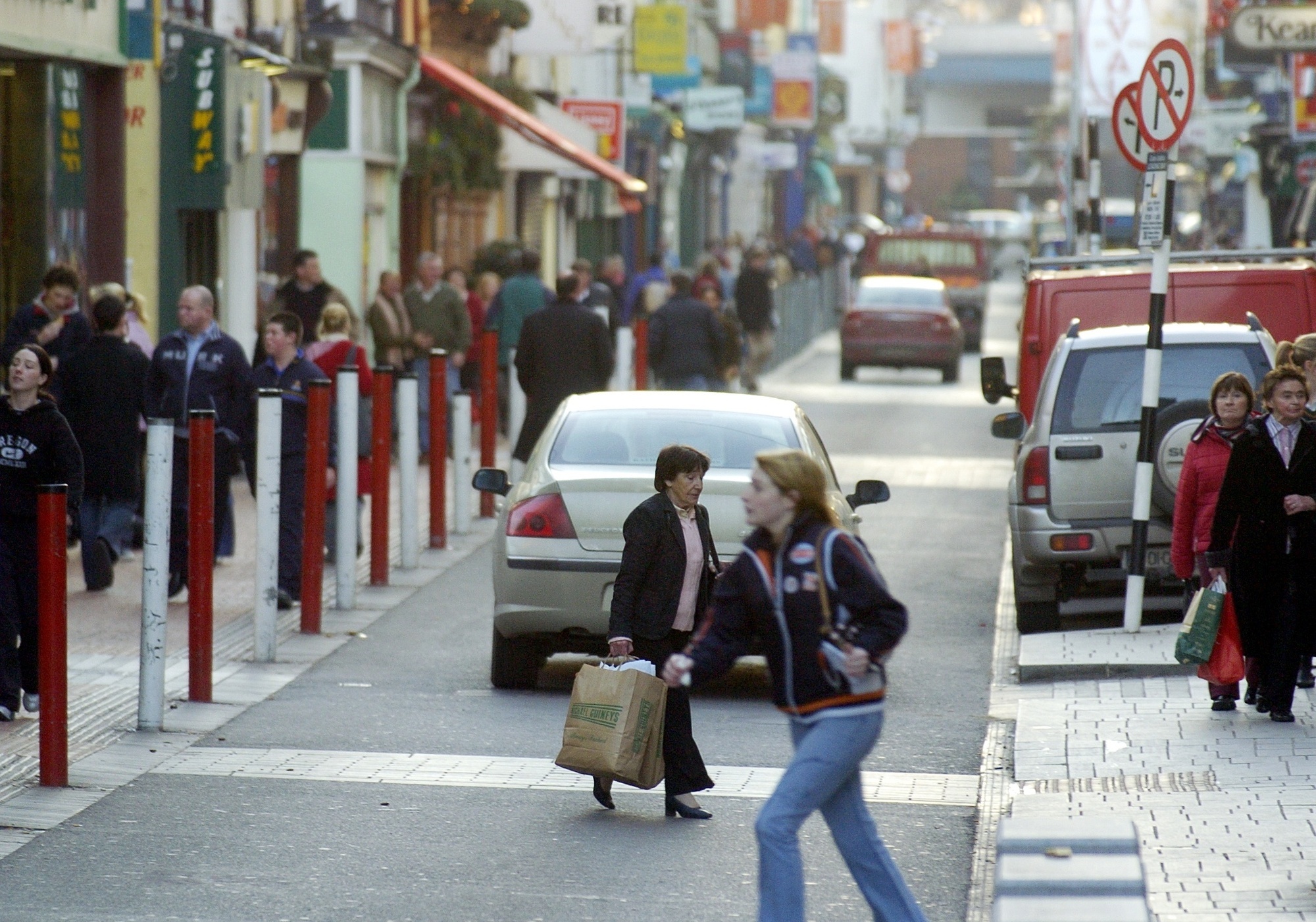
The CSO on Tuesday published its projections for how Ireland’s population will change between 2023 and 2057. File picture: Denis Minihane
Ireland’s population could exceed seven million people in just over 30 years’ time, with the number of people aged 65 and over set to reach more than one million by 2030.
The Central Statistics Office (CSO) on Tuesday published its projections for how Ireland’s population will change between 2023 and 2057 under three different scenarios, based on the findings of an expert group made up of CSO statisticians, academics, and civil servants.
In each scenario, Ireland’s population will change from naturally increasing to naturally decreasing by the 2040s. This would mean Ireland will reach a point where there are more deaths than births in the country in a year.
When it comes to mortality rates, Ireland’s population is expected to live longer in the coming years.
The CSO said: “Mortality rates for males and females are both assumed to improve at 2.5% per annum in the short-term to 2047. These assumptions will result in gains in life expectancy from 80.2 years in 2022 to 86.2 years in 2057 for males [and] 83.9 years in 2022 to 89.1 years in 2057 for females.”
As well as living longer, the CSO expects people to stay in work for longer in the coming years.
“Rates for older males (55-69) in the labour force are projected to show proportionately larger increases, particularly for those aged 60 and over,” the CSO said.
.
Older women are also expected to stay in the labour force for longer over the next decade.

Over time, the number of people among the working-age population of 15 to 64 may increase to as high as 4.1 million by 2057. However, the number of people over the age of 65 is also expected to increase significantly, from 781,000 in 2022 to 1.94 million in just over 30 years.
Furthermore, due to the falling number of births in Ireland, the number of primary school-age children is expected to decline by as much as 100,000 in the next 10 years.
Across the population as a whole, the three scenarios put Ireland’s population by 2057 at 7.005 million, 6.446 million, and 5.734 million depending on changes in net migration per annum.
Forecasting how inward migration will develop in the coming years was challenging due to what it called the “volatility” in our net migration figures in recent decades.
“Irish migration flows are currently in a unique situation regarding the inward migration flows in 2022, 2023, and 2024 (to date),” it said.
“A large number of inward migrants have arrived from Ukraine as beneficiaries of Temporary Protection. As well as this, applicants of International Protection have also increased significantly.”
Across the different scenarios, it nevertheless forecasts net inward migration of 75,000 people in 2023 will taper off in the coming years.
In the highest-number scenario, this will taper to 45,000 per year from 2027. The high scenario is based on an assumption of a limited proportion of Ukrainian migrants returning home and large numbers of inward migration from international protection applicants.
At the lowest, net migration will taper to 25,000 by 2027 and to 10,000 a year from 2032.

CONNECT WITH US TODAY



Be the first to know the latest news and updates