If you went to one funeral every day for every child killed in Gaza, it would take you 39 years
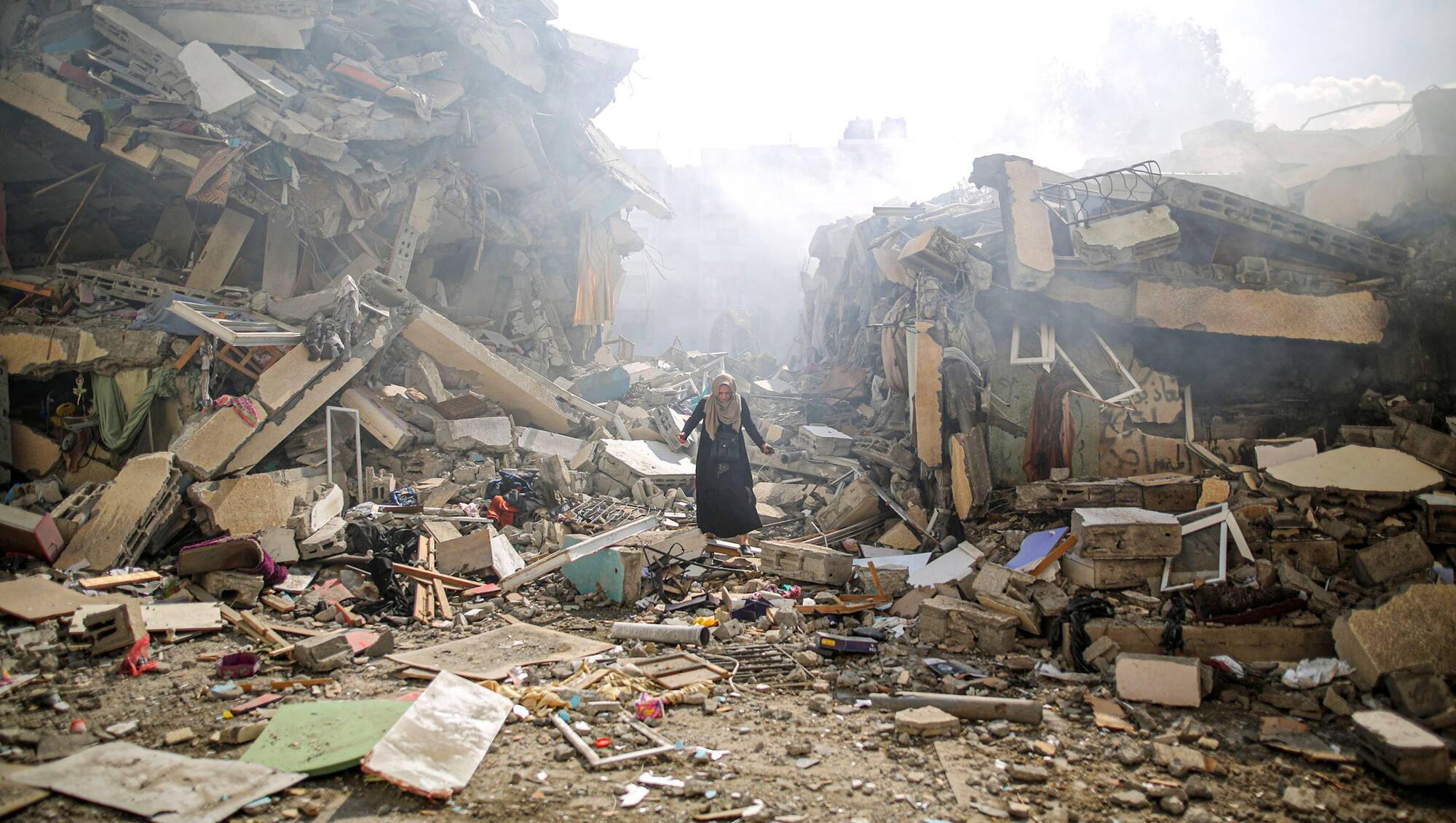
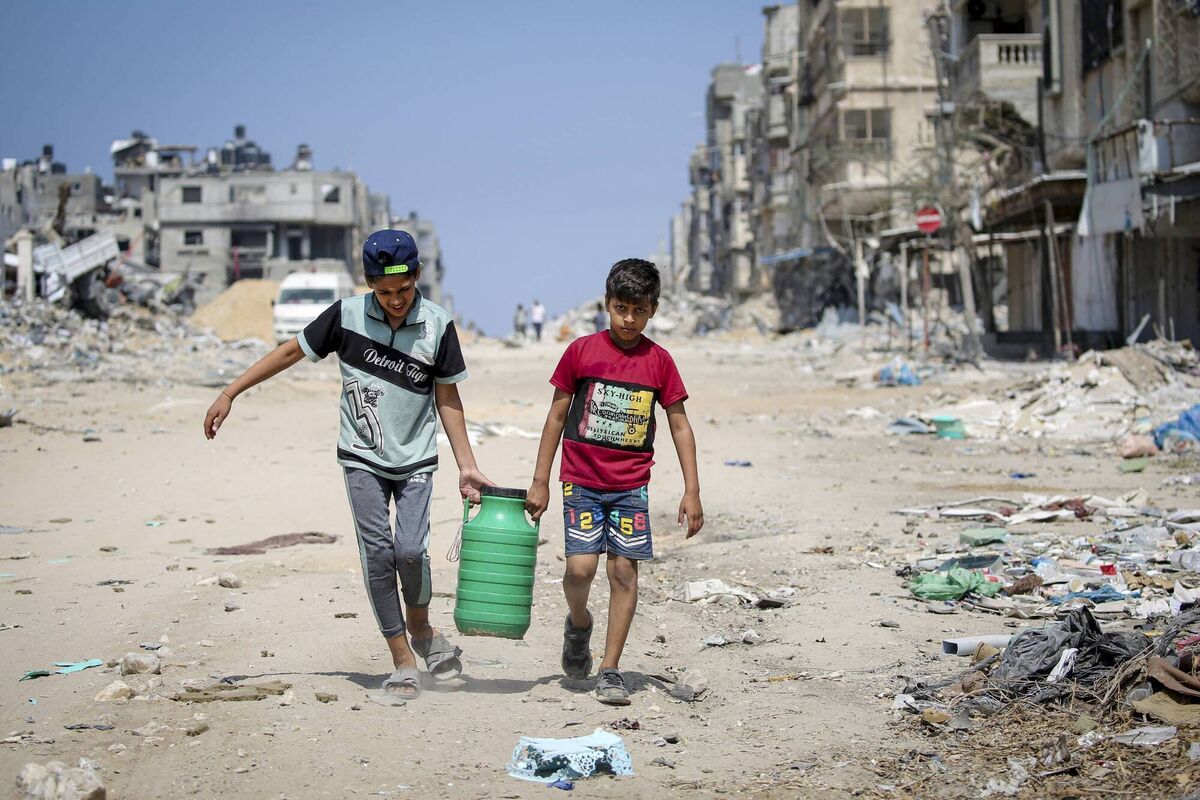
A resident of al-Zahra walks through the rubble of homes destroyed in Israeli airstrikes. The strikes hit around 25 apartment blocks in the university and residential neighborhood.
In Gaza, each day brings a new atrocity.
Just when we think the horrors unfolding cannot be surpassed, another even more appalling act is committed.
As the war entered its 200th day on Tuesday, more than 14,500 children and 9,500 women are among the dead, the Health Ministry in the Palestinian enclave said.
The ongoing assaults since last October have also injured 77,143 Palestinians, it added.
More than one million Palestinian women and girls in Gaza are facing catastrophic hunger, with almost no access to food, safe drinking water, functioning toilets, or running water, creating life-threatening risks.
Babies left to rot in incubators, toddlers bleeding out on hospital floors, families given 24 hours to flee their homes, elderly men stripped and cable-tied in bombed-out streets, hungry people killed waiting for aid deliveries, a heavily pregnant woman shot in cold blood; children shouldered with responsibilities and pain they should never have to carry.
The denial of aid is now a new tactic being used, with CT scanners, incubators for babies, ambulance stretchers, green sleeping bags, cooking utensils, and even education kits for children all included in a growing list of items considered dual-use and therefore prevented from entering the Palestinian enclave.
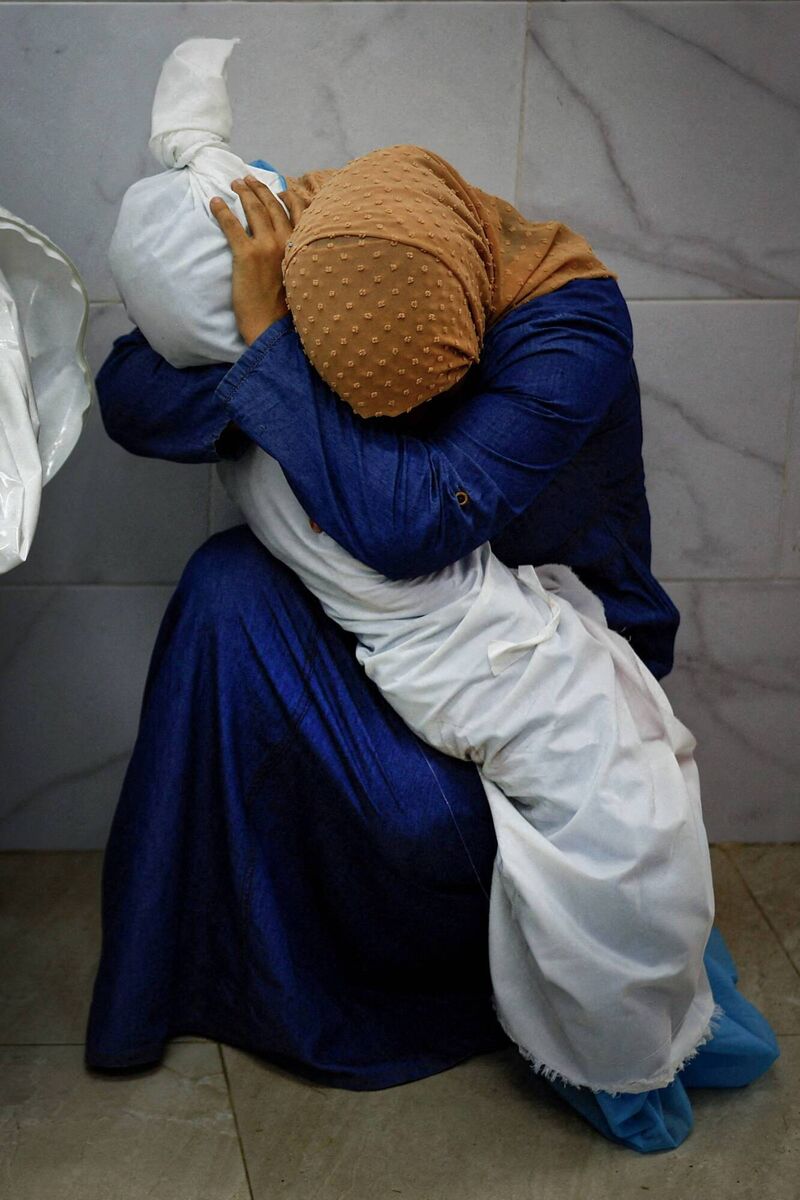
Images such as the one of Inas Abu Maamar cradling the shrouded body of her five-year-old niece stay with us, haunt us, but it is not humanly possible to be moved to the same extent for the 13,000 other children who have perished in Gaza. The relentless bombardment has dehumanised the innocent. The dead, the wounded, the orphaned, have been reduced to numbers.
If you went to one funeral every day for every child killed in Gaza, it would take you 39 years to attend them all.
With international media blocked from entering, Tánaiste Micheál Martin, visiting the region this week, warned that the world has not yet seen the true extent of what is being committed on the people of Gaza.
As the world becomes less focused on what is happening to a people trapped inside a strip of land the same size as Louth we cannot let ourselves become unperturbed. We must not allow ourselves to turn away, we cannot forget what has happened and we must constantly remind ourselves of what is still happening.
Just after dawn, thousands of armed Hamas fighters break through the Gaza border at various places, some using paragliders to storm Kibbutzim, military bases, and towns.
Those attending the Supernova music festival assume a barrage of rockets are simply fireworks or special effects, but terror quickly spreads as hundreds of attendees are shot while fleeing, others are subjected to sexual attacks and violence.
Around 1,200 people are killed, and some 250 others are taken hostage, in what is the deadliest day for Jews since the Holocaust. The next day, Israel declares war.
Already described as the largest open-air prison in the world, Israel further restricts more than 2 million Palestinians by ordering a complete siege of Gaza.
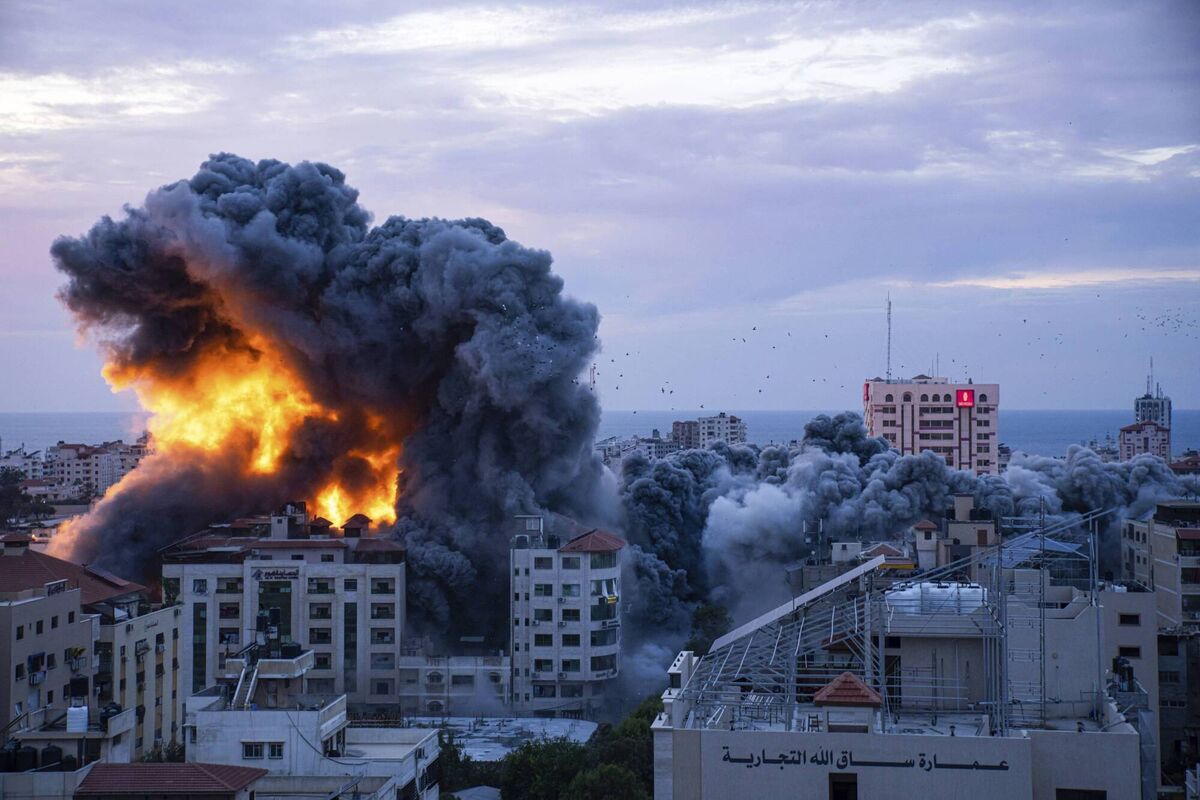
The enclave has been under a blockade for 16 years, but now Israeli Defense Minister Yoav Gallant announces that “no electricity, no food, no fuel” will be allowed to enter.
With a ground operation looming, 1.1m Palestinians are given a 24-hour notice to evacuate northern Gaza.
UN secretary general Antonio Guterres warns that moving so many people across a densely populated warzone to a place with no food, water, or accommodation is extremely dangerous.
Over the course of the next week Israel will push for the evacuation of the entire north, and many are forced to move multiple times in the coming months as the IDF continues its campaign.
In further leaflet drops the strip is divided up into a grid of hundreds of areas, which causes confusion around what areas are safe.
A new shocking threshold is crossed as a hospital is targeted in Gaza City.
At least 100 people are killed when al-Ahli Hospital is bombed. Both sides move to blame the other with Hamas blaming an Israeli airstrike. However, Israel claims the blast is the result of a stray rocket launched by Palestinian militants.
As Israeli troops launch a ground invasion amid continued aerial bombardment of the strip, Guterres issues a stark warning: "This is a moment of truth: History will judge us all."
Outlining the situation, he says the humanitarian system in Gaza is facing a total collapse with unimaginable consequences for citizens. About 500 trucks per day had been crossing into Gaza before the hostilities began, but now just 12 trucks a day are entering.
On the same day, Gaza is plunged into a communications blackout, creating an information vacuum as phone and internet connections are cut.
Scenes of desperate residents trying to save loved ones trapped beneath the rubble in a massive crater are broadcast across the world after Israel strikes the Jabalia refugee camp.
The attack kills more than 110 people and wounds hundreds more.
Guterres warns that “Gaza is becoming a graveyard for children”.
Patients, including premature babies, die when al-Shifa hospital loses electricity:
After surrounding and laying siege to the hospital for several days the IDF mounts a raid on the facility which is also sheltering thousands of displaced Palestinians in its grounds.
The Israelis say the hospital had been used to conceal an underground headquarters for Hamas fighters, which staff deny.
The first temporary ceasefire, in seven weeks of war in Gaza, comes into effect. But Israel’s prime minister Benjamin Netanyahu warns that the bombardment will resume to achieve “complete victory”.
Under the ceasefire agreement, Hamas will free at least 50 women and children of the more than 240 hostages they took during the October 7 attacks. The humanitarian pause will be extended by two more days on 27 November, but ends on December 1.
Overall, 105 hostages held in Gaza — Israeli and foreign nationals — and 240 Palestinians detained in Israeli prisons are released.
After being held for 50 days, Irish-Israeli girl Emily Hand is released.
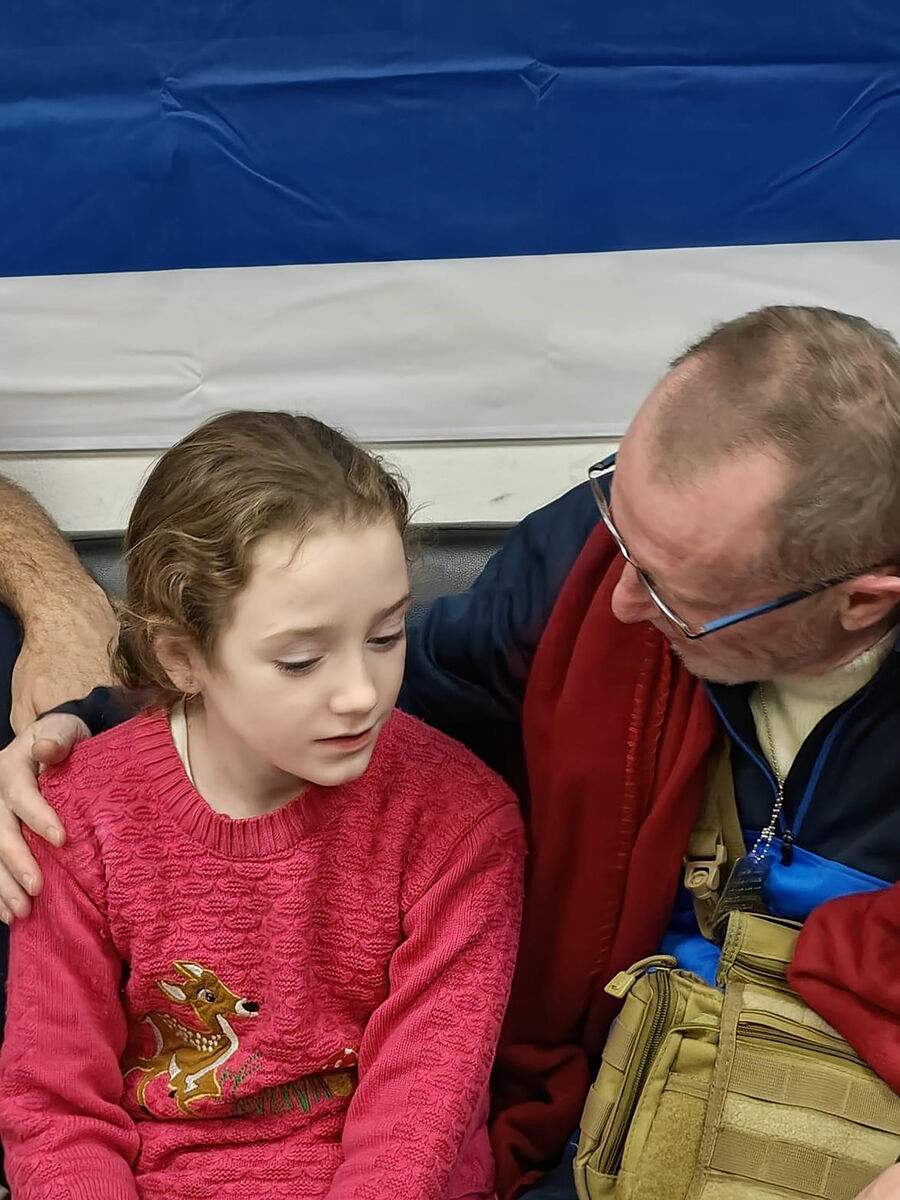
She had marked her ninth birthday as a hostage in Gaza, the day before she was reunited with her father, who initially believed she had been killed in the devastating attack by Hamas gunmen on southern Israel.
"We can't find the words to describe our emotions after 50 challenging and complicated days," her family say in a statement.
Israeli forces push south toward Khan Younis, an area which Palestinians had been previously encouraged to go for safety. Civilians are now told to head to the southernmost city of Rafah, on the border with Egypt.
Outlining the devastation so far, the Hamas media office says Israeli forces have dropped more than 50,000 tonnes of explosives on civilian homes, hospitals, schools, and other institutions, resulting in the complete destruction of 52,000 housing units, 69 schools, 121 government buildings, and 100 mosques.
A resolution demanding an immediate ceasefire in Gaza fails to pass in the UN after the US blocks it.
All other members of the Security Council vote in favour of the resolution, apart from the UK, which abstains.
With every passing day, Israel has intensified its campaign of air and ground assault on Gaza with devastating effect, writes Colin Sheridan in a special front page report.
In the last 48 hours, Palestinians have suffered the most brutal days of violence in the south, the very area the IDF urged besieged Gazans to flee to in order to be spared their unrelenting campaign of indiscriminate bombing in the north.
"Every other day has felt like a tipping point. We may now finally be there, only because, finally, there is literally nowhere else to go," Sheridan writes.
The three men appear shirtless waving a makeshift white flag in the air. But the internationally recognised signal of peace is not enough to save the three Israeli hostages in Gaza city, who are mistakenly shot dead by Israeli forces.
“Hamzah was all mine, he was my breath, and he was my soul, but certainly this loss and pain will not stop us from continuing on this path,” Al Jazeera bureau chief Wael Al-Dahdoudh says of his son, also a journalist, who is killed during an airstrike.
The UN International Court of Justice (ICJ) in The Hague hears that Israel has shown chilling and incontrovertible intent to commit genocide in Gaza, with full knowledge of how many civilians, as opening statements in case being brought by South Africa are heard.
The ICJ orders Israel to take measures to prevent and punish direct incitement of genocide in its war in Gaza but stops short of calling for a ceasefire.
The Palestinian ambassador to Ireland calls on the Government to join the genocide case against Israel following the ruling by the UN’s top court.
One in 20 people in Gaza are now dead or wounded as the number of fatalities reaches the 30,000 mark. Another 70,000 people have been wounded according to the Gaza Health Ministry.
With warnings now sounding that famine is imminent, the US military carries out its first airdrop of aid into Gaza.
It comes just two days after at least 112 people were killed and more than 280 wounded as they waited for an aid delivery in Gaza City. Gaza health authorities say Israeli forces shot dead people as they gathered around food trucks, but the IDF say victims had been trampled or run over.
Global leaders express outrage as an Israeli airstrike kills seven World Central Kitchen workers delivering aid in Gaza. The team had clearance from the Israeli military.
President Joe Biden warns Netanyahu that he will reassess US policy if Israel does not immediately address humanitarian conditions and protect aid workers. Israel says it will open more aid routes into Gaza.
CONNECT WITH US TODAY



Be the first to know the latest news and updates