EU embraces comprehensive new AI rules
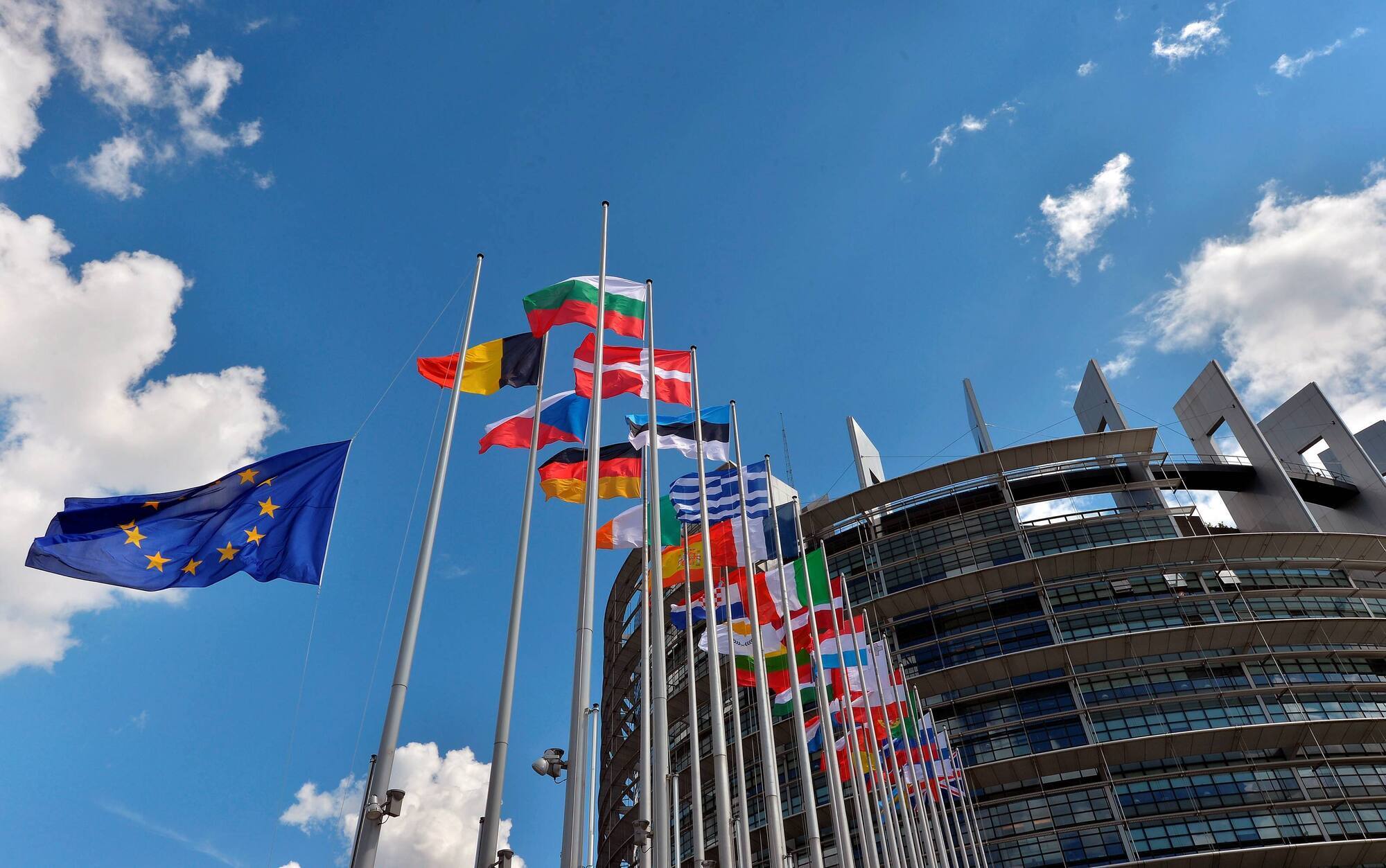
European lawmakers during Tuesday’s debate acknowledged that there was still significant work ahead. File photo: Patrick Hertzog/AFP/Getty Images
The European Union has moved a step closer to enacting the most comprehensive guardrails on the fast-developing world of artificial intelligence.
Members of the European Parliament on Wednesday endorsed a provisional agreement on artificial intelligence (AI) rules, the world’s first legislation on a technology used in banking, internet-connected devices, smart homes and cars.
The European Parliament and EU countries had clinched a preliminary deal in December after nearly 40 hours of negotiations on thorny issues such as governments’ use of biometric surveillance and how to regulate foundation models of generative AI such as ChatGPT.
In the absence of any legislation from the US, it could set the tone for how AI is governed in the western world. But the legislation’s passage comes as companies worry the law goes too far and digital watchdogs say it doesn’t go far enough.
“We’re laying out a common European vision for the future of this technology, one where AI is more democratic and safe,” MEP Eva Maydell said in parliament on Tuesday, “but also, I would hope, more competitive — that is if it’s done right.”
The AI Act is intended to address concerns about bias, privacy and other risks from the rapidly evolving technology. The legislation would ban the use of AI for detecting emotions in workplaces and schools, as well as limit how it can be used in situations such as sorting job applications.
It would also place the first restrictions on generative AI tools, which captured the world’s attention last year with the popularity of ChatGPT.
However, the bill has sparked concerns in the three months since officials reached a breakthrough provisional agreement. As talks reached the final stretch last year, the French and German governments pushed back against some of the strictest ideas for regulating generative AI, arguing that the rules will hurt European start-ups like France’s Mistral AI and Germany’s Aleph Alpha.
Civil society groups such as Corporate Europe Observatory raised concerns about the influence that Big Tech and European companies had in shaping the final text.
“This one-sided influence meant that ‘general purpose AI’ was largely exempted from the rules and only required to comply with a few transparency obligations,” watchdogs, including the observatory and LobbyControl, wrote in a statement referring to AI systems capable of performing a wider range of tasks.
A recent announcement that Mistral had partnered with Microsoft raised concerns from some lawmakers. Kai Zenner, a parliamentary assistant key in the writing of the act and now an adviser to the United Nations on AI policy, wrote that the move was strategically smart and “maybe even necessary” for the French start-up, but said “the EU legislator got played again”.
US and European companies have also raised concerns that the law will limit the bloc’s competitiveness.
“With a limited digital tech industry and relatively low investment compared with industry giants like the United States and China, the EU’s ambitions of technological sovereignty and AI leadership face considerable hurdles,” wrote Raluca Csernatoni, a research fellow at the Carnegie Europe think tank.
Lawmakers during Tuesday’s debate acknowledged that there was still significant work ahead.
CONNECT WITH US TODAY



Be the first to know the latest news and updates