Kevin Bakhurst urged to 'come clean quick' on RTÉ exit packages
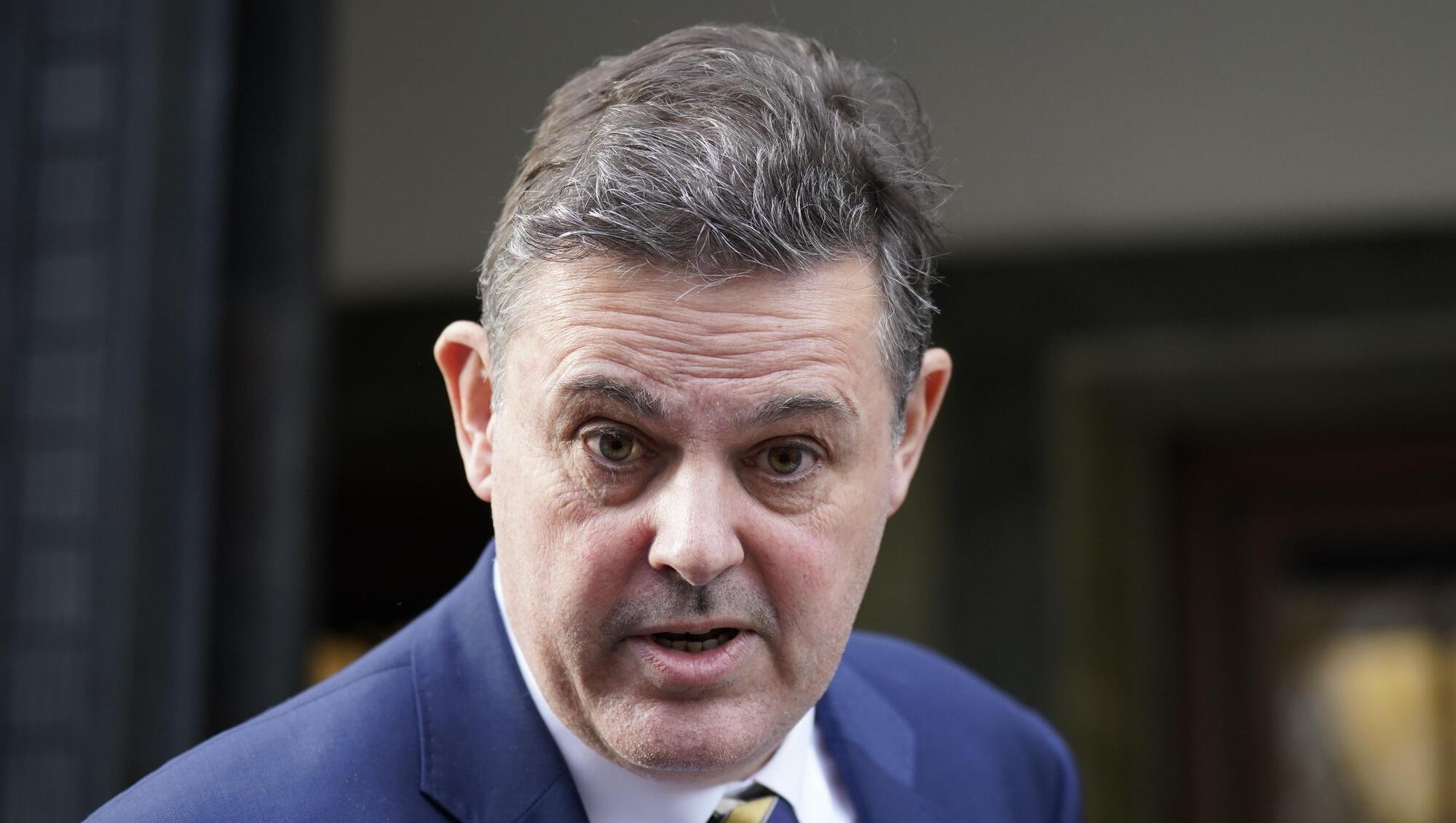
RTÉ director general Kevin Bakhurst following a meeting with Media Minister Catherine Martin on Monday. Ms Martin said she told Mr Bakhurst in the meeting of her 'concern and frustration' at the ongoing row at the broadcaster. Picture: Niall Carson/PA
RTÉ director general Kevin Bakhurst has been urged to "come clean quick" over the details of exit packages paid to former staff with Government ministers saying the matter has become "extremely corrosive".
In a day of recriminations between RTÉ and the Government, Mr Bakhurst claimed politicians had put him "in a position where I’m actually being asked by elected officials to break the law" by revealing details of confidential agreements with former staff.
Media Minister Catherine Martin said she told Mr Bakhurst in a meeting of her “concern and frustration” at the ongoing row at the broadcaster. She said she has concerns about the transparency of issues surrounding exit payments.
A number of Cabinet ministers have privately said Mr Bakhurst should never have allowed a confidentiality clause to be signed by the broadcaster. It formed part of the agreement between the station and former chief financial officer Richard Collins to depart RTÉ.
One Cabinet source said the idea that such a clause was agreed is “appalling” and it would be in Mr Bakhurst’s interest to “come clean quick” about outstanding information on exit packages.
A second Cabinet source expressed dissatisfaction at Mr Bakhurst’s handling of the most recent revelations, pointing out that the director general has “been beating the transparency drum” since he took up the role last July.
They added: “He should have revealed the details that we have only learned in recent days, months ago. He was wrong not to have done that given the sensitivities.”
On Tuesday, the Tánaiste questioned why RTÉ signed a number of confidentiality agreements with former senior executives as they left the broadcaster.
Speaking on his way into Cabinet, Micheál Martin said that he believed there needed to be “full transparency” on pay and exit packages as RTÉ receives funding through the taxpayer.
“My general principle is that in any public sector area, where taxpayers money is involved or indeed the public’s money is involved in, in this case through the licence fee and taxpayers money combined, there should be full transparency in relation to matters of pay and exit packages,” Mr Martin said.
“Clearly now it seems that confidentiality legal agreements were entered into and contractual agreements and that is difficult to contravene those.
“Maybe the question should be asked as to why they were entered into in the first place.”
Following a meeting with Ms Martin on Monday, Mr Bakhurst said he would “absolutely not” be resigning and he stands entirely by what he has done at the broadcaster since he took up his role.
Earlier, Higher Education Minister Simon Harris called on Mr Bakhurst to explain why Mr Collins secured a confidentiality agreement on his exit payment.
Public Expenditure Minister Paschal Donohoe said at the “heart of all” of the matter is corporate governance.
He said transparency is needed regarding any arrangements or decisions that have been made on exit packages. He said the latest revelations have been "extremely corrosive".
Both ministers backed the director general to remain in his position but still want him to explain the logic behind some of the exit packages which were described as causing "real concern”.
Ms Martin confirmed she asked Mr Bakhurst to ask former executives if they would waive the confidentiality clauses in their exit packages.
She said: “I have asked him to explore all possible options, up to and including, I suggested speaking to the individuals in question themselves to see if they could waive the rights because there are two parties to the agreement and I think that is worthy of consideration. He has agreed to that too.”
Ms Martin also said she has called on RTÉ to cap future golden handshake payments to senior staff members. In an interview with RTÉ's , Mr Bakhurst said “there was absolutely no grounds” to sack Rory Coveney and defended the decision to provide the former strategy director with an exit payment upon his resignation.
He said: “If you can’t fire someone in a semi-state, you have to find another way of exiting them from the organisation in a way that provides value to licence fee payers."
He again refused to give the details of how much Mr Coveney received but said the amount paid out was also “considerably less” than what Mr Coveney would have received under an RTÉ voluntary exit programme. The director general confirmed that Mr Coveney was never asked to leave the station without an exit package despite admitting that , which had a revenue loss of over €2m and which Mr Coveney led, was a “disaster”.
On the confidentiality clause with Mr Collins, he said it is “standard in mediation processes”.
He said he is seeking updated legal advice on how far he can push transparency on the details of exit payments.