Nothing fire service could have done to prevent deaths of Stardust fire victims, says expert
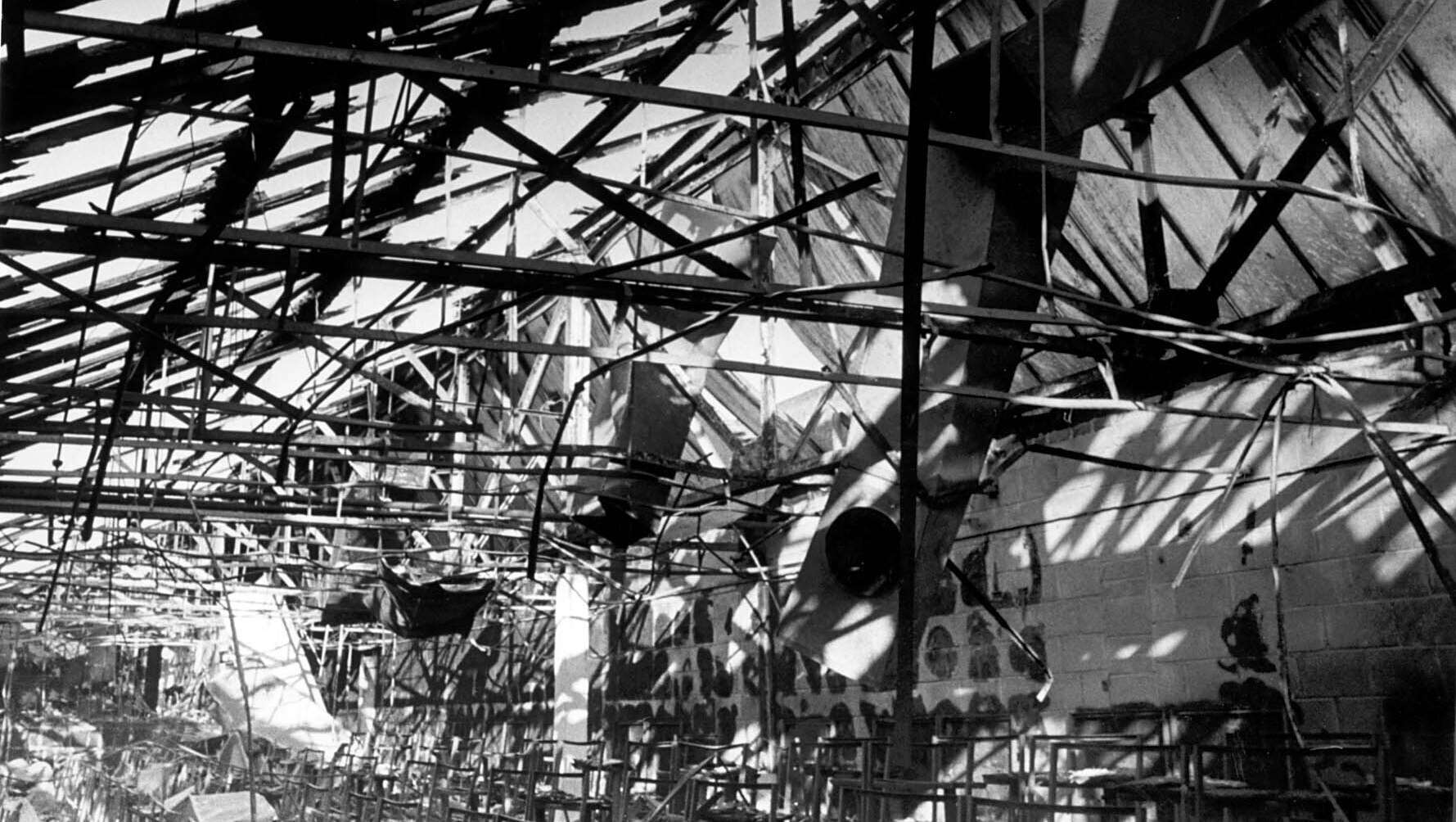
The aftermath of the Stardust fire in February 1981, in which 48 people died. File picture: Donal Sheehan/Irish Examiner Archive
There was nothing the fire service could have done to prevent the deaths of the victims of the Stardust fire on the night, despite the first appliance arriving less than 10 minutes after the initial 999 call made from inside the club, fresh inquests have heard.
Furthermore, the task facing the first firefighters on the scene was “unprecedented” and something which was “extremely difficult to plan for”.
Giving evidence on Wednesday, expert Mark Ross said: “I don’t think anything done before or during that incident would’ve changed the outcome. Can I be certain? No. But I think it’s highly unlikely.
“You could liken it to something like Grenfell, turning up to that.”
Separately, another expert told the 13-person jury that numerous bylaws related to the operation of the Stardust were not complied with, including matters related to exit doors and fire safety measures at the premises.
Having now sat for over 100 days, the fresh inquests for the 48 people who died is nearing its conclusion with the testimony of fire experts as to the cause of the fire, the emergency response and the evacuation of the building.
In the early hours of February 14, 1981, a fire swept through the ballroom in North Dublin just at the close of a disco dancing competition. The average age of the deceased was just 19, and new inquests were ordered after sustained campaigns by families for fresh inquiries into the disaster.
Looking at the response from firefighters who rushed to the scene, Mr Ross — who worked for London Fire Brigade for 28 years — said within a few minutes, the seriousness of the fire was recognised in the control room on Tara Street.
He said when the first crews arrived, the main priorities would have been to get fire fighting apparatus in place, a steady water supply and begin rescue attempts for those trapped inside.
"It was a sound tactic in my opinion,” he said. “I don’t think I’d have done anything differently to that. They did the best they could with those limited resources. It was clearly a challenging situation. That’s an underestimate, really, for what they faced.”
The jury heard how at least three people were rescued from one set of toilets and five from another near the front of the building. Just a few weeks before, metal plates had been welded to block access to the windows of these toilets. It was claimed this was done to prevent drink or weapons being passed through the windows to those inside.
Mr Ross said the firefighters in the building would have faced difficult choices about whether to try to remove someone from the premises or look for someone who perhaps had a better chance of survival.
“Making assessments on a casualties’ condition by sight or touch alone is extremely difficult,” he said. “Initial condition may not give you all the information you need.”
He said, with hindsight, he would have recovered the two bodies that were found at the top of the stairs near the main door of the premises. The inquests have heard these were not immediately removed from the Stardust when discovered. But, Mr Ross added, he could understand why the decision was made not to.
Under questioning by counsel Mark Tottenham, for the coroner’s team, Mr Ross was asked if it was likely that most of those who died in the Stardust had already died by the time of the arrival of the first appliance at 1.51am. The first emergency call from within the Stardust to report a fire had come at 1.43am.
“From what I’ve reviewed, I think it is likely,” he said.
Within 23 minutes of the arrival of the first fire appliance, the officer in command at the scene switched from a rescue operation to a recovery one as it was considered there may not be anyone else alive in the Stardust at that point.
Later, fire engineering expert Martin Davidson began his evidence. He said the carpet tiles used on the wall of the Stardust did not have the required “surface spread of flame” rating that was required of it by the chief fire officer.
At the time, there were no national building regulations in Ireland and the bylaws in individual jurisdictions would have applied. In the case of the Stardust, it was to adhere to the bylaws of Dublin Corporation.
Mr Davidson said of the 26 bylaws deemed relevant to the Stardust, 16 of them were not complied with. This ranged from the exit doors not being made available to the public at all times when they were on the premises and no fire drills ever being held at the Stardust.
However, he did say with the exception of the entrance foyer, the Stardust had a “good design”, with an adequate number of exits and reasonably good access to the building.
“Which leads to the question as to why so many people died in the fire,” he concluded on Wednesday afternoon.
“There were a number of issues and the means of escape strategy was undermined by a number of factors."
Mr Davidson continues his evidence on Thursday.

CONNECT WITH US TODAY



Be the first to know the latest news and updates