Government to roll out more average-speed cameras amid rise in tragic road accidents
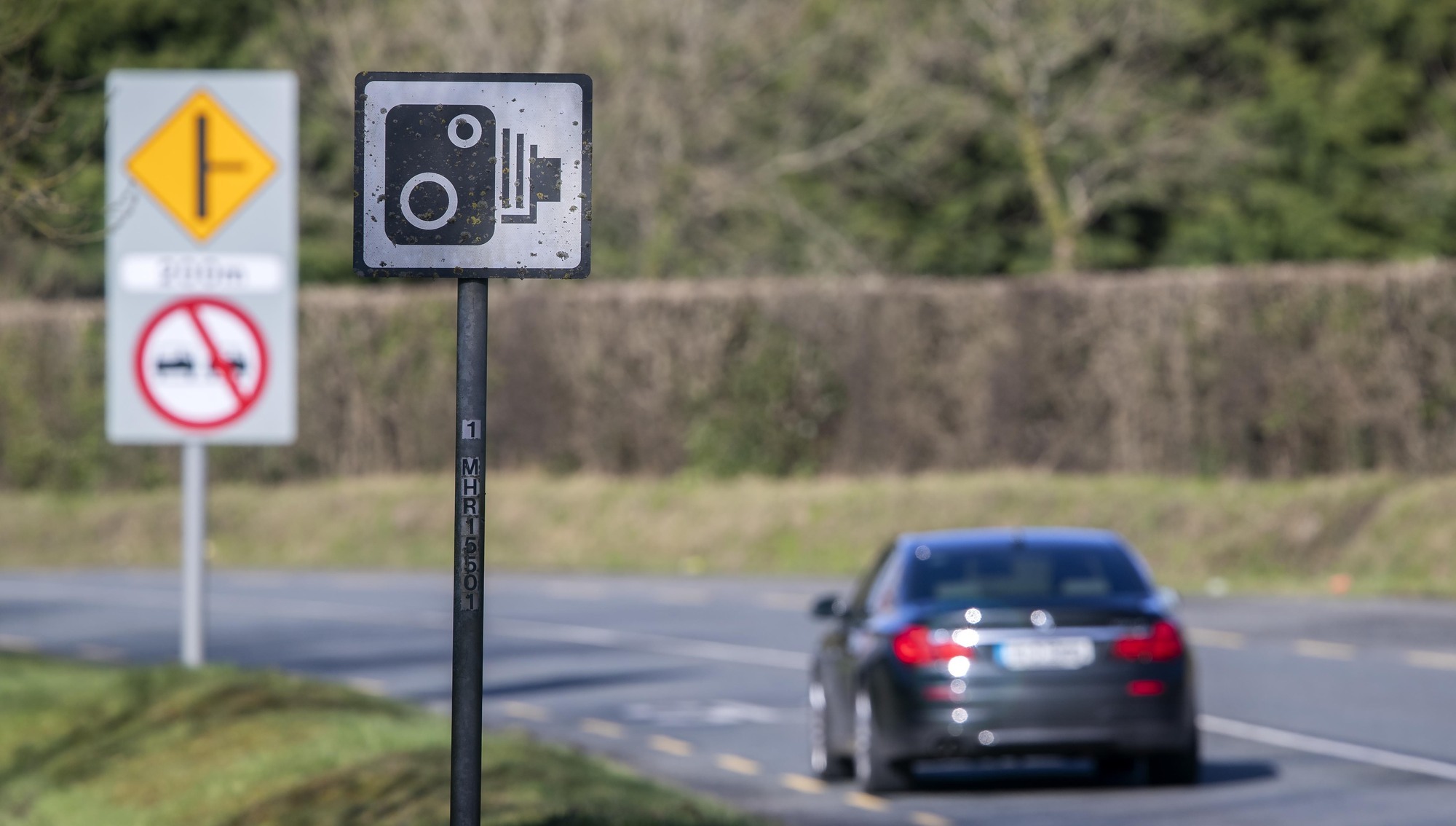
Average-speed cameras track how long it takes to travel between two set points on a road. Picture: Colin Keegan/ Collins
The Government is due to roll out more average-speed cameras across the country next year, Transport Minister Eamon Ryan has said.
Mr Ryan said he was planning to increase spending on road safety measures, following a high number of tragic accidents across the country over the last year.
So far in 2023, there have been 181 fatal collisions on Irish roads, an increase of 29 from 2022.
"One of the initiatives I'm going to be looking for... is a significant increase in the road safety spending,” Mr Ryan said.
"We've already earmarked about €27m, which we're looking to roll out more average speed cameras.
“We're looking to roll out a number of those in other locations, particularly on national primaries, which aren't segregated, where there's a real safety issue.”
When asked how many average-speed cameras — which track how long it takes to travel between two set points on a road — will be rolled out, Mr Ryan said a final figure had not been decided upon by the Department of Transport.
“We don't have the exact number yet, we only have one at the moment so I'd be looking at multiplying that... It'll be a high single figure,” Mr Ryan said.
"We're going over to Scotland to look at their use of them. They, I think, have a good experience, we have a lot in common with Scotland.
"It'll be a slow start but next year we will start rolling out."
Currently, the only average-speed camera in operation is on the M7, between Nenagh and Birdhill.
Mr Ryan also said driver behaviour had become worse since the covid-19 pandemic, citing particularly the increased number of people driving in bus lanes.
Alongside the rollout of average-speed cameras, Mr Ryan said road safety cameras would also enforce the proper use of bus lanes.
“Behaviour has disimproved through and after covid. So using a lot of that camera technology to enforce use of bus lanes, that will help in terms of speed, and also speed management in the city urban areas,” Mr Ryan said.
"In the urban areas, there'll be cameras looking at speed, but also just people within bus lanes."
Earlier this year, junior minister Jack Chambers announced plans to reduce baseline speed limits across many Irish roads.
As part of the plan, speed limits on national secondary roads will be lowered to 80km/h from 100km/h, while rural roads will be reduced from 80km/h to 60km/h. In cities, towns, and urban areas, speed limits of 30km/h have been introduced.
National Slowdown Day also took place on Friday, with Gardaí reporting one driver reaching 145km/h on the M8 at Ballinglanna.