Irish doctor in Morocco says city areas 'got off lightly' compared to devastation in Atlas Mountains
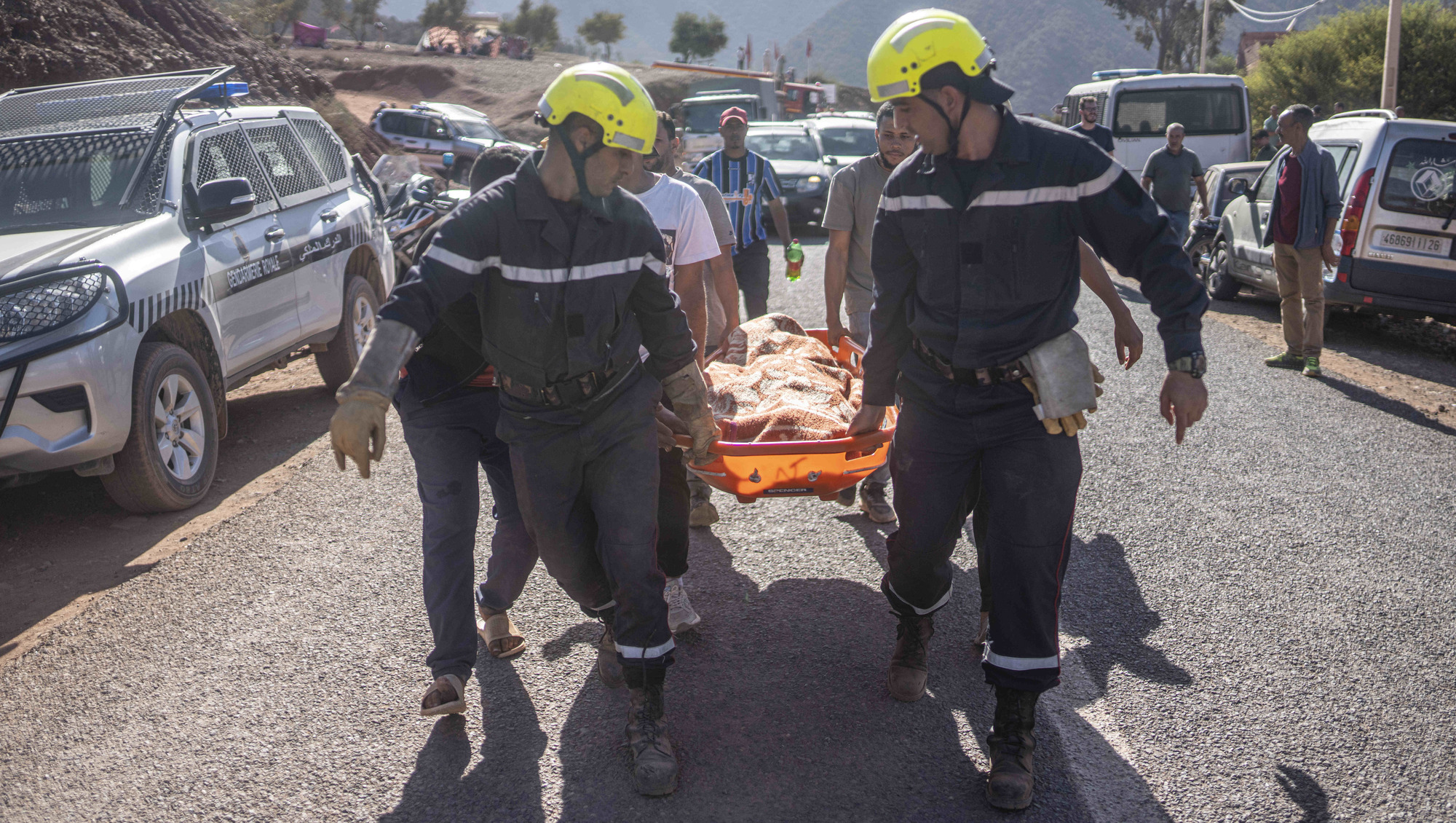
Members of rescue teams carry the body of a victim of an earthquake in Ouargane village, near Marrakech, Morocco, on Saturday. Picture: APMosa'ab Elshamy
An Irish doctor based in Morocco said Marrakech had "got off lightly" compared to residents in the Atlas Mountains following the earthquake on Friday night.
Moroccan soldiers and aid teams in trucks and helicopters battled on Monday to reach the remote mountain towns devastated by the 6.8 magnitude earthquake that killed more than 2,400 people, with survivors desperate for help to find loved ones feared trapped under the rubble.
The United Nations estimates 300,000 people were affected by the quake, made more dangerous by its relatively shallow depth.
Dr Clare McCaughey, who is based in Marrakech, said residents in the area of the Atlas Mountains “are facing devastation” following the earthquake.
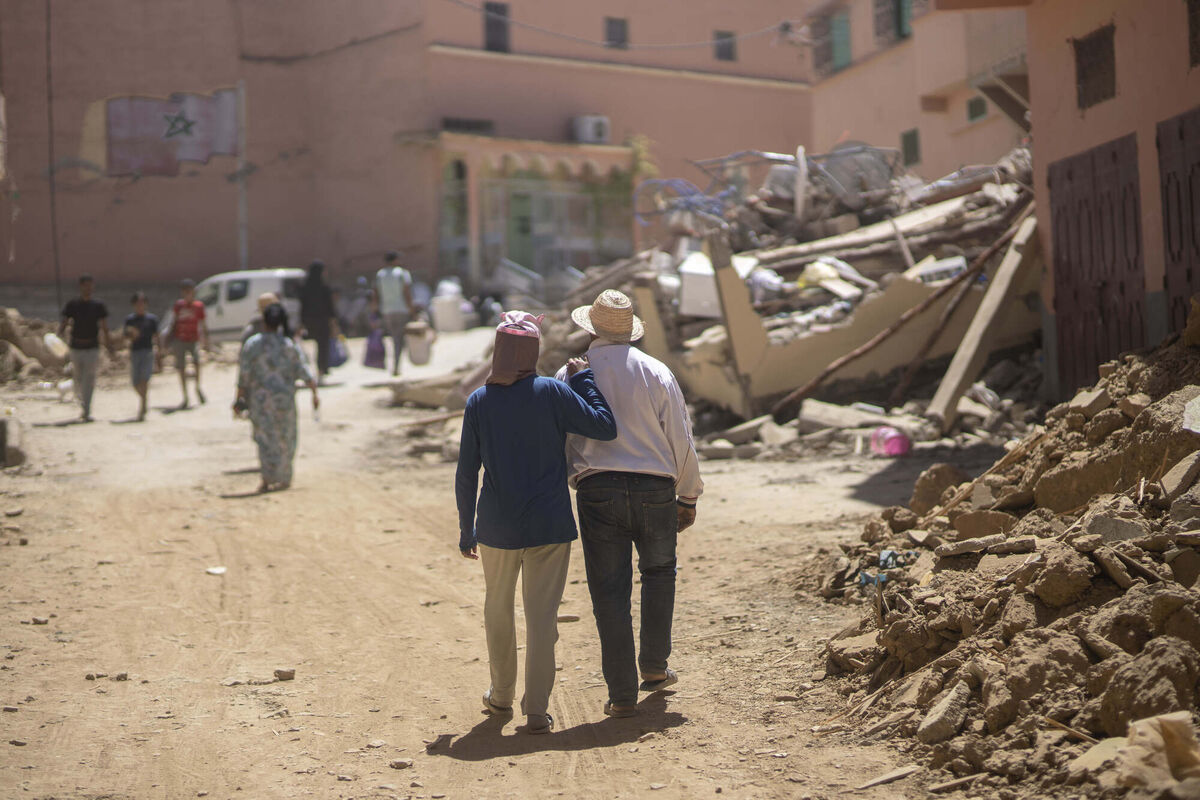
“Up there you have got very, very poor quality housing. Not much more than mud brick [houses]. People have houses that just went straight down," she told the on Newstalk on Monday.
"I was talking to a friend up there right now and despite the best efforts on the ground he is saying that he is not seeing a whole lot of wounded people. It is basically they died or they got out on time. Because it was that sudden, everything shook and the houses came down.”
Dr McCaughey said the aftershocks of the earthquake are still being felt in Marrakech.
“There is still fear about that. People in the city not wanting to go back to their houses.”
She also said people were worried about the potential for aftershock and damage to their homes. She said the authorities in Morocco had worked very quickly to assist impacted persons and areas.
“There is a big military response and they have a big major incident protocol in place. No one has ever dealt with anything on this scale before, of course, and never expected to but that is kicking in.
"The military were right up there in the mountains within the first hour or two. It is very time-sensitive because there are people who can still be found and helped and that needs to happen.”
Meanwhile, Irish Travel Agents Association chief executive Clare Dunne told the show most Irish people tend to visit Agadir rather than Marrakech.
“As yet we have no reports of any Irish people being injured or caught up in it. I do have one of my own staff on holiday in Marrakech and she is safe and well.
"Obviously, it is very subdued with the three days of mourning. For our own part, we want to send our condolences to all of our colleagues and friends and partners in Morocco who are still working.”
Ms Dunne said airports in Morocco remained open and flights were still operating to the country.
“I was talking to the managing director of Sunway this morning and he said they haven’t as yet had any request to change or cancel holidays.
"People who were due to go on Saturday went. Everything is operating as normal in the hotels and the resorts.”
Meanwhile, Foreign Affairs Minister Micheál Martin announced a contribution of €2m in emergency aid which will support "immediate and urgent humanitarian needs on the ground".
The funding will support the work of the International Federation of the Red Cross , the Moroccan Red Crescent Society and local communities most affected by providing emergency shelter, clean drinking water and food.
It will also help provide mobile health care including psychological support as well as hygiene centres.
CONNECT WITH US TODAY



Be the first to know the latest news and updates