Emissions from Greek wildfires equivalent of 2.3m barrels of oil, data shows
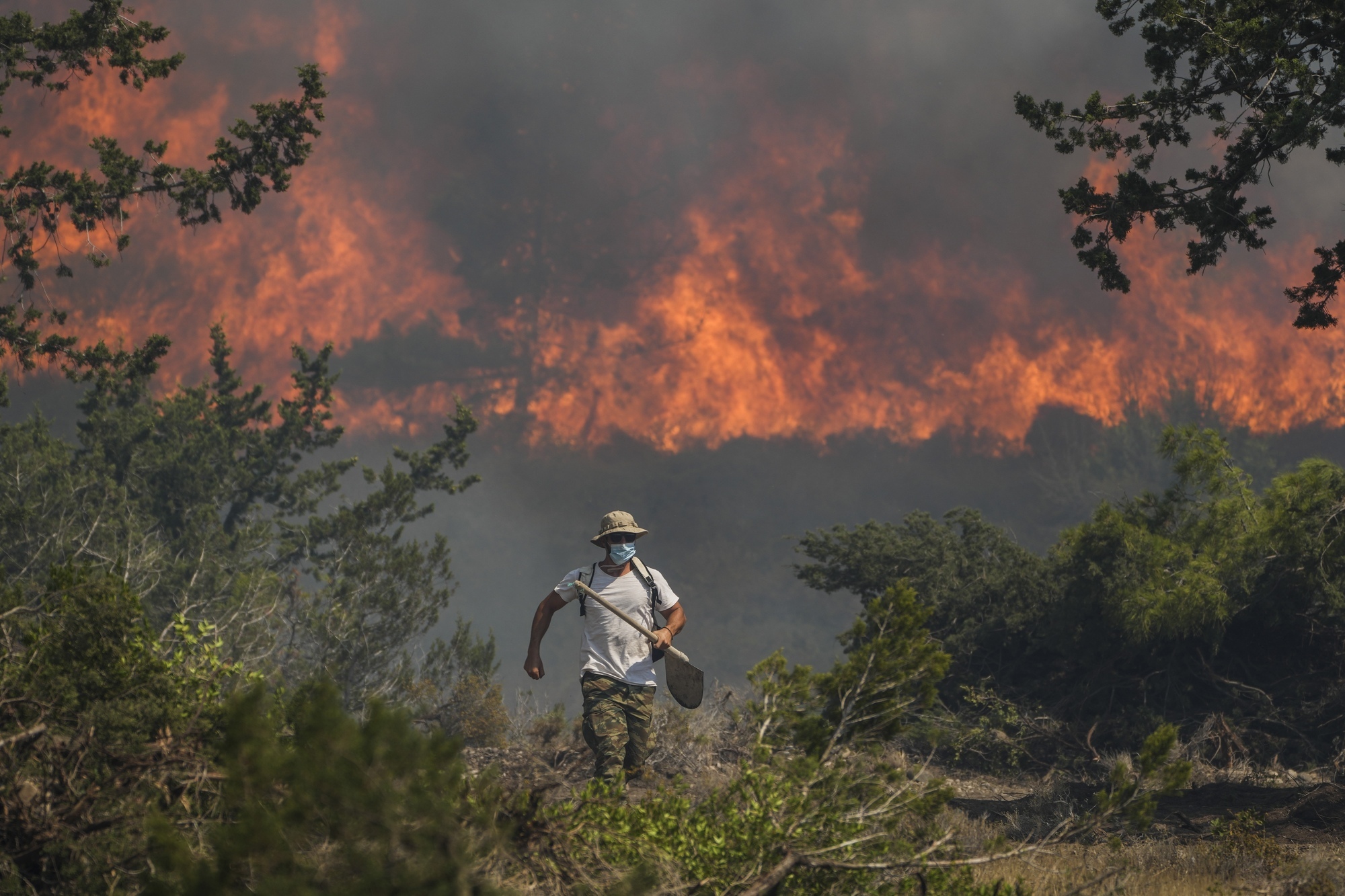
According to the EU's Copernicus Atmosphere Monitoring Service, the emissions of the wildfires that burned through islands such as Rhodes have reached record levels, with an estimated total of one megaton of carbon emissions so far in July, almost doubling the 2007 record for the same month. Picture: AP/Petros Giannakouris
Emissions from the wildfires that have ravaged parts of Greece in recent weeks are the highest in two decades — similar to more than 220,000 petrol cars driven for a year.
According to the EU's Copernicus Atmosphere Monitoring Service (Cams), the emissions of the wildfires that burned through islands such as Rhodes have reached record levels, with an estimated total of one megaton of carbon emissions so far in July, almost doubling the 2007 record for the same month.
Using a calculator from the US Environmental Protection Agency, a megaton — which is one million tonnes or a billion kg — of emissions would be similar to the pollution from 222,500 cars driven in a year, more than 500,000kg of coal burned, or 2.3 million barrels of oil consumed.
Poor air quality from the wildfire emissions will drift through the region, Cams warned.

Particulate matter — all solid and liquid particles suspended in air, such as dust, pollen, soot, smoke, and liquid droplets — and other pollutants associated with wildfire emissions have shown smoke transported southward across the Mediterranean, confirmed by visible imagery of the smoke plumes from different satellites, Cams said.
The wildfires will affect the air quality downwind of the fires both locally and around the wider Mediterranean region and will require tracking to mitigate the health impacts, the organisation warned.
Cams senior scientist Mark Parrington said: “The current ongoing heatwave affecting Greece and the Mediterranean has increased the wildfire risk which is reflected in the high observed intensity of the wildfires around the Mediterranean.
"With several more weeks left in the summer, we will continue to closely monitor the fire emissions and potential air quality impacts across the region.”
Meanwhile, climate-related disasters in Asia will increase in what is already the most vulnerable continent on the planet, the World Meteorological Organisation (WMO) has said.
In 2022, the continent "ricocheted between droughts and floods in 2022, ruining lives and destroying livelihoods", it added.
In its State of the Climate in Asia report, the WMO said Asia was warming faster than the global average, with the warming trend on the continent in 1991–2022 almost doubling the 1961–1990 period.
The report said there were 81 weather, climate and water-related disasters in Asia in 2022, of which more than 80% were flood and storm events.

More than 5,000 people died and more than 50 million people were directly affected, with $36bn in economic damages, the WMO said.
WMO secretary general Prof Petteri Taalas said: "In 2022, many areas in Asia experienced drier-than-normal conditions and drought. China, in particular, suffered prolonged drought conditions, which affected water availability and the power supply. The estimated economic losses from the drought affecting many regions in China were over $7.6bn. Pakistan, by contrast suffered disastrous flooding."
Most glaciers in the High Mountain Asia region suffered from intense mass loss as a result of exceptionally warm and dry conditions in 2022, he added.
"This will have major implications for future food and water security and ecosystems,” he said.
Asia's average temperature in 2022 was the second or third warmest on record and was about 0.72C above the 1991–2020 average, which itself was about 1.68C above the WMO 1961–1990 reference period for climate change.
CLIMATE & SUSTAINABILITY HUB