Mick Clifford: Little-known rents law could finally see Carrickmacross get past colonial hangover

The McBride brothers Jim (centre) and Colm who won their right to buyout the fee-simple interest in their hotel the Shirley Arms Hotel in Carrickmacross in Co Monaghan. Picture: Pat Byrne
Some years ago, Philip Shirley, who descended from a family well favoured by Queen Elizabeth I, was seen riding his mount down the main street in Carrigmacross, Co Monaghan.
Shirley’s family were gifted south Monaghan by the queen back in the 16th century, when it was the royal prerogative to hand out land in the colonies to favoured earls.
The Shirleys have been in Carrigmacross since, using it as a retreat from their main residence in the UK. Philip retains a country pile at Lough Fay house, set on 1,000 acres, near the town.
As his mount trotted from the north end of the main street, the absentee landlord would have observed the contrasting fortunes of the businesses on either side of the thoroughfare.
To the left of him stood a row of premises typical in an Irish town: Pubs, shops, the odd bank, all owned by, or rented from, local people.
To the right, though outwardly similar, he was, and still is, master of practically all he surveyed, the owner of the leases to more than two dozen premises on the west side.
While other absentee landlords took flight after independence, the Shirleys held tough, casting a long shadow over the commercial development of a town that was trying hard to shake off its colonial past.
Last month, a major step forward was taken in getting past the past in Carrigmacross.
Following a four-day hearing, the country registrar in Monaghan granted a local hotel owner the right to buy out the lease on his property, which the Shirley family have held since the premises was first built in the 1830s.
Since he acquired the Shirley Arms hotel in 2000, Jim McBride had been paying ground rent to the family’s company, JES Holdings. The 99-year lease on the premises was due up in 2026.
What has been a nominal sum could then be hiked to a commercial rate, making the business unaffordable.
But thanks to a new law enacted in 2019, McBride acquired the right to buy out the lease.
He thus became the first tenant to avail of the new law, which in turn was enacted following a Supreme Court ruling that affected one of the McBride’s neighbouring tenants, Gus O’Gorman, proprietor of the local Supervalu store.
“I hope it will clear the way for others in the town to buy out their leases,” said McBride.
"You might ask why we’re still dealing with something like this, now in 2023."
Ground rents are largely, but not exclusively, a hangover from colonial times. Large landowners owned the ground on which properties were built. Sometimes the tenant built on it, others the landlord leased property for the long term, often up to 100 years, occasionally more.
Anybody who subsequently bought a property, domestic or commercial, thus had a leasehold rather than freehold interest. In some cases, the ground rent was payable to local authorities, and in others to the developers of a property.
In 1978, a new act brought in the right for leaseholders to buy the freehold interest under certain conditions.
“The real thinking behind the law was that if a tenant put up the buildings on the land, and all the landlord had was the ground, then the tenant had a major interest,” according to Professor John Wylie, of Cardiff University, an expert on land law.
Despite the ground rent often being a nominal sum, the situation has had a real impact on homeowners and businesses. For instance, many banks will not give loans on a leasehold property that has less than 70 years to run.
Homeowners can eliminate this problem by acquiring a freehold under the 1978 act. This is done easily when the freehold is owned by a local authority, but if a private landlord doesn’t want to play ball, the situation can get very sticky.
In this respect, there have been contrasting fortunes in different parts of the country.
For instance, Castlebar in Co Mayo, for instance, was largely owned by the family of the notorious Lord Lucan. In that case, homeowners and commercial operators have, over the years, bought out the leases from Lucan’s estate.
However, in Carrigmacross, the Shirley family have always resisted selling on, presumably calculating that they are better off in the long term to hold on to the property.
The Shirley family got lucky when they married into the family of Lord Essex, who was one of Elizabeth I’s favourite earls. The queen had awarded the earl the Barony of Farney, which took in south Monaghan.
But he didn’t produce an heir, so the barony was split between his two sisters, who married into the Shirley and Bath families. The split ran down what is now the Main St of Carrigmacross, with the Shirleys owning all to the west, the Baths taking the east.
The town was built in the 1800s and both families continued to prosper in what was granted at her majesty’s pleasure.
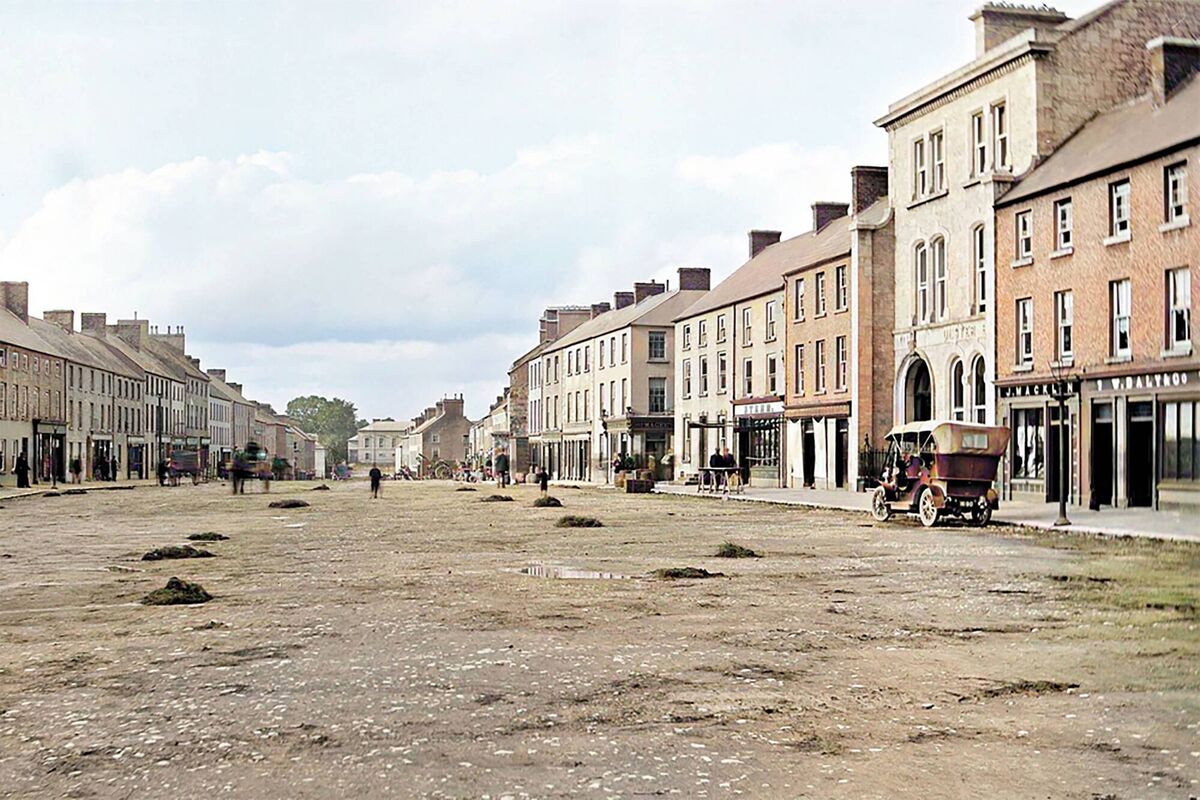
The Shirleys say that they constructed the west side, but, one way or the other, they owned, with a few exceptions, the leases to these properties.
In the early years of the last century, the Bath family sniffed the winds of change, sold up, and returned to the UK.
The Shirleys hung onto their property, so as a result, one side of Carrigmacross is owned by the usual variety of businesses, while the title to the premises on the other side is owned by the Shirleys.
From 1959, a number of leases began coming up for renewal, and ignorance or bad advice ensured that most traders opted for shorter-term tenures.
Some of those also had a five-year rent review built into the contract.
One local estate agent noted in recent years that before the property bubble, the Shirleys were pulling in at least €6,000 a week from rents.
One of the results of the anomaly is that the tenants on the west side of the street were reluctant to invest in their businesses when their future was so uncertain.
This was alluded to in the Dáil in 2005 by local TD Paudge Connolly, who told the House that some leases in the town had been hiked enormously after coming up for renewal in 1991.
“In one case, that of the former post office, the rent soared from £35 a year to £10,500 a year, despite the tenants having carried out renovations to the property,” he said.
"Many Shirley leaseholders in Carrigmacross are now afraid to spend money on their premises because they are unsure whether any improvements would be for their own benefit, or for that of the Shirley estate.
"Stagnation has been caused in Carrickmacross, which is a good market town. Then tenants live and work in the town, but are unsure whether to develop their businesses.”
The Shirleys' agent, Stephen Gunn of Property Partners in Dundalk, rejects the idea that development has been stifled by the Shirleys’ interests, pointing to significant investment in the town.
“Any properties that have become vacant have been substantially refurbished by the company [JES Holdings] and all the overhead accommodation owned on Main St has now been refurbished."

In 2005, one of the businesspeople on the west side had taken a challenge to force the Shirleys to sell him the lease.
Gus O’Gorman won his case in the Circuit Court, but the landlord appealed to the High Court.
There, O’Gorman’s victory was confirmed and the price of the buyout was set at €30,000.
Then the landlord appealed the constitutionality of the act to the Supreme Court, which again ruled in favour of O’Gorman.
However, the interpretation of the 1978 act by the court actually made it more difficult for other leaseholders to buy out.
The upshot was that if a long-term lease was held on a premises, then the right to buy out that lease was dependent on the premises having changed “identity” over the term of the lease.
Once the landlord could show that the core of the building was the same as when the lease was taken out, he or she had the right to refuse to sell out.
“The manner in which the act was interpreted by the Supreme Court means that you would have had to abolish the original building completely and put up your own building in order to have the right to buy it out,” said Professor Wylie.
A few years later, Pat Byrne, a documentary maker and native of the town, put together the film, . It highlighted the conundrum that many in the town now faced.
Byrne also approached politicians, including Fianna Fáil’s Jim O’Callaghan and senator Robbie Gallagher about what was now viewed as a lacuna in the law.
There followed a private members’ bill, The Landlord and Tenant Act, which breezed through the Oireachtas in 2019. Byrne’s work was cited by a range of politicians as the eye-opener to the issues that had arisen.
Stephen Gunne notes that even though the change in law came about as a direct result of a case affecting the Shirley company, nobody on that side of the issue was contacted or consulted to provide a “fair and balanced” approach.
The act was passed, with very little newspaper or other reporting during its passage, and was clearly driven by the tenants and political representatives in the area, he says.
Jim McBride of the Shirley Arms saw the new law as the ideal route to buy out his lease from the family whose name still adorns his hostelry.
Licenced premises had a history of their own on the west side of Carrigmacross.
Back in the 19th century, one of the few hostelries on the west side, the Fiddler’s Elbow, had to be sold in controversial circumstances.
Legend has it that the Shirleys’ agent at the time was fond of a pint and a flutter, and as a result accumulated debts which were ultimately paid off by granting the freehold to the Fiddler’s Elbow to its then-owner.
Following that, only a handful of licenced premises were opened on the west side, compared to up to a dozen on the east side.
Local wags suggest the Shirleys, having bailed out one inebriated agent, were not going to allow another recourse to flogging off property to a creditor publican.
The Shirley Arms was already in operation by that time, having been built in the 1830s.
When Jim McBride acquired it over a century and a half later, it had retained some of its original features, but he undertook extensive renovations.
How much he did change the building was to be central to the hearing before the County Registrar when he applied to buy out the lease.
“All that was left of the original building are four walls,” says McBride’s solicitor, Tony Donagher.
The issue then was whether the building as originally built had changed identity. Over four days, architects, architectural historians, and engineers.
All dwelt on the extent of the changes over the last 190 years and whether the Arms today could be identified as the Arms of yesteryear.
In the end, the registrar ruled that the lease could be bought.
“The act is complicated,” said Tony Donagher.
“And when it is deemed that the right to buy is there, a theoretical value applies of which you have to pay one-eighth. The two sides had their own valuation, and the registrar split the difference.”
The purchase price for the lease was set at €55,000. The hearing had heard that Jim McBride and his brother Colm had invested between €4m and €5m in refashioning the premises over the 15 years.
JES Holdings continues to maintain around 20 leases on the west side of Carrigmacross.
The company’s agent, Stephen Gunne, says there will be an appeal to last month’s ruling.
Whether the new law is robust enough to withstand such a challenge may end up being the final chapter in a saga that reaches all the way back in Carrigmacross to Elizabethan times.


CONNECT WITH US TODAY



Be the first to know the latest news and updates