'A lot of people waiting for stalking legislation to pass', says campaigner
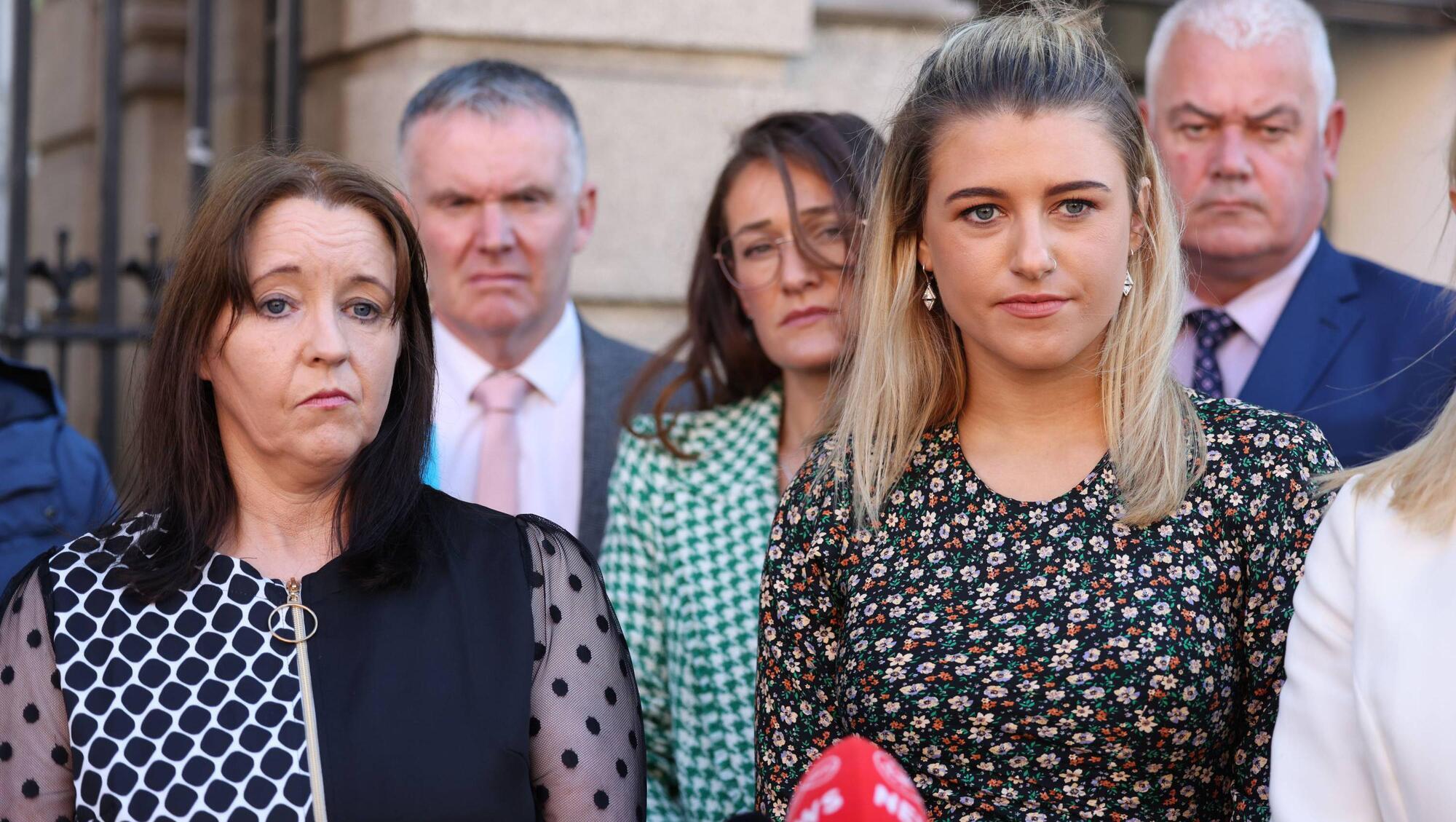
Una Ring and Eve McDowell, co-founders of Stalking Ireland, outside Leinster House. Picture: Dara Mac Dónaill
A campaigner has said it is "important" the stalking bill gets through to the Dáil before it goes into summer recess next week as "a lot of people are waiting for the legislation to come through."
The Criminal Justice (Miscellaneous Provisions) Bill 2022 was in its final stage in the Seanad on Wednesday but was sent back to the Dáil for approval following amendments.
Eve McDowell says she and fellow campaigner Una Ring were "really happy" with the amendments made, especially in regards to civil protection orders by making it more "accessible" for people to make them.
"I know it is like another bit of delay, but it has passed the Seanad and it just needs to be ticked off in the Dáil," she told the .
"It is such a relief though to see it happen. It should have been something that was there beforehand. Yes, it is an achievement that needs to be celebrated, but at the same time, it was a long time coming and it is unfortunate that it was us that had to campaign for it.
“There were so many victims reaching out when they were like, actively being stalked and actively waiting for this legislation to come in, so it was really hard to find the balance of justifying the wait time of these things when there are people being affected by this every day but then also making sure that the legislation is strong and good and will actually be able to help those people.”
Thanks to everyone who has supported our campaign, signed the petition, reached out for help and encouraged us to keep pushing when others told us it would never happen! Today is a huge milestone for Irish legislation and we hope this will help many people in the future ❤️ pic.twitter.com/ybhGamSaYr
— Eve McDowell (@evemcdowell_) July 5, 2023
In 2021, Ms McDowell, from Sligo, and Cork native Una Ring decided to use their experience where they both escaped physical harm after being subjected to sustained harassment to drive a campaign to legally recognise stalking as a crime.
Both women campaigned for legislation that could bring longer jail sentences for the offence, and for more information, support and counselling services for the victim.
A bill was then proposed by the Government to provide for offences relating to "non-fatal strangulation, non-fatal suffocation, harassment and stalking" and was introduced into the Dáil in September last year.
The bill also allows victims to seek barring orders in the civil courts, which will help them get more protection. These orders will require a lower burden of proof, and can be applied for by the affected person themselves, or by gardaí on their behalf.
"I am really glad that we did [campaign], and now knowing that it is possible for an ordinary citizen to make a change to legislation, I hope it will be a good example to anyone else that is unhappy with the way that the Irish system works," Ms McDowell said.
The 24-year-old also highlighted how their next steps will include establishing a civil service for stalking: "We need support services at the minute in Ireland, and this is something that we want to work on."
In March this year, the first Irish study of people who have been stalked or harassed was published and revealed significant social, financial, and psychological impact upon survivors.
This follows a landmark UCC report on stalking released in March this year, where more than 1,000 people responded to the survey run by Catherine O'Sullivan and Ciara Staunton.
It found most perpetrators who were identified were known by the victims, who reported being threatened, physically attacked, and sexually assaulted.
The role social media played was also highlighted in the report. Inappropriate texts, WhatsApps, or emails were the most common forms of malicious communications that were identified by respondents, followed by targeting on platforms like Twitter and Facebook.