Retired judge says removing juries from defamation cases won't reduce costs
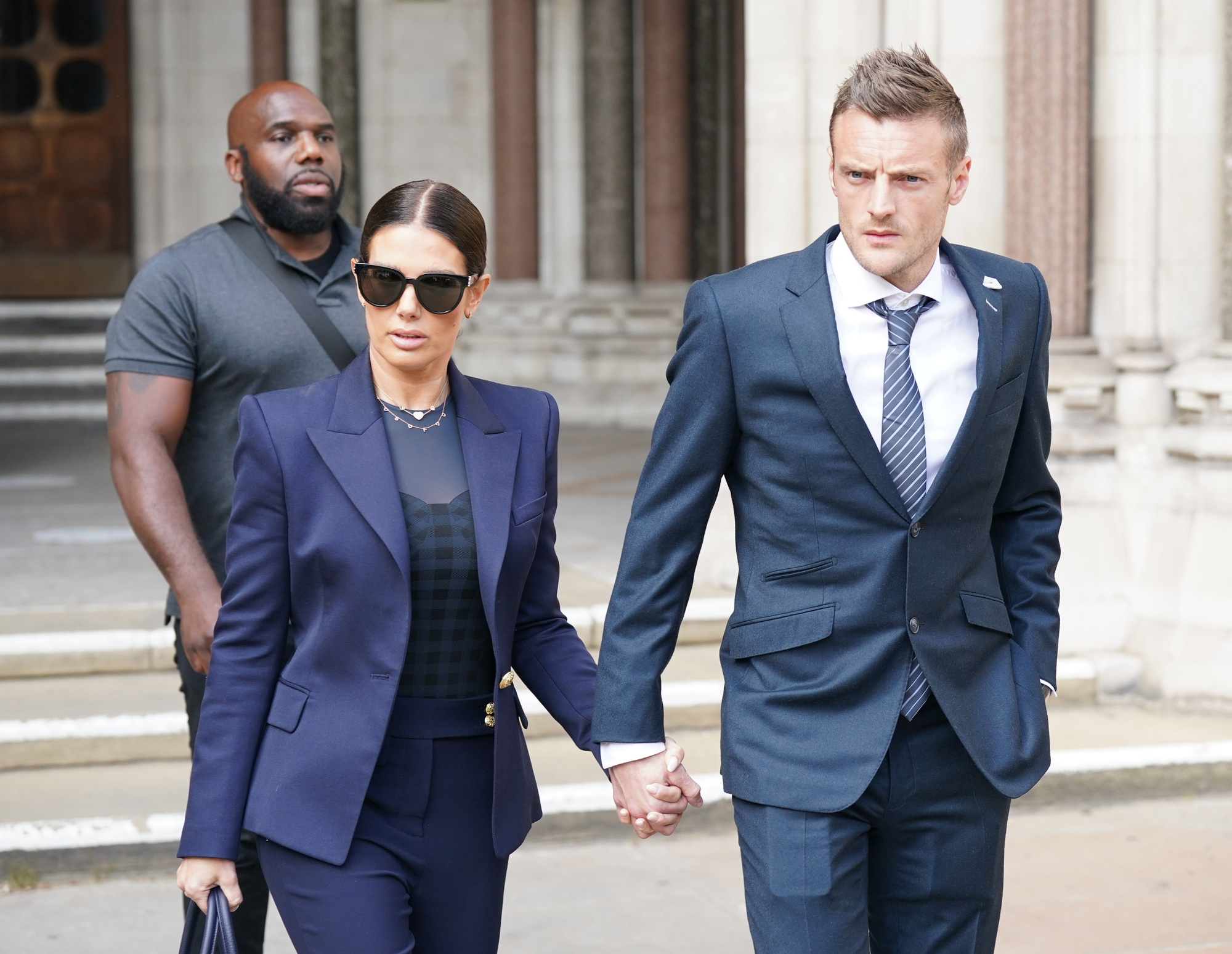
Rebekah and Jamie Vardy leaving the Royal Courts Of Justice, London, in May 2022.
A senior retired High Court judge has questioned a government plan to remove juries from defamation actions, saying that it will likely inflate legal costs and awards.
Former judge Bernard Barton told the Oireachtas justice committee yesterday that the removal of juries from defamation cases would not have the Government’s desired effect on costs.
Former justice minister Simon Harris had previously said that the removal of juries from defamation actions would “reduce the likelihood of disproportionate and unpredictable awards”.
Mr Justice Barton compared the plan to when juries were removed from personal injury claims in 1988, which led to an increase in the money awarded to claimants as well as a spike in insurance costs.
“We’ve been through this before. The Oireachtas was persuaded in 1988 to get rid of juries in personal injury actions because the Oireachtas was told by those who favoured abolition [that] premiums would go down because awards would go down, cases would take less time and it would be less expensive,” Mr Justice Barton said.
“What happened? Awards went up, costs went up and the number of cases increased. The very opposite result to what had been told was likely to happen.”
Mr Justice Barton also cited the increased costs of defamation actions in parts of the UK since 2013, when juries were removed in England and Wales.
“What has now happened in the UK is that there’s been an explosion in legal costs. It hasn’t had the desired effect at all.
“The idea that getting rid of the jury is going to reduce costs - there is no basis for this.”
In particular, Mr Justice Barton referenced the high-profile case involving Coleen Rooney and Rebekah Vardy.
When asked about delays in cases being heard, Mr Justice Barton said that the issue was with a lack of resources within the judicial system and not with juries.
The decision to remove juries was criticised by all witnesses that appeared before the justice committee, including the Bar of Ireland, Dentons, and Mark Harty SC.
In his criticism, Mr Harty said that a mechanism to control the scale of awards in defamation cases has been set out by the Supreme Court in a recent decision.
This is through a case where an Aer Lingus pilot received €202,500 in damages following an appeal to the Supreme Court after the Court of Appeal cut his award.
The case provides a precedent for a judge to issue guidance to a jury on the scale of award granted.
CONNECT WITH US TODAY



Be the first to know the latest news and updates