Could you write as Gaeilge about an octopus? Junior Cycle Irish 'challenging' but 'fair'
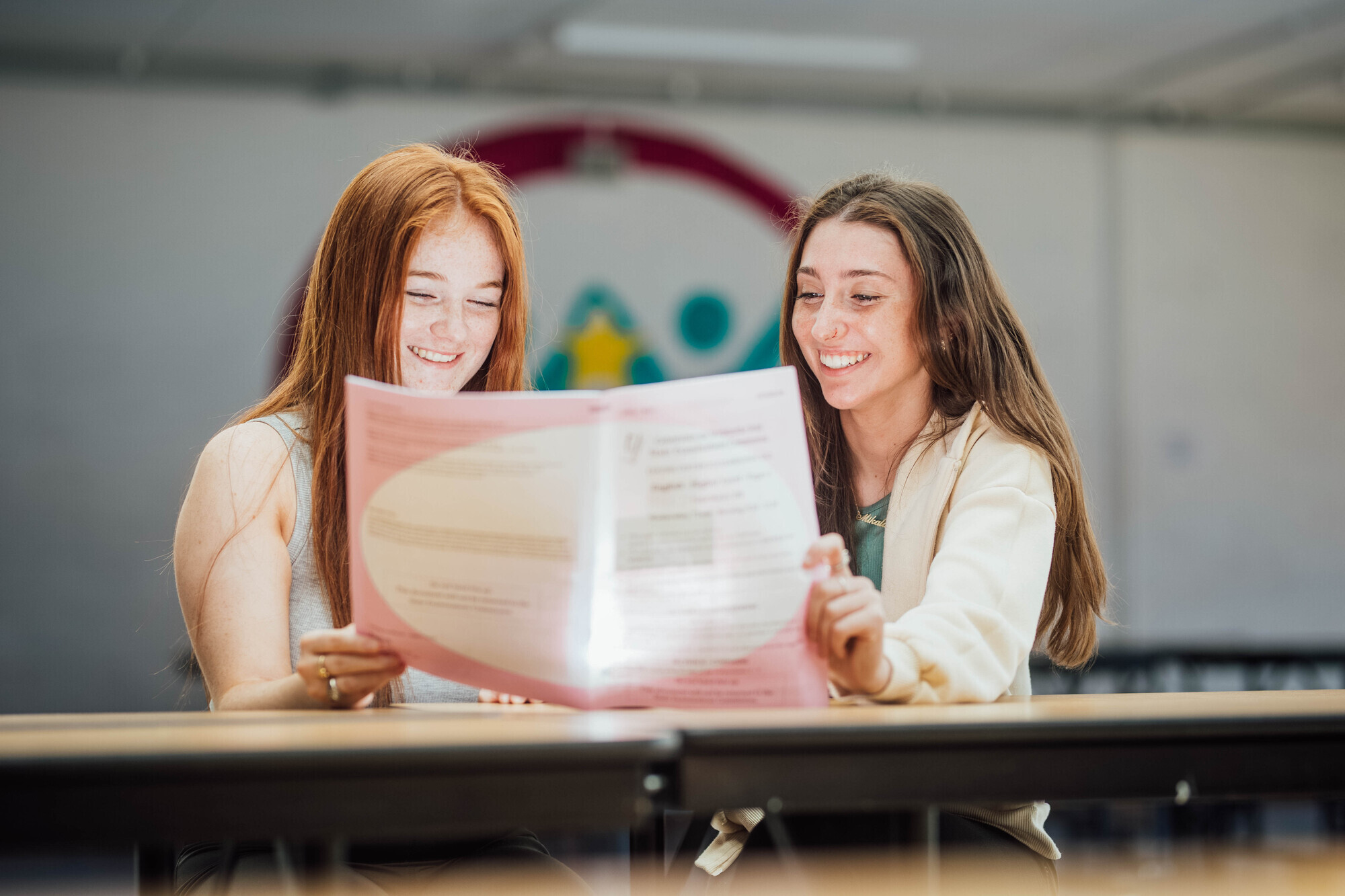
Students Lydia Purcell and Mikala Hickey of Thomond Community College in Limerick who are doing their Leaving Cert this year. Picture: Brian Arthur
The 2023 Junior Cycle Irish exam was a massive improvement on last year's “mind-boggling” paper, teachers agree, but technical language about the anatomy of an octopus may have proven tricky for some.
Meanwhile, this year’s Leaving Cert engineering paper featured extended reality (XR), classic car restoration, delivery robots and foldable electric scooters.
In general, the higher-level Junior Cycle paper was manageable, and students would have anticipated most of the content, according to Association of Secondary Teachers Ireland (ASTI) subject representative Anne Loughnane.
“It was challenging in some areas, but overall students would have been happy with most aspects of it and there would have been no major surprises.”
The listening test was accessible and suitable, except for question two where the speaker spoke too quickly, she added.
One area students may have found challenging was the comprehension section, based on ‘Iontais na Mara’ — the wonders of the seas.
“It included technical language about the octopus, it talked about the brain of the octopus being in the middle of its body while two thirds of its nerves are in its feet.”
“It talked about the anatomy of the octopus, which is not familiar to a lot of people. It includes a line about its body being so soft it can push through a hole which is as small as 2.5cm across. It’s not of students’ experience.
“While the language of the piece was difficult in some aspects, the questions were general and direct and understandable.”
Teachers’ Union of Ireland (TUI) subject representative Claire Markey described herself as a “very happy camper” with this year’s Junior Cycle Irish papers compared to last.
“Lovely papers, very fair I thought. I think the students will be brimming with confidence now as they come out of the exams and be very happy with themselves.
Students may not have expected a question about a ‘fogra’, a notice, on the ordinary level paper, she added.
“You are always going to encounter little challenges everywhere but there is nothing there that the students couldn’t handle," she said.
“In general, I thought the questions were at their level and within their understanding to deal with.”
Studyclix subject spokesperson Linda Dolan, an Irish teacher at Mercy College in Sligo, also welcomed this year’s Junior Cycle Irish paper.
“The final section, based on poetry, offered students two undemanding questions on emotions and images. This paper was a massive improvement on last year's mind-boggling exam,” she added.
“Students and teachers alike undoubtedly would have been happy and greatly relieved to receive this paper today.”
The papers for Gaeilge T1, which is designed for schools in Gaeltacht areas and Irish-medium schools, also provided ample choice and gave students the opportunity to display their knowledge of the material, she added.
The 2023 Leaving Cert engineering higher level paper contained no major surprises for students but was challenging enough in places, according to Eamon Dennehy, subject spokesperson with the ASTI and teacher at Heywood Community School, Co. Laois.
“The big change this year was that there was greater choice and no compulsory element to it, which would have been a relief for students.
“There weren’t any surprises and again because of the choices, there certainly wouldn’t have been shocks because if something was unusual, students would have been able to avoid it.”
Read More
"There are always questions as a teacher you can’t budget for because there is an element of everyday life and a ‘what-if’ quality to them, which makes students think on their feet.”
The higher-level paper accounts for 50% of students' overall marks, while the ordinary-level paper accounts for 60%. Project work and a practical test completed earlier in the year accounts for the rest of their marks.
“It gives them a bit of confidence, going in," Mr Dennehy said.
"The ordinary level paper also included very helpful graphics”, he added. “Both papers have evolved over the years with the times.”
CONNECT WITH US TODAY



Be the first to know the latest news and updates