Services 'facing collapse' because they cannot recruit staff
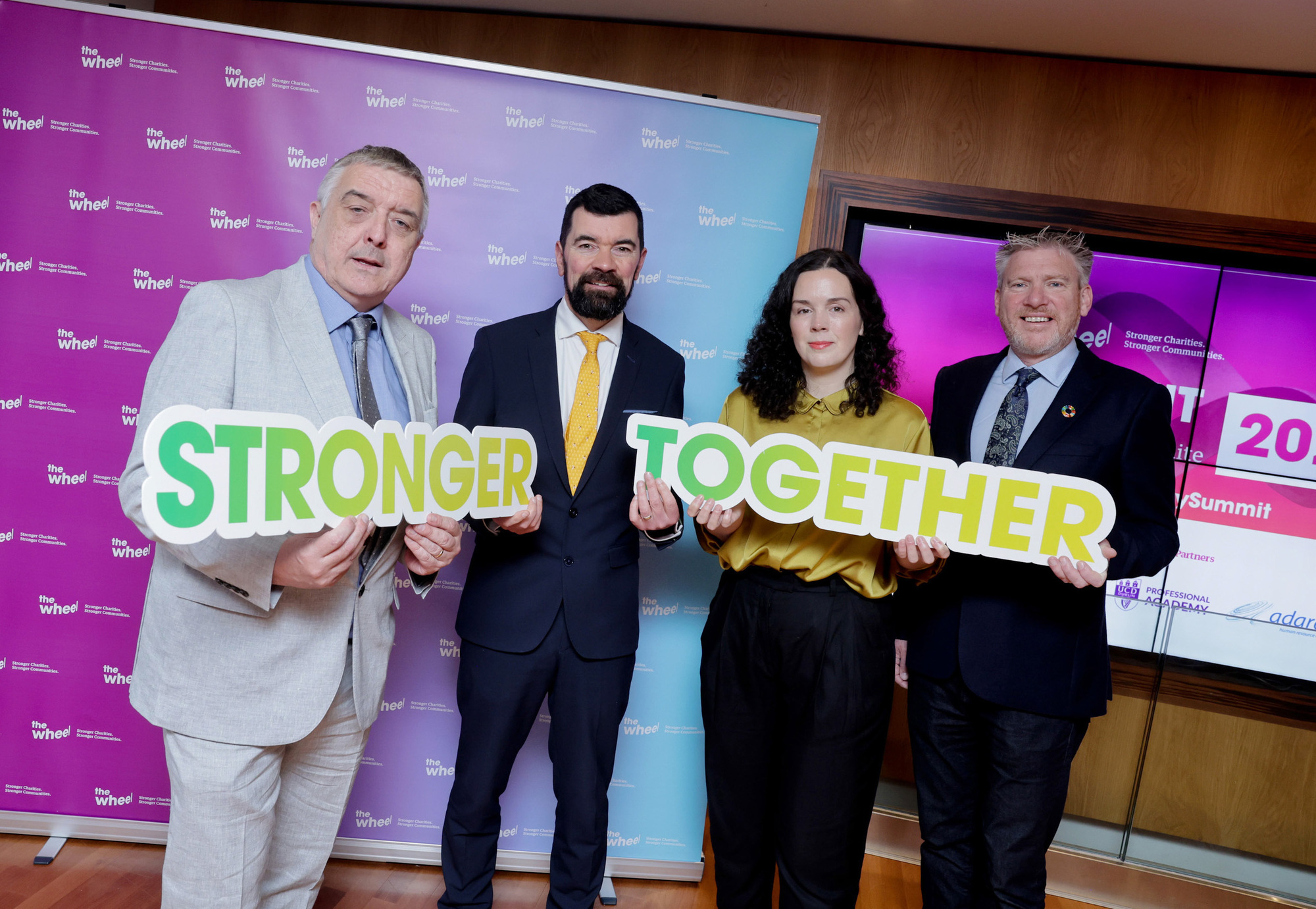
The Wheel chairman Vincent Keenan, The Wheel; Minister of State with responsibility for charities Joe O'Brien; campaigns and advocacy officer Emily Bourke; and chief executive Ivan Cooper at The Wheel's national Charity Summit at Croke Park on Tuesday. Picture: Maxwells

The Wheel chairman Vincent Keenan, The Wheel; Minister of State with responsibility for charities Joe O'Brien; campaigns and advocacy officer Emily Bourke; and chief executive Ivan Cooper at The Wheel's national Charity Summit at Croke Park on Tuesday. Picture: Maxwells

Homecare, disability, and addiction services are among organisations “facing collapse” because they cannot recruit staff, a charity conference has heard.

More than 6,000 people have been approved for homecare packages but carers cannot be hired to fill the roles.

State-funded charities are paying workers 10% less than their similarly qualified colleagues in the public sector due to pay cuts made during the financial crisis that have never been reversed, with the issue due to be examined at the Workplace Relations Commission (WRC) on June 12.

Industrial relations organisations, including Fórsa and Siptu, will take part in showdown talks with the Governmentwith a goal of earning a pay hike for thousands of workers of between 15% and 20%.

Workers at so-called section 39, 56, and 10 organisations — including Enable Ireland and Coolmine, and many housing, homelessness, meantal health, and drug support services — did not have their pay restored after cuts made during the economic crash. In the current cost-of-living crisis, this is making the sector increasingly untenable, speakers at the national charities’ association annual summit in Dublin said yesterday.

'Enforced pay disparities'

Ivan Cooper, the new chief executive of The Wheel, which represents more than 2,200 charities in Ireland, said that “enforced pay disparities” of 10% between the community sector and those performing the same function with the likes of the HSE mean charities simply cannot recruit and retain staff.

He said he hopes the summit will “bring the sector together and get the strength in numbers” to force the State to act.

“Since 2008, public servants have seen significant salary increases, so their pay has risen by between 10% and 20% over that timeframe,” Mr Cooper said.

So the static salaries of the voluntary sector which haven’t increased are falling back further and further behind

John Gallagher, a public affairs adviser to The Wheel, said: “It is insane to expect that someone with a qualification in childcare, medical care, or whatever will get 10% or 12% less than they would if they were doing the exact same job for a State agency.”

Mr Gallagher said the problems will “inevitably manifest themselves in human suffering”.

“Already some charities are just not tendering for contracts because they don’t have the staff to provide the service,” Mr Gallagher said.

“I think there’s a political decision to be made by Government now, that it’s more important to look after people in need of homecare or disability care now, than to say we might have some crisis if someone’s multinational company pulls out in five or ten years time. I think now is more important than 10 years from now,” he said.

“There are over 6,000 people approved for homecare at present that can’t get it,” he said.

“The key issue is resources and services and staffing to provide that service. If you’re not paying enough money to recruit staff then obviously there are 6,000 people in dire need of homecare services who are not getting it.” 

Mr Gallagher said there are “a lot of small drug services running around the country that are physically on a knife edge at present”.

'Services remain underfunded'

Gordon Burke is 57 and living in Galway City where he is the branch campaign officer for Galway Fórsa. He has worked in social care for 24 years and currently works in the homeless services. He has watched colleagues leave for better-paid jobs in the HSE and the private sector,  where pay has increased.

He works with men with mental health, intellectual disabilities, as well as addiction problems in Galway, and he believes they deserve continuity with their carers.

“They have a right to have staff who are there for the long term. Continuity is paramount for connection, and to build lasting and trusting relationships,” he said. 

“Services provided by the community and voluntary sector remain underfunded. People are delivering the same services at different rates of pay.”

'Is it a crisis? Yes, it is a crisis'

Coolmine Therapeutic Community chief executive Pauline McKeown acknowledged the issue facing that sector, noting that Coolmine has seen a 34% turnover in staff within the past 12 months, up from 28% the year before.

One of the country’s largest drug rehabilitation services and employing more than 200 people, Coolmine is currently 80% State-funded, Ms McKeown said, meaning any hike in State pay levels would “make a massive difference”.

“It’s just very difficult at the moment," said Ms McKeown. "We’re trusted to provide the services, we’re the experts in providing the service, but yet we’re not treated with the same respect.” 

She said it is  “very difficult to hear about colleagues in my organisation who are continually going to roles within the HSE”.

“Is it a crisis? Yes, it is a crisis."

More in this section

Lunchtime News

Newsletter

Get a lunch briefing straight to your inbox at noon daily. Also be the first to know with our occasional Breaking News emails.

Cookie Policy Privacy Policy Brand Safety FAQ Help Contact Us Terms and Conditions

© Examiner Echo Group Limited