Climate change: 'No getting away from need' for higher taxation to deter fossil fuel use
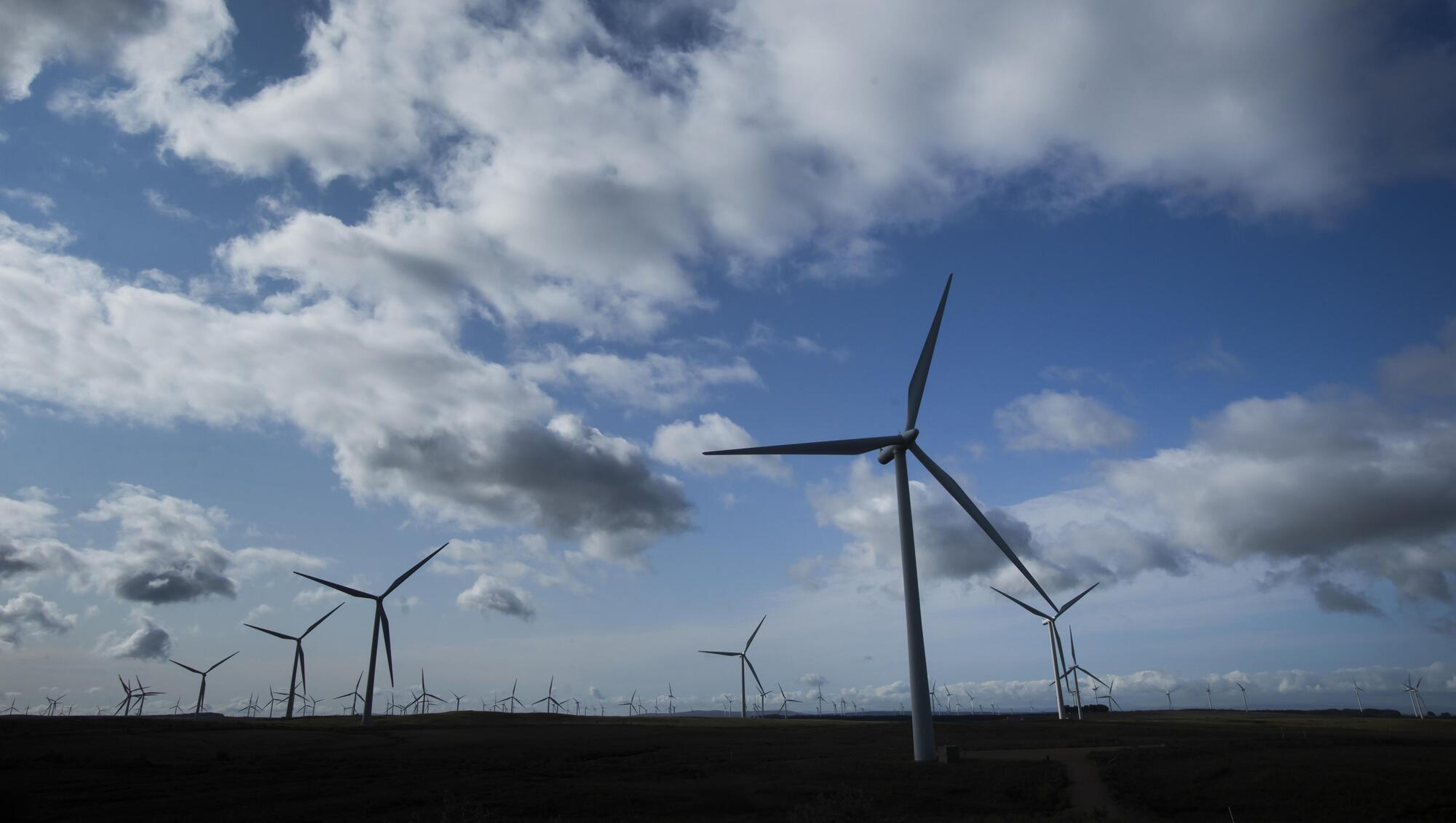
Climate scientists warn of the steep climb Ireland faces to meet its 2030 emissions reductions targets but say measures including investment in renewables are already making a difference. File picture: Danny Lawson/PA
There is “no getting away from the need” for higher taxation or other measures that would discourage people’s fossil fuel usage, one of Ireland’s leading climate scientists has said.
However, any such funds raised by more taxes should be ringfenced for the so-called just transition in assisting the most vulnerable people and communities who rely on traditional industry employment, said Maynooth professor of climate change geography Peter Thorne.
Prof Thorne and his University College Cork (UCC) counterpart, professor of sustainable energy and energy-systems modelling, Hannah Daly, said the interim report for 2022 by the Sustainable Energy Authority of Ireland (SEAI) should give warning of the steep climb ahead if Ireland is to meet its 2030 emissions reductions targets.

The SEAI said that, despite annual energy-related emissions in Ireland’s carbon budgets falling by 1.9% in 2022, the pace is too slow to meet 2030 targets.
Prof Daly said overall emissions must fall by 7% each year, and each year that that target is not reached will necessitate even greater cuts in later years.
“Cutting fossil fuel use in transport, heating, power generation, and industry at the pace necessary will take a huge mobilisation of the State, of finance, and of society at large, to massively accelerate renewable energy like wind and solar, electrify transport and heating, and reducing overall energy use,” she added.
Prof Thorne said slashing fuel duty on diesel and petrol to combat price spikes due to last year’s energy crisis was counterproductive in terms of emissions reduction.

“If we want to aggressively reduce fossil fuel use, there is no getting away from the need for price signals via taxation or other measures,” he said. “That revenue of course can, and should, be used to protect the most vulnerable and aid the transition.”
‘Just transition’ is the term used to describe making sure employment opportunities and societal benefits are present for those who live and work in communities tied to legacy industries such as coal mining and peat extraction, as well as protecting less financially secure and vulnerable citizens.
However, Prof Thorne said there is hope yet.
"The longer-term and much more hopeful story is that alternatives to fossil fuels are available at scale, can be deployed quickly, and over a reasonable timeframe — ranging from instantaneous to within a decade — end up net putting money back in all our pockets," he said.
“Similarly, most electric cars break even within several years and thereafter save money.
“These are just examples. We should be investing in moving away from fossil fuels irrespective of climate considerations. Fossil fuel usage puts us at the mercy of various despots and countries which are not our friends, nor our allies.
"We have more than enough renewable energy resource to power our future ourselves which gives us control over our own future as well as saving emissions,” he said.
CONNECT WITH US TODAY



Be the first to know the latest news and updates