Ronnie Chatah, the storyteller who refuses to let Beirut forget its troubled past

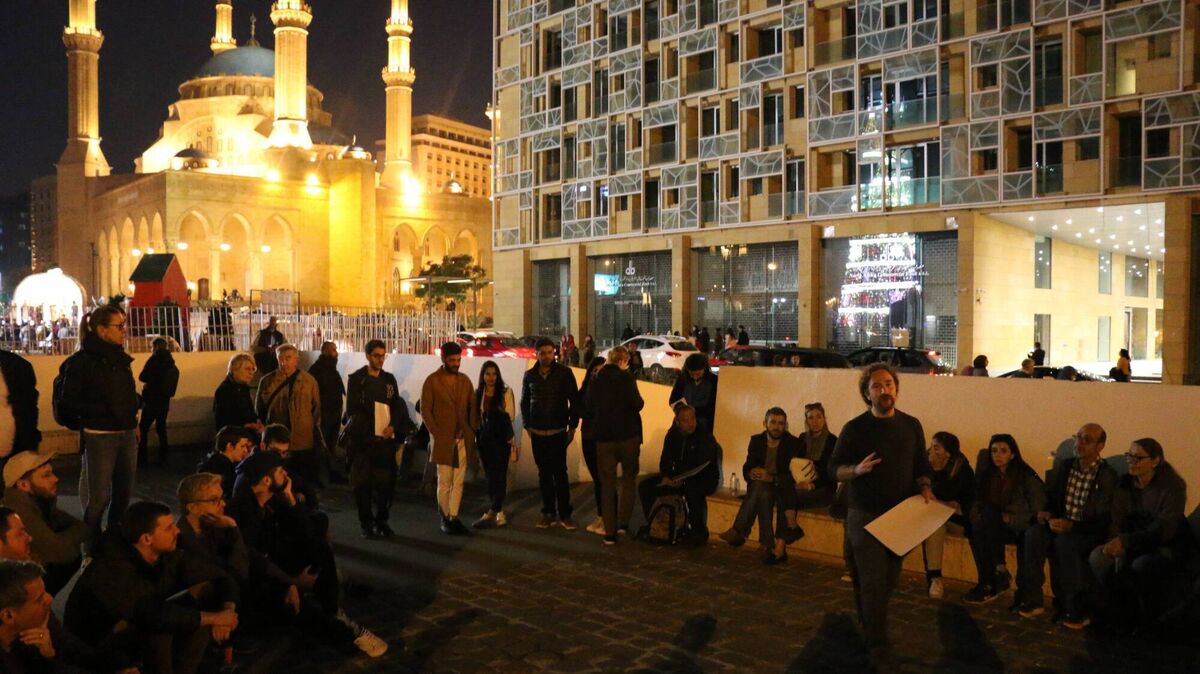
Ronnie Chatah delivering his walking tour in Beirut.
For a city with a long and storied history, Beirut doesn’t make it easy to remember it.
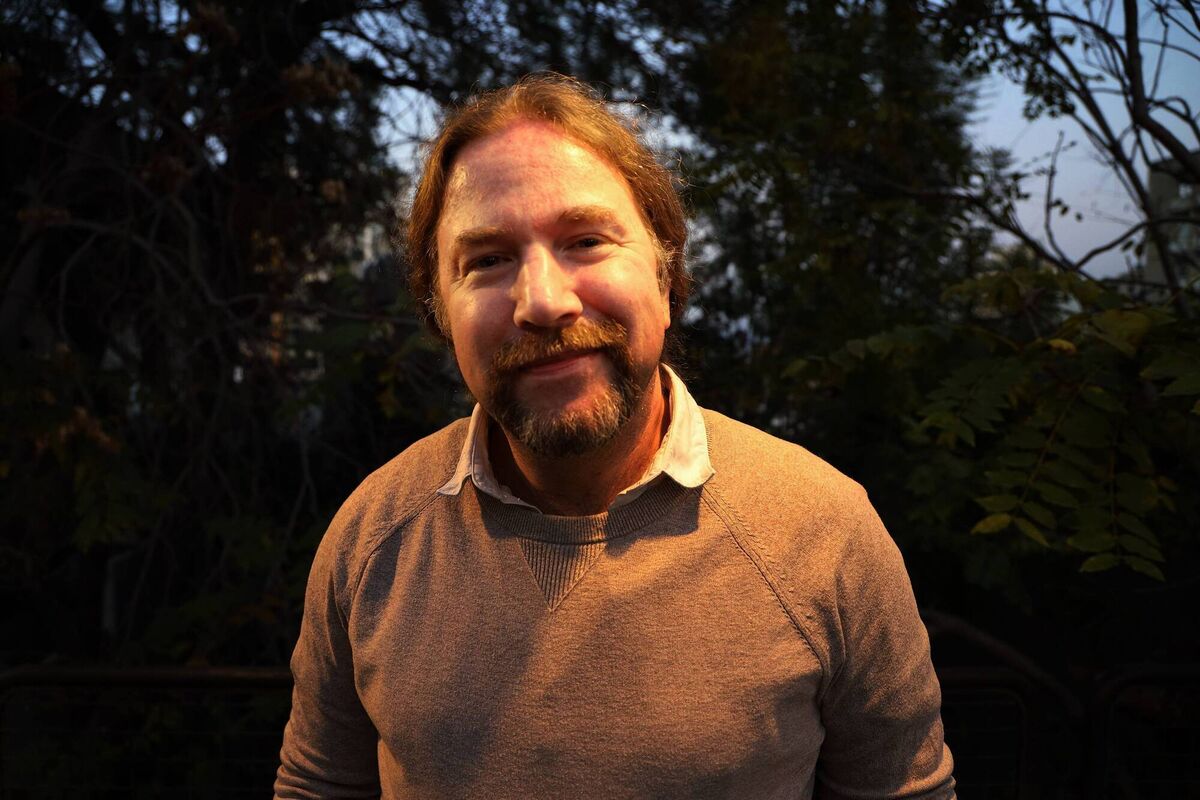
Ronnie Chatah has been on an almost two-decade-long, one-man mission to remedy this historical amnesia by telling stories of Lebanon’s complicated and frequently dark past. Soft-spoken and pony-tailed, the Lebanese podcaster and columnist speaks to the from the rooftop of Kalei, a popular café in Mar Mikael in East Beirut.
This is not his first encounter with Irish media. He remembers being interviewed by RTÉ several years ago for a radio feature on tourism in Lebanon. Starting in 2005, Ronnie ran a popular walking tour where he used the neighbourhoods and landmarks of Beirut to explain the city’s past and how the modern, dysfunctional state of Lebanon came into existence.
On the tours, Ronnie would describe the country’s eighteen sects and how the mishmash of crumbling Ottoman villas, French-era buildings, and glass skyscrapers, were constructed and frequently damaged to create the modern Beirut skyline.
HISTORY HUB
If you are interested in this article then no doubt you will enjoy exploring the various history collections and content in our history hub. Check it out HERE and happy reading
Locals and tourists alike attended. Lebanon has never had a public reckoning with its past and the history of the civil war is mostly avoided in schools. An amnesty granted to militias in 1990 after the conflict ended meant that almost no one was prosecuted for the countless atrocities committed during the bloody period.
Ronnie stopped delivering the walking tour for several years after his own father, Mohamad Chatah, a Lebanese politician and former ambassador to the United States, was killed. He died along with seven other people in a car bomb in downtown Beirut in 2013.
No one has ever been held responsible for the attack.
“Expectations for a functioning, systematic investigation that yields tangible results is off the table completely, whether that's in my own case or any other political crime of that nature over the last 17 years,” says Ronnie.
“There is a sub-state group in this country that determines most security concerns and that includes things like political assassinations,” says Ronnie referring to Hezbollah, an expansive Shia Muslim organisation backed by Iran which operates paramilitary and parliamentary wings in Lebanon.
“When that group deems it problematic, those investigations don't happen.”
Ronnie’s father was viewed as a moderate figure who could cross sectarian lines and get opponents to talk in a country where political stalemates strangle progress. He was a close adviser to Saad Hariri, the son of the former Lebanese Prime Minister Rafik Hariri who was also killed by a car bomb eight years earlier. The elder Hariri and Chatah are buried in the same mausoleum in Beirut.
Both men had opposed the Syrian regime’s three-decade-long occupation of Lebanon and the paramilitary strength of Hezbollah, a Syrian ally. Lebanese politicians who have opposed either have frequently paid with their lives.
“There were threats in the way many people face threats, but nothing that was hinting at that kind of attack,” says Ronnie of the car bomb that killed his father. Hezbollah has certain redlines but over time they might “re-adjust them,” he says and what is “not always a redline could be a redline when they deem it so.”
Ronnie recounts how Hezbollah began as a Shia militia backed by Iran in the 1980s during the civil war. The group focused on kidnappings and truck bombings, with an emphasis on violence rather than political strategy.
Hezbollah kept its arms after the civil war on the basis that Israeli forces still occupied South Lebanon but was constrained by the presence of the Syrian army in Lebanon. Hezbollah was not allowed to do everything it wanted to do because Syrian and Iranian interests in Lebanon did not always align, says Ronnie.
Israeli forces withdrew beyond the Blue Line which separates Lebanese and Israeli territory in 2000. Hezbollah should have disarmed then, says Ronnie, but it didn’t. In 2006, after the withdrawal of the Syrian forces, the group waged a 5-week war with Israel that displaced 1 million people.
Today, Hezbollah is one of Lebanon’s main political parties, “which is not that important,” says Ronnie, as “Hezbollah’s leverage has less to do with politics and more to do with security.” The group operates “fairly invisibly”.
Ronnie resumed his walking tours of Beirut in 2018; the first tour had over 90 sign-ups. But anti-government protests in October 2019 and covid-19 led him to pause the tours once again.
While the tours have been on hold, Ronnie has channelled his energy into a new venture, The Beirut Banyan, which is now one of the most popular English language podcasts in Lebanon.
Along with conversations about Lebanese politics and history, the podcast gives a platform to many of those who, like Ronnie, lost loved ones to political assassination.
From Beirut, Ronnie watched the funeral in December of Pte Seán Rooney, who died in an attack on Irish peacekeepers in an area controlled by Hezbollah in South Lebanon.
To maintain relations and avoid a sudden withdrawal of UN peacekeepers, Ronnie believes Hezbollah “may surrender one or two people at most” who were involved in the lethal attack. In late December, Hezbollah handed over one suspect but the whereabouts of six others who have been charged with offences related to the attack are not known.
“What is lacking is a functioning state that doesn't care what Hezbollah wants or doesn't want,” says Ronnie. “It would arrest those individuals regardless.”
CONNECT WITH US TODAY



Be the first to know the latest news and updates