Aid workers sleeping in cars amid fear of unstable buildings in Turkey and Syria
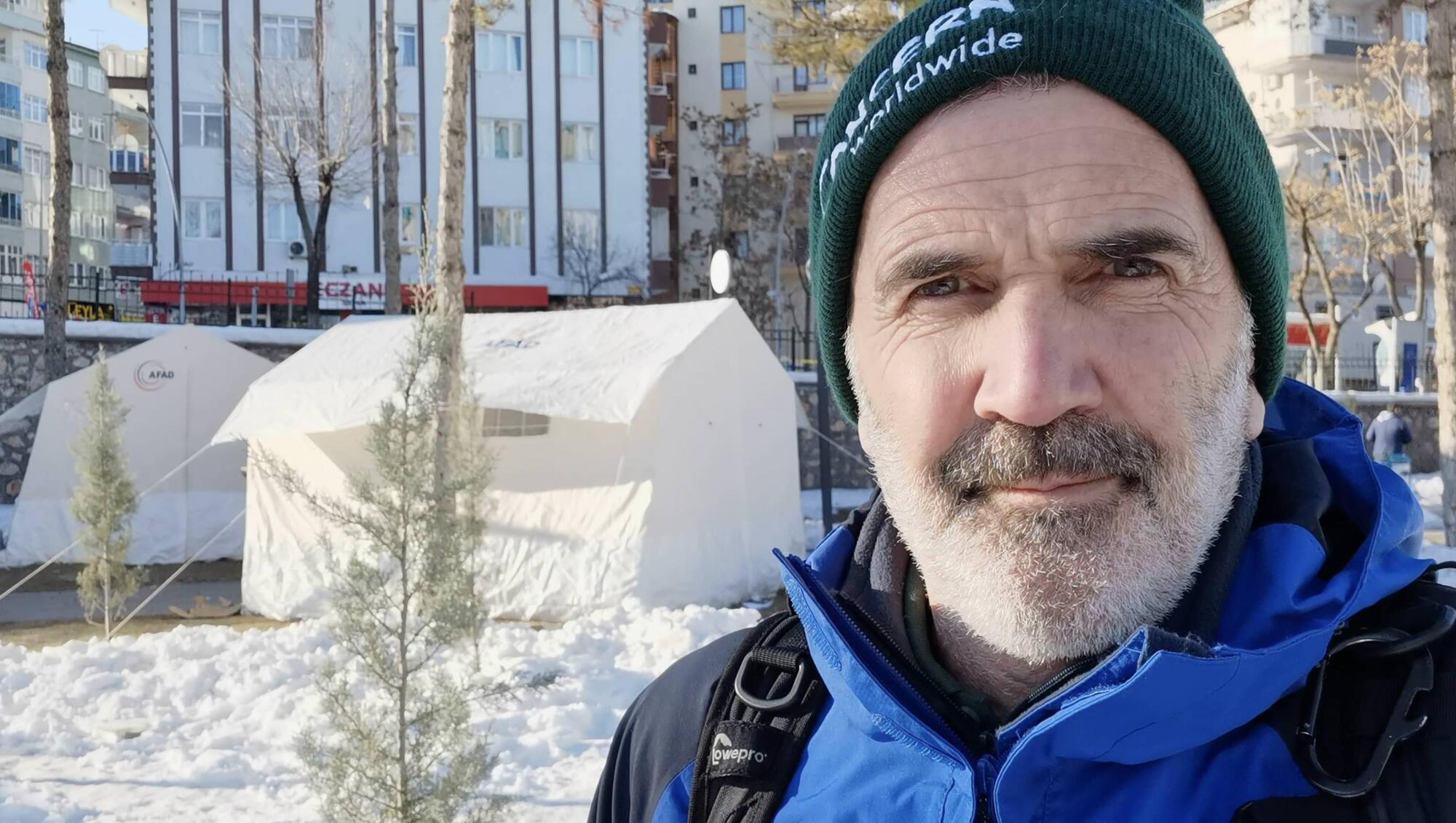
Kieran McConville from Limerick, who works with Concern,in Malatya, Turkey. Picture: Kieran McConville.
The ongoing psychological impacts of the earthquake that hit parts of Turkey and Syria on February 6 have resulted in thousands of empty buildings across Turkey and Syria, according to a Concern employee based in Turkey.
Kieran McConville from Limerick, who works with Concern in Şanlıurfa, Turkey has spoken to numerous people affected over the past number of weeks and said the fear that it could happen again is “constant”.

The combined official death toll in Turkey and Syria now stands at 47,244 with Mr McConville saying “everybody has somebody who was hurt or killed”.
“The big impact is more psychological than anything because you have people who are deeply traumatised by the first two earthquakes. Everybody here has been affected,” he said.
Mr McConville said the fears and anxiety surrounding further potential earthquakes are spread far and wide with some Concern staff sleeping in cars due to fears about going back into buildings, even if they have been cleared in terms of safety.
“You can tell by looking at people’s faces and the way that they act that they are carrying some sort of trauma with them. That fear of the ground moving beneath your feet and things falling down around you is something that does not go away,” he said.
Malatya, a large city in Turkey, has thousands of buildings left empty because of lingering trauma. That is despite it being -12C when he visited, he said, while the score of damaged buildings has left countless homeless.
“There is a massive number of multi-story apartment buildings that have been damaged and a good proportion of them might never be habitable again. So, there are huge numbers of people who are essentially homeless, with nowhere to go and essentially traumatised.
“I met a lady in Aleppo who was camping with her sister and three kids in a small tent beside a collapsed building which was her home. One of her children was in that building and died during the earthquake.
Mr McConville said Syrian refugees in Turkey in particular have been greatly affected given the trauma they have experienced over the past ten years before the earthquakes.
“They were already carrying all of that psychological baggage from war and now have this layer on top,” he said.
Concern has been providing psycho-social support for Syrian refugees for several years, something that will now be scaled up for those affected by the earthquakes.
“The day of the first earthquake, we had people out already collecting stuff from the stores, blankets, water, and cooking hot meals for people who lost their homes,” he said, before adding that staff are working night and day.
With staff coming in from an emergency surge team, the charity is now focusing on ramping up the emergency response but warned that it is just the start.
“To a certain extent, in the public mind at this point, the earthquake will start to fade from the headlines and from people’s consciousness but now really is the time when the real work begins because you have so many people displaced and living in tents,” he said.
He noted that some tents have between 10 and 14 people in them, with one toilet to share among them and no proper washing facilities which can bring about its own set of health and hygiene issues.
Mr McConville said the Concern team is now in a good position to design longer-term solutions in addition to immediate needs, adding that the Irish public has been “unbelievably generous”.
“This is going to go on for months, maybe even years.”