Concern chief and his team battle to help Turkey quake survivors out of the darkness
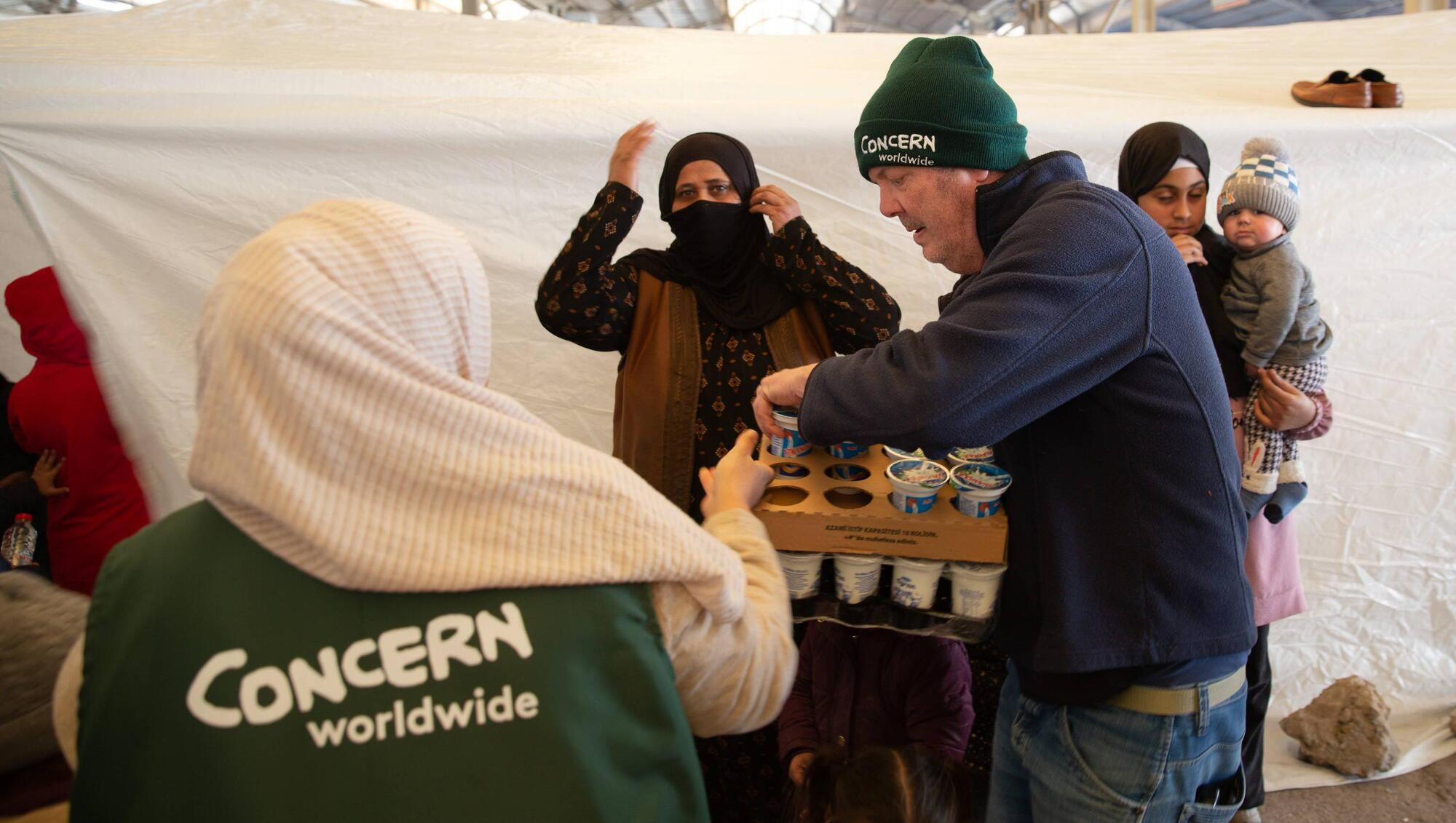
Ros O'Sullivan, Concern Worldwide's emergency operations director, at a food distribution for people left homeless by the earthquake. Photo: Kieran McConville/Concern Worldwide
"You know this is a very, very dark place at a very, very dark time."
These are the stark words of Ros O’Sullivan, Head of Emergency Operations with Concern Worldwide, on what he said seen in recent days in the earthquake-hit city of Sanliurfa in Turkey.
Within hours of the first earthquake on the morning of February 6, he was packing up his belongings and checking flights before saying farewell to his family in Leitrim and heading for the south-eastern Turkish city.
It is one of three ancient cities devastated by the massive Turkey-Syria earthquakes.
“You don't need to see [a body] to know that lives have been lost,” he said of his first visit to the worst-hit areas as part of his initial fact-finding.

“You see buildings collapsed or tumbled down, and in some the sides of buildings have come away. You're looking into apartments, wallpaper on walls, and pictures, but you're looking at somebody's life, looking at kitchen cabinets hanging on walls.
"In many respects, some of those people who were in those homes probably got out because those buildings didn't all come down completely.
His voice trails off as he adds: “You might not see anything, but as you pass each collapsed building, each pile of rubble, you know that this is a very, very dark place at a very, very dark time.” In the job 29 years, the Galway-born emergency aid co-ordinator is a veteran of disasters such as Nepal in 2015, following the earthquake there, and the Philippines in 2013 after Typhoon Haiyan.
You’d think the 60-year-old who has spent much of the last 12 months in and out of Ukraine would have seen it all — but that is not the case.
“What has happened in Turkey and northwest Syria is as bad as anything that I have ever seen,” he said.
“We're talking about tens of thousands of people hospitalised — and they're the fortunate ones, they survived. You're talking now upwards of over 41,000 people dead so far in Turkey, but there are still thousands missing. So this is going to take a lot of time, and a lot of financial support.” His job is to have a logistics plan in place to help displaced communities once the search-and-rescue side of operations has concluded once and for all.

Concern’s role will be to provide supplies to many who have absolutely nothing left. Two things he makes sure he and his team have are ... footballs.
“Turkey is no different to any other country in the world — they love football,” he said.
Once they have a bit of space, children will kick a ball around.
“Football is just one example of where you can help traumatised children feel some bit of normality.”