Environmental groups claim 'weak' bill to protect Ireland's marine life 'falls very short'
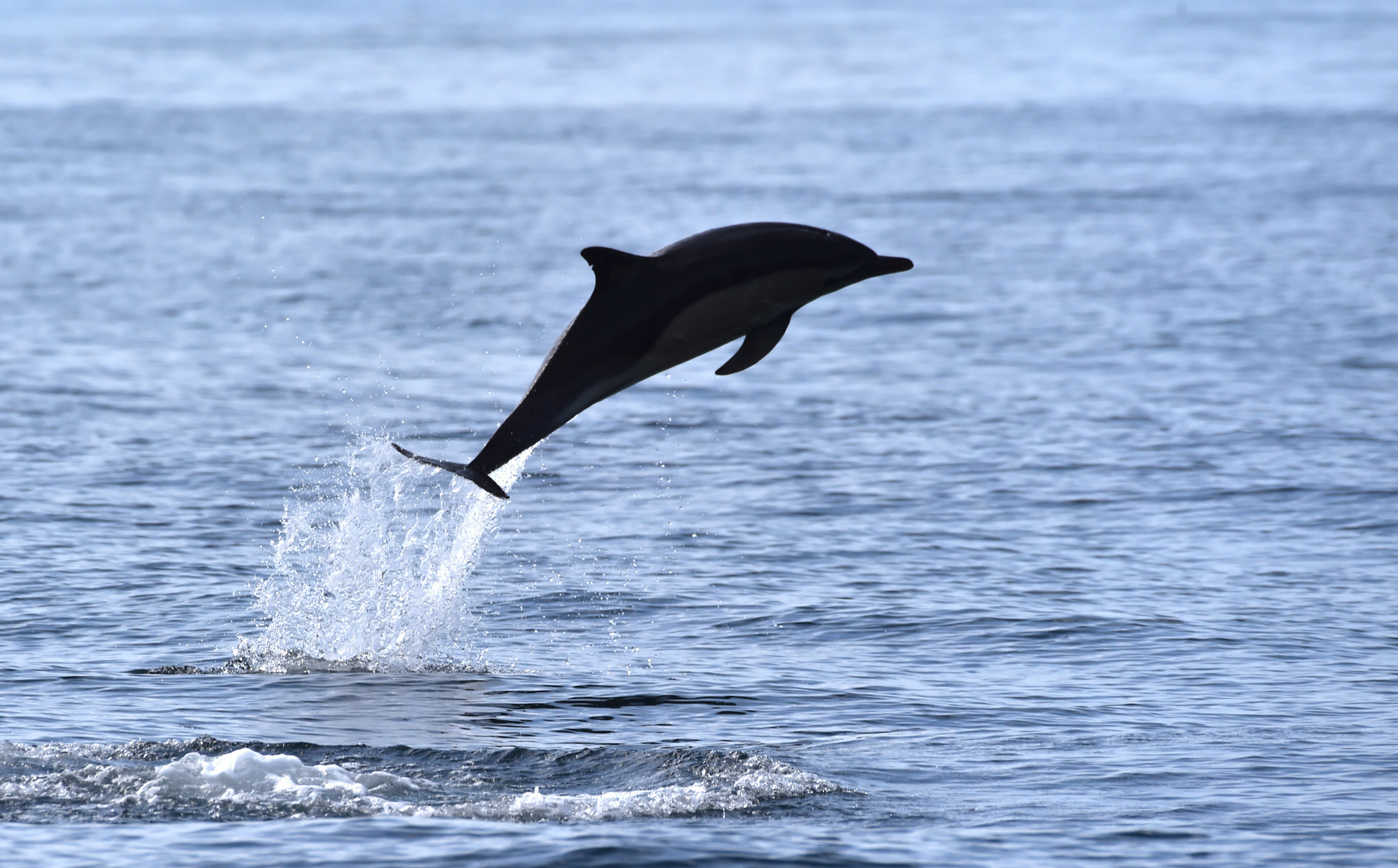
A short-beaked common dolphin off the south coast of Ireland. Fair Seas marine policy officer, Dr Donal Griffin, said: "We have before us a once-in-a-generation opportunity to protect and restore the waters that surround our country." File picture: Dan Linehan
The proposed bill to protect marine life around Irish waters in its current form "falls very short" and is hampered by "weak and ambiguous language overall", environmental groups have warned.
Addressing TDs and senators at an Oireachtas Committee to discuss the Marine Protected Areas Bill 2023, members of the Irish Environmental Network (IEN) called for the proposed legislation to be tightened up to address the "serious gaps" within.
The bill aims to cement the country's ambition to protect 30% of its maritime area by the end of the decade. The EU's Marine Strategy Framework Directive legally compels member states to establish marine protected areas (MPAs), stipulating spatial protection measures be put in place to conserve biodiversity.
The IEN, which includes groups such as the Irish Wildlife Trust, Birdwatch Ireland, and the Irish Whale and Dolphin Group, said the country is already around nine years late delivering on EU obligations to provide for marine protected areas (MPA), despite having one of the largest total areas when marine territory is also considered.
The new bill in its current guise fails in areas such as timelines for actions to be implemented, data collection, enforcement, resourcing, management, and monitoring, they told the committee.
"These together with matters which seriously limit or puncture the protections afforded by an MPA, are compounded by weak and ambiguous language overall and an extraordinary level of ministerial discretion throughout," the IEN claimed.
"Evaluated as a basic piece of legislation in terms of what it can deliver as an outcome, it falls very short, leaving scope for delay, weak implementation and poor and inadequate protection. It falls far short of the expectations of our members focused on this area."
Speaking beforehand, Fair Seas marine policy officer, Dr Donal Griffin, said there are "a number of important and positive provisions" in the proposal which are welcome. If implemented properly, they will help change the way Ireland protects marine species, habitats and ecosystems, he added.
"We have before us a once-in-a-generation opportunity to protect and restore the waters that surround our country. We are on the cusp of a massive energy revolution and offshore renewables will play a huge role in that.
"We want to ensure that these developments are located in the most appropriate areas. We know from international experience that effectively managed and implemented MPAs benefit biodiversity, but they can also deliver social, economic benefits to coastal communities, and help Ireland adapt to and mitigate against climate change.”
Wind Energy Ireland told the committee that it was wholly committed to the idea of co-location of offshore wind farms with MPAs. "We believe that offshore wind projects can be suitably located with MPAs, particularly where there is a requirement to rejuvenate areas of seabed or reef," it said.
There are "real and tangible examples" in the North Sea where offshore wind installations have resulted in ecosystem benefits within the footprint of the project, it claimed.
"However, we also acknowledge that there will be MPAs designated where offshore wind energy development would be completely unsuitable," it added.
CONNECT WITH US TODAY



Be the first to know the latest news and updates