Leaving Cert reform risks 'piling significant additional pressure' on students and teachers
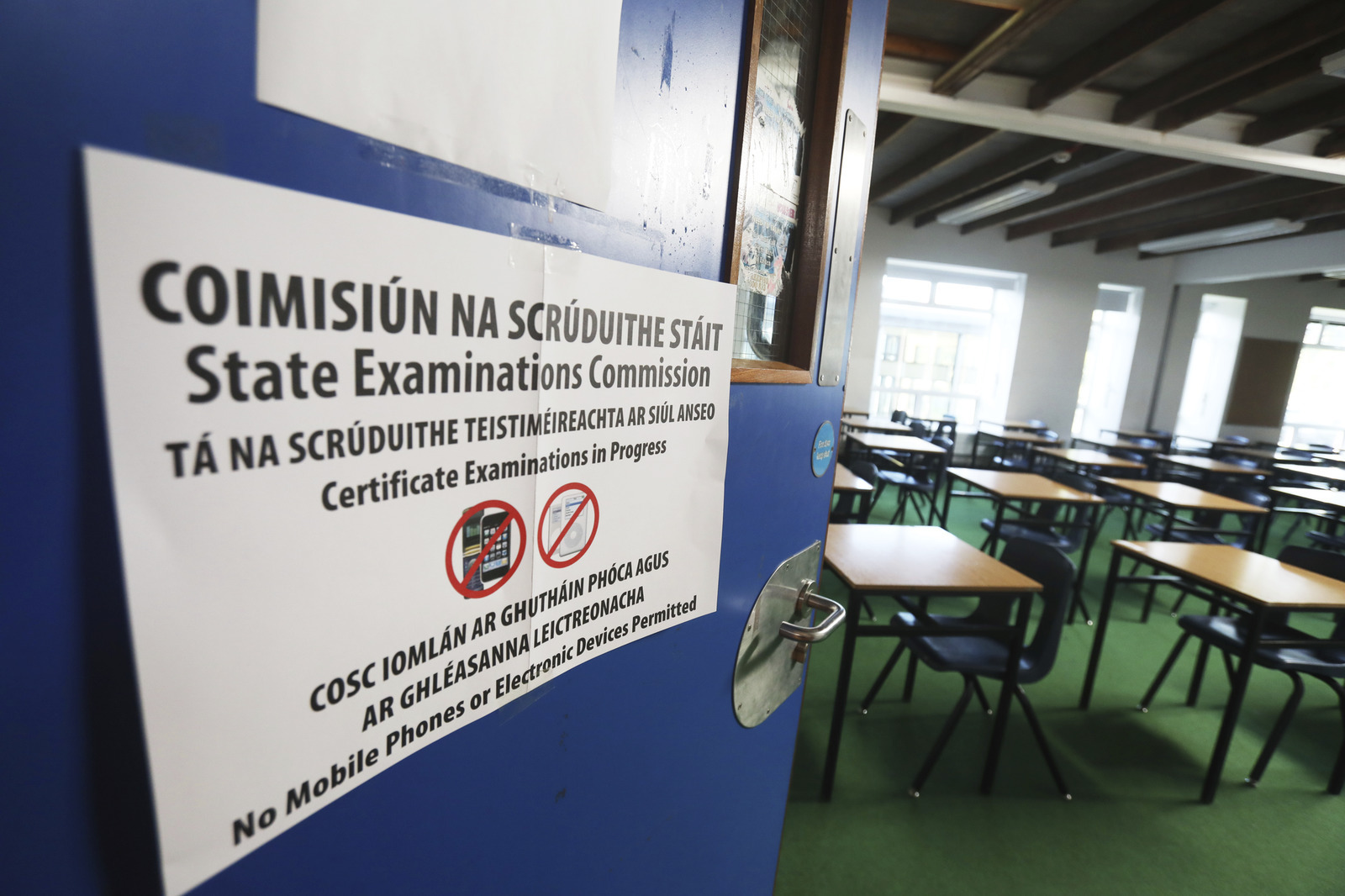
TUI president Liz Farrell said the union’s strong position is that Paper 1 in both English and Irish should not be completed at the end of fifth year. Picture: Leah Farrell/RollingNews.ie
The plan for pupils to sit Leaving Cert exam papers at the end of fifth year could “pile significant additional pressure” on students and teachers.
That’s the warning from both the Teachers’ Union of Ireland (TUI) and the Irish Second-Level Students’ Union (ISSU), which have expressed serious concerns about Education Minister Norma Foley’s intended Leaving Cert reforms.

Students entering fifth year from September will take Leaving Cert Irish and English Paper 1s at the end of the year.
Intended to reduce the ‘assessment burden’ on students, these marks will then be ‘banked’ and added later after students take Paper 2 in June 2025.
This week An Gréasán do Mhúinteoirí Gaeilge, the subject association for Irish teachers, and Gael Linn are calling on the Department of Education and Ms Foley to shelve the plans.
English teachers have also voiced concerns about the move, with the Irish National Organisation of English Teachers (INOTE) warning the plans pose more stress to students.
On Thursday, TUI president Liz Farrell said the union’s strong position is that Paper 1 in both English and Irish should not be completed at the end of fifth year.
“It would particularly disadvantage those students who develop positive study habits at a later stage or the roughly 25% of students who either do not have access to, or who choose not to take up the option of transition year.”
“The suggestion that fifth-year students can complete a composition and comprehension examination in both languages a year earlier than their previous cohorts disadvantages students unnecessarily.”
She added: “In more general terms, State certification is key to all developments and must be retained. TUI members are fundamentally opposed to assessing their own students for State certificate purposes and therefore external assessment and State certification — which retain significant public trust — are essential for all written examinations and all additional components of assessment.”

The current format of the Leaving Certificate causes severe stress and increased anxiety amongst students, specifically the tight scheduling of the exams at the end of sixth year, according to ISSU Uachtarán Caitlin Faye Maniti.
“The ISSU has always advocated for Leaving Certificate reform but the proposed changes are neither an adequate nor comprehensive enough solution to tackle the problems surrounding the Leaving Certificate exams and we do not see this leading to better outcomes for students.”
She added: “We have yet to see a procedure for any Leaving Certificate 2024 for students who wish to repeat and re-sit their Irish and English Paper 1 exams, along with a procedure for students that wish to drop from higher to ordinary level when they enter sixth year.
“With so many gaps in the plan, specifically relating to the cognitive development of boys opposed to girls at the end of sixth year and valid concerns from students regarding the above, we simply cannot support this plan.”
Representatives of the TUI and the ISSU will host a joint consultative conference this weekend on Senior Cycle reform.
A spokesman for the Department of Education said a critical element of the minister’s plans was to reduce stress for students and to address the feeling that “everything hinges on two to three weeks in June”.
Introducing a redeveloped Senior Cycle will take time, he added, “but we have an opportunity to bring about generational change".
“The minister has to balance the phasing of change with setting out specific changes which will allow as many students as possible and as early as possible to see and feel the benefits of those reforms.”
The scheduling of Paper 1 is an “interim measure”.
“If we do not introduce some changes like this now, hundreds of thousands of young people will have completed their Leaving Certificate before the more comprehensive reform is felt.”