State papers: US researcher told Government about plans to find Robert Emmet's skull
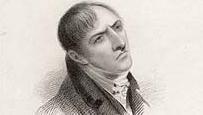
Robert Emmet, who was executed on September 20, 1803, for his role in leading a revolt against British rule, was aged just 25 at the time of his death.
The Government was contacted in 1978 about the bizarre method to be used by a US researcher trying to trace the location of the skull of the Irish patriot, Robert Emmet.
The researcher, Ann Druffel from Pasadena in California, sought to clarify to the Government the technique she hoped to use amid concern that some media reports about her mission had been misrepresented.
Emmet, who was executed on September 20, 1803, for his role in leading a revolt against British rule, was aged just 25 at the time of his death.
Following death by hanging, Emmet’s body was beheaded and dismembered. However, no family member or friends came forward to retrieve his body out of fear of being arrested.
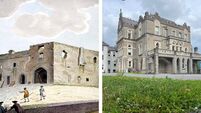
Emmet’s jailor at Kilmainham Gaol had been instructed to bury his body in the grounds of a nearby hospital known as Bully’s Acre.
HISTORY HUB
If you are interested in this article then no doubt you will enjoy exploring the various history collections and content in our history hub. Check it out HERE and happy reading
However, family lore has it that his remains were removed in 1804 and reinterred in the family vault (which was subsequently demolished) at St Peter’s Church in Aungier Street, although another rumour suggested they had been reburied at St Catherine’s Church on Thomas Street – the location of his execution.
The location of Emmet’s skull has captivated the imagination of many individuals over two centuries including the British poet, Percy Bysshe Shelley who came to Dublin to search for Emmet’s burial place because he was inspired by the rebel’s famous Speech from the Dock.
Ms Druffel explained in a letter to the Department of Foreign Affairs in December 1978 that she intended using a technique called “remote viewing” or “map dowsing” to determine if the patriot’s skull was in the vicinity of St Catherine’s Church.
She complained that newspaper articles about her visit to Ireland were “full of inaccuracies” as they had not checked to find out what her sources of information were about the location of Emmet’s skull.
In a newspaper report around the same period, Ms Druffel revealed she had engaged with a psychic and a hypnotist in her efforts to locate the skull. Ms Druffel expressed hope that the Government would support her formal request to continue her research in 1979.
She also outlined how she had extensive Irish family links.