Stricter asylum checks, more deportations, and more basic shelter in bid to control migration
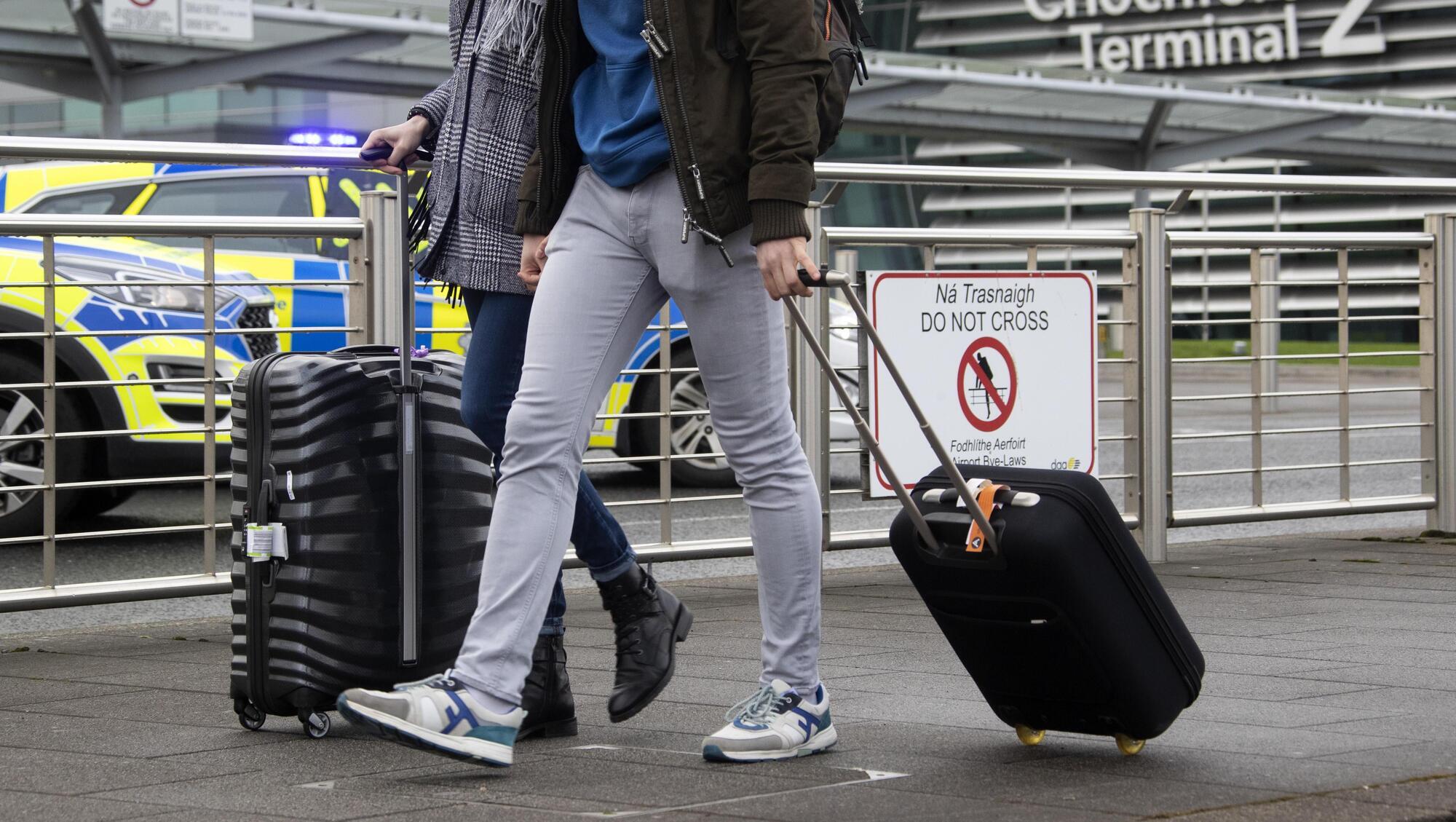
A unit will be set up at Dublin Airport to facilitate extra checks on new arrivals. File picture: Colin Keegan/Collins
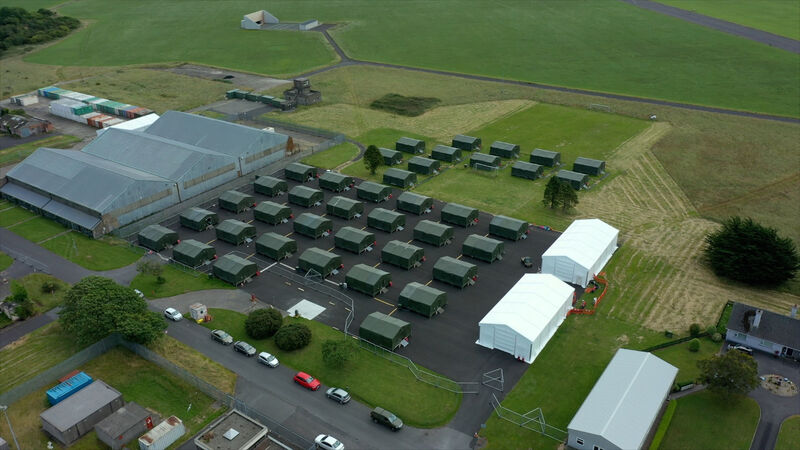
Tougher checks, more deportations, and tented accommodation during the winter for Ukrainians are among the measures the Government will approve to better control the influx of migrants into Ireland.
The Government will look to boost the €400 payment to Irish families who accept refugees into their homes, and issue a fresh call for pledges on a county-by-county basis, seeking commitments of at least six months.
Prefabricated units at military bases, including Mullingar barracks, are to be used and there will be a “doubling down” on the rollout of modular homes, sources have said.
The Department of Justice is to step up checks on people claiming to be coming from war-torn countries in light of the recent surge in arrivals, amid concerns that some are seeking to come here under false pretences.
A unit is to be established at Dublin Airport to facilitate these checks, and deportations are also to be increased, sources have said.
The measures will be adopted after at least 43 Ukrainian men were “turned away into the streets” this weekend as there was no room to house them due to the spike in arrivals.
The Ukrainian ambassador to Ireland has said the lack of accommodation for Ukrainian refugees arriving here is “unacceptable”.
Larysa Gerasko said the accommodation situation in Ireland was very worrying, but also said it was hard to predict the actions of the Russian government.
A building at Dublin Airport will open today, Monday, to prevent any more people being turned away should the Citywest processing facility remain full, it has been confirmed.
Discussions are continuing about the establishment of a second Citywest-type facility, given that the influx of Ukrainian refugees is likely to continue for months.
Taoiseach Micheál Martin and senior Cabinet ministers meet tonight for a “refocusing” on the Government’s response to the crisis, which has seen more than 60,000 people arrive here this year.
The primary focus is to see where extra accommodation can be sourced quickly and how refurbishments can be speeded up, with greater focus on the delivery of modular homes, which has been extremely slow.
Government sources said in recent weeks there has been a large increase in the number of single males arriving into Ireland from Ukraine, whereas initially it was mainly women and children. Males now account for 39% of all arrivals, the meeting will be told tonight.
Read More
It has also emerged that some Ukrainian families currently housed in hotels, with food provided, are refusing to move out of what is technically emergency accommodation and this is creating “a major blockage”.
Adding to the pressure is a greater number of people arriving here who are seeking refuge under the International Protection System as other EU countries have significantly tightened their entry requirements.
Sources have said there has been an increasing number arriving from Georgia claiming to be coming from a war-torn country, even though there is no war there.
Increasingly, Ireland is seeing economic migrants seeking to claim they are from a war-torn country and even refuse to say what flight they arrived in on when speaking to garda officers.
A source said Ireland must abide by its legal obligations to those from Ukraine, but said: “We cannot be a soft touch, or be seen to be a soft touch”.
Meanwhile, a Ukrainian interpreter has told of how some of her compatriots are considering returning home as they do not want to stay in Ireland if they are not welcome.
Lily Orlovska told RTÉ radio’s Morning Ireland that refugees arriving at the weekend were surprised that there was no accommodation available for them.
A number of refugees eventually returned to the airport after they failed to find accommodation in the city.
“I met them at the airport where they told me that they tried, they went to City West, there was no space. They were told to return to airport to stay there at least until Tuesday.”
A number of the refugees had slept rough on the streets as they did not know they could return to the airport.
Ms Orlovska spoke of a young couple she met who did not fill in the documents to apply for a temporary protection order.
“They did not want to stay in Ireland if they were not welcomed. They are thinking of going back to Europe to Germany where they can be given accommodation”.
Another woman she met had been refused temporary protection, she had hoped to find work in Ireland to support her family in Ukraine. She had sold items to buy the ticket to Ireland.
“So basically they don’t have money for food, or the ticket back. It's very sad”.

CONNECT WITH US TODAY



Be the first to know the latest news and updates