'We've no intention of rushing BusConnects plan ... the aim is to get it right'
Submissions on BusConnects Cork show homeowners concerned about the possible loss of parts of their gardens and on-street parking, the risk of devaluation of their homes, worries about the impact of construction on the structural integrity of their homes. Picture: Larry Cummins
The man who oversaw the delivery of BusConnects in the capital has now turned his attention to delivering something similar in Cork.
Despite some initial vocal criticism of the Leeside proposals, the National Transport Authority (NTA) director of transport planning and investment, and its deputy chief executive Hugh Creegan said when it was all boiled down, the choice is simple: do we want to deliver improvements to bus and bike infrastructure, or do we not?
Ongoing dialogue is the key to solving the issues, he said.
The lessons learned in Dublin in the design and consultation process around its 12 core bus corridors could help resolve many of the issues which have emerged in Cork following the first round of public consultation on the draft proposals for its 12 strategic transport corridors (STCs).
“I always know it’s a bad idea to compare Cork and Dublin," Mr Creegan quipped.
"But in the case of BusConnects Dublin, we went out with the first set of proposals, without the benefit of public input,” he said.
“We took the input and started the engagement at local level and for a lot of issues, we managed to find alternative arrangements that still gave us bus priority and cycling infrastructure but which dealt with some of the concerns that people had.
“I don’t want to misrepresent it and say we dealt with them all — that was impossible.
“But a considerable number were capable of being addressed and it is the same in Cork.
“Having had dialogue with various groups, it’s clear that there's not just one solution to everything.
“There are alternatives.
“And now having had the feedback in Cork, we're able to look at some of the other alternatives and see if they would be more appropriate”.
Following more than two years of consultation and revisions on the design of the Dublin bus corridors, the NTA has lodged planning applications with An Bórd Pleanála for several of the routes. Consultation on others continues.
Changes have been made to the initial designs of all the routes, in some places to protect trees, in others to minimise the impact on heritage structures, and elsewhere to mitigate the impact on property.
But the compulsory purchase of hundreds of properties has been unavoidable — albeit fewer than was originally predicted.
While October 3 was the deadline for formal submissions on the draft STCs in Cork, Mr Creegan stressed the process of engagement would continue over the coming months.
“During that process, we're able to indicate what changes are likely to be made. So it's not a case that people need to wait until everything is finished,” he said.
“There will be a dialogue in the intervening period where we're going to give feedback.
“We will, in a lot of cases, be able to give some comfort as to the direction of the changes being made.
“But we still have lots of places where we’re affecting people and we're not going to be able to solve it fully for them.
“And the trade-off becomes do we want to do this better public transport and cycling network, which does affect them, or do we not want to do it?
“That's the consideration that has to take place at the end.
“On every corridor, we will have some level of property acquisition, but less than the current proposals.
“I think on every corridor, we're able to make changes, based on the feedback, but it's probably too early for us to say what specific places, and where it’s impossible for us to make changes. It’s just too early to say that.”
The initial feedback has been overwhelmingly critical, with several local councillors describing some of the proposals as “bonkers”, with others claiming the designs in some areas have reduced people to tears.
The submissions show homeowners concerned about the possible loss of parts of their gardens and on-street parking, the risk of devaluation of their homes, worries about the impact of construction on the structural integrity of their homes, tidy towns groups concerned about the loss of hundreds of trees, and business people concerned about the impact the loss of on-street parking might have on trade.
Several have criticised the NTA’s initial approach to affected property owners, and how it has engaged with those affected communities.
But Mr Creegan said he was not sure if the NTA could have done it any other way.
“We published an initial set of plans to get public input. So they were developed without the benefit of public input, with the intention of seeking it — which we’ve done,” he says.
“And we expected that there would need to be changes — that’s the nature of good consultation, that there's a dialogue, people’s views to be considered and taken on board or changes made.
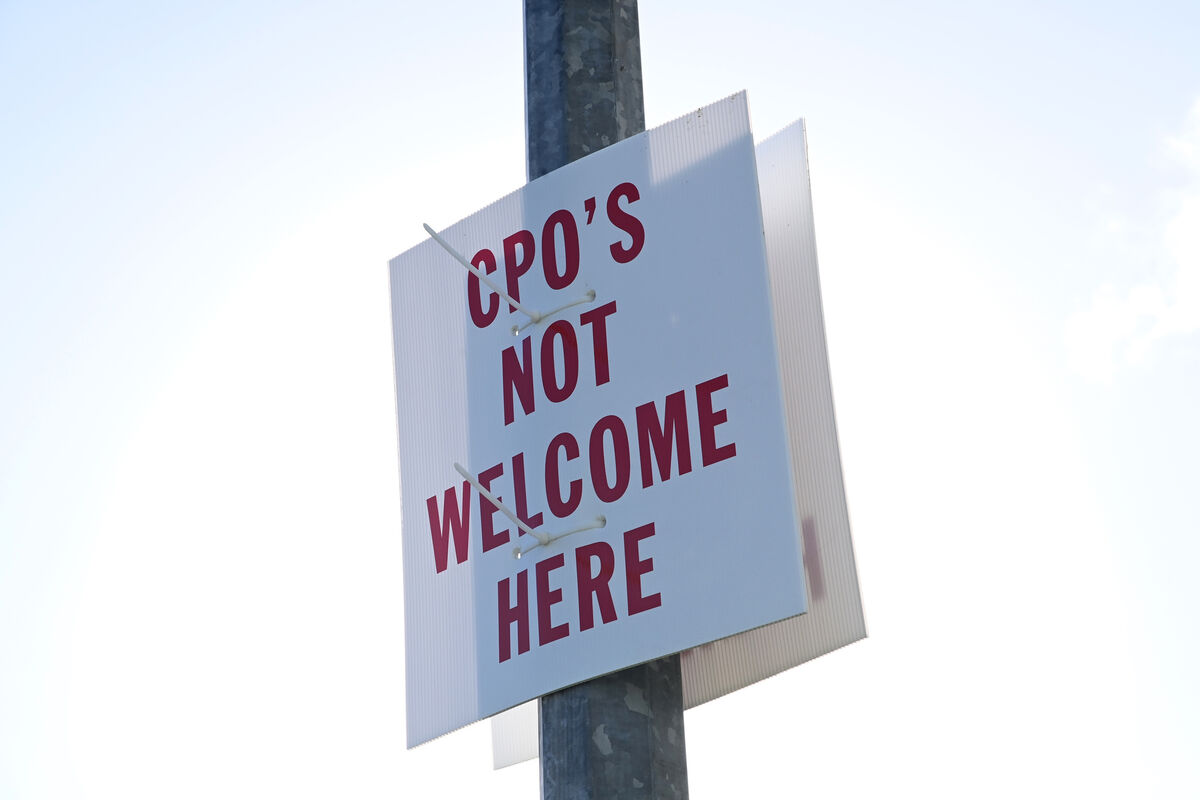
He is also very keen to stress the NTA has yet to issue any compulsory purchase orders (CPOs) on any property.
The NTA has written to property owners whose land may be affected by the STC proposals to give them advance warning of the proposals — that’s all, he said.
“We wrote to them in advance, because it is a courtesy to inform them in advance rather than them reading a newspaper or something that their properties, if this plan was to proceed, might require us to acquire a small piece of their front garden,” he says.
“But that letter clearly said this is the first stage of a consultation process.
“This is not a decision, there is no decision made to build anything.
“We wanted to inform them in advance that this was a possibility and in each case, we've offered them a one-to-one meeting with us to discuss the proposals in more detail.
“We’ve had dozens of one-to-one meetings with various people.
“And if I was to do it a different way, and not notify them in advance, then the criticism would be that it’s discourteous to those people who might be directly impacted by having to read it at the same time as everyone else, with no advance notice, and no personalised information provided to them.
“So for that reason, we believe we had to do it the way we did it in terms of issuing those letters.”
In other areas, some of the draft proposals, including one to build a flyover through the Mangala woods near Douglas, appear to have been dropped already — unofficially at least.
“Like every part of this plan, nothing is set in stone and it's there to be to be reviewed as part of the next stage,” Mr Creegan said.
“And we've said publicly we're not wedded to that bridge, or indeed to any other element of the plan, and that we were going to relook at that at the end of the consultation period.
“It was important to us not to make formal changes during the consultation period because people have gone to the trouble and time of reviewing the drawings and making submissions and for us to change something mid-stream would be incorrect — we’ll wait until after the consultation is over to make the changes and have a further round of consultation.
“They're all proposals.”
He has also dismissed suggestions from some opponents that the STCs were designed by American consultants using Google maps.
He said Irish engineering and transport experts have designed the STCs using maps from the Ordnance Survey of Ireland — “the officially mapping agency for Ireland Inc”.
“The maps may be a year or two out of the date, but we will be doing our own surveys in the detailed design process later,” he said.
“I have walked many of those routes and people in the NTA have cycled all of those routes. Some of the design team members are based in Cork.”
Mr Creegan also defended its publicity and communications campaign, which he said included an initial media launch, and a major advertising campaign across newspapers, radio, and outdoors on bus shelters and on buses.
“But on top of that, we also engaged a company to distribute a BusConnects leaflet across every household and business and we did that during August,” he said.
He said the initial round of consultation involved one-to-one meetings with property owners, information events, community forums, and further meetings with smaller resident or community representative groups.
Getting through all those submissions and considering the issues raised will probably take until next March or April.
Options can be suggested and explored, and as happened in Dublin, alternative ideas or solutions can and will emerge from local communities, he says.
One case, in particular, stands out for him, where the NTA dropped a road-widening plan and opted for a one-way system following a suggestion from the local community.
“When we looked at it, it was fine from the point of view of public transport. It achieved the same objective, and we were able to change the plans completely at their instigation and end up with a proposal that we're happy with and they’re happy with,” he says.
“And that's not an isolated situation. It happened in a good few places.
“The thing about this type of work is there's more than one solution.
“And that gives us opportunities to re-look at an alternative that might be less impactful.”
He said the experience of BusConnects Dublin has shown that bus priority can be delivered everywhere it was planned, but delivered in different ways to what was first suggested by the NTA.
While one-way systems do not work for buses — it means people have a longer distance to walk when you put a bus service on parallel roads — one-way systems for cars can give the NTA enough space on a road to provide a bus or a bike lane without the need to widen the road into private gardens.
In some places, where Dublin residents faced CPOs, residents suggested the installation of bus gates to prevent through traffic, again reducing the need for road-widening in these locations.
In a small number of places, the NTA has been able to use traffic signals to give bus priority along short sections of road where buses and cars share the road, but car access is controlled.
Residents also suggested alternative bike routes which avoided the need for road-widening into gardens.
“That portfolio of options meant that in Dublin, we’ve ended up with the same level of bus priority as we started out but it’s been achieved in a different way that was less impactful on residents,” Mr Creegan said.
“The way for issues to be addressed is a dialogue process.
“I don't want to exaggerate and say we’ll solve every problem — we won’t because the only way you could do that is to do nothing. But we'll definitely explore if there is some alternative that might alleviate the issue and we're happy to do that.
“The message also is that there is a need to do something in Cork.
“Cork is a massively growing city, and it’s already got a level of congestion.
“If we don't improve the bus system and cycling facilities, the big picture is that congestion is going to get more widespread and more severe.
Cork has also decided that it wants to be climate neutral by 2030.
“One of the biggest parts of that has to be transport emissions — it's a major component,” Mr Creegan said.
“So our view is in order to achieve that ambition, we have to address the transport issues in Cork and try and provide alternatives in the sustainable transport area.” Several city councillors agree.
Fine Gael councillor Shane O’Callaghan, who organised a meeting with the NTA for residents concerned about the Mangala bridge proposal, described it as productive, and a big step towards ensuring it would not happen.
Green Party councillor Oliver Moran said he believed those communities that can engage fully and deeply in the consultation process stand to benefit most between now and 2024, when planning applications are expected to be ready for submission to An Bord Pleanála.
Veteran Green Party politician Dan Boyle said the process that accompanies the making of these submissions must be open and responsive, that tree removal should be avoided, and where unavoidable, the carbon benefit of what is replanted must be greater.
“What follows the initial first draft proposals has not been, nor should it have been expected to be received as being universally popular,” he said.
“The public events that have occurred have been good experiences but to reach their full potential, only substantial changes in the next draft will encourage public buy-in into the necessary changes.”
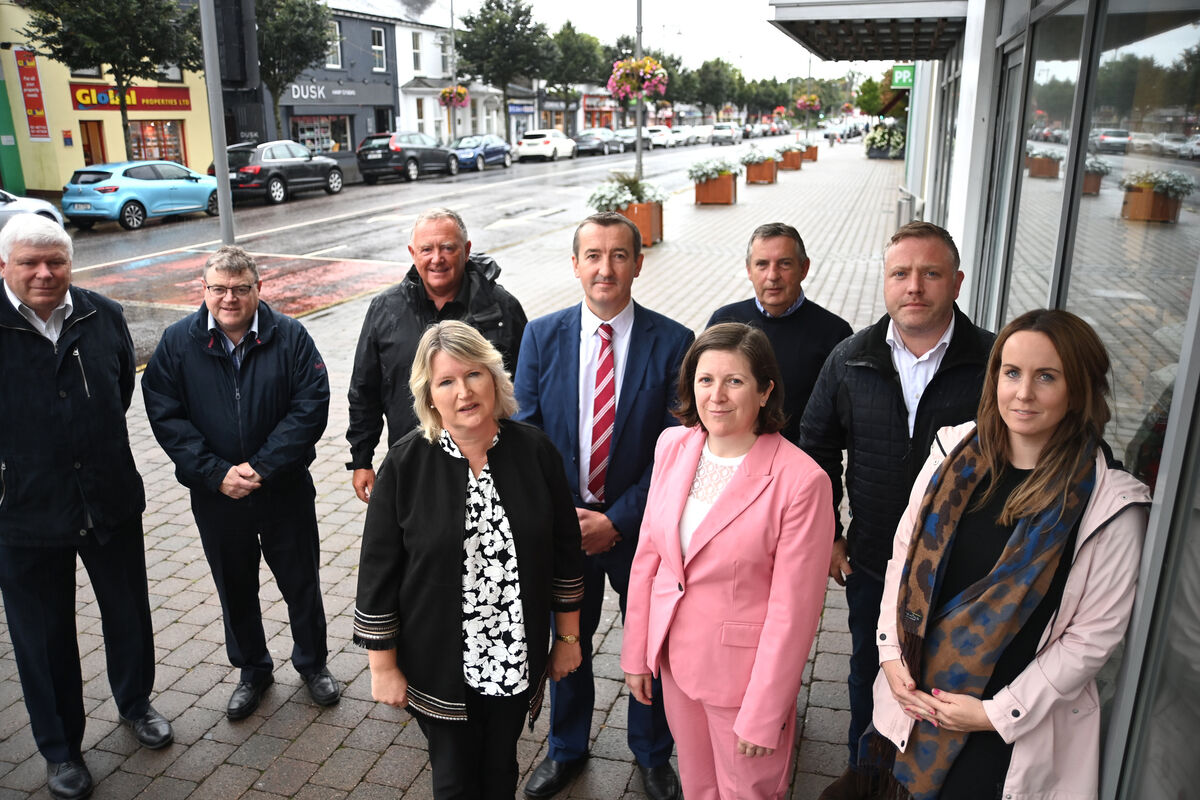
Traders in one of Cork’s largest suburban towns, and its residents facing land acquisition, have come out fighting against the BusConnects proposals in their town.
The plans for strategic transport corridor (STC) E linking Ballincollig to the city, which at 11km is the longest and most expensive of the city’s 12 STCs, includes a controversial bus gate to prevent cars driving through the heart of the town, and the proposed removal of all on-street parking from the town centre.
Chairperson of the Ballincollig Enterprise Board Emer Cassidy said it would spell disaster for the town and put jobs at risk.
Finbarr Creed, who has lived on Main Street for 25 years, said he felt disgusted when he first saw the extent of the proposed land take on his property just outside the town centre.
“It was like throwing a hand grenade at residents and saying we’ll take the pin out later,” he said.
STC E, which runs from west of Ballincollig, through the town centre, and city-bound via the Model Farm Road, Dennehy’s Cross and Donovan’s Road, has been estimated to cost just over €84m — €24.6m on infrastructure and up to €60m on land acquisition — with 283 properties set to be impacted and the possible removal of about 373 trees.
Land take is proposed in Ballincollig, along Model Farm Road between Carrigrohane Road and Rossa Avenue, and on the section between Melbourne Road and Dennehy’s Cross.
Current bus journeys take up to 56-minutes, and are forecast to rise to 67-minutes without BusConnects.
If this STC is built as planned, it would deliver bus journey times of 35 minutes.
This STC is viewed as one of the most strategically important because it follows the indicative route of the proposed €1bn Cork light rail system that will ultimately link Ballincollig to Mahon.
It is hoped population density along the STC route will rise and public transport patronage will increase ahead of the delivery of the light rail system.
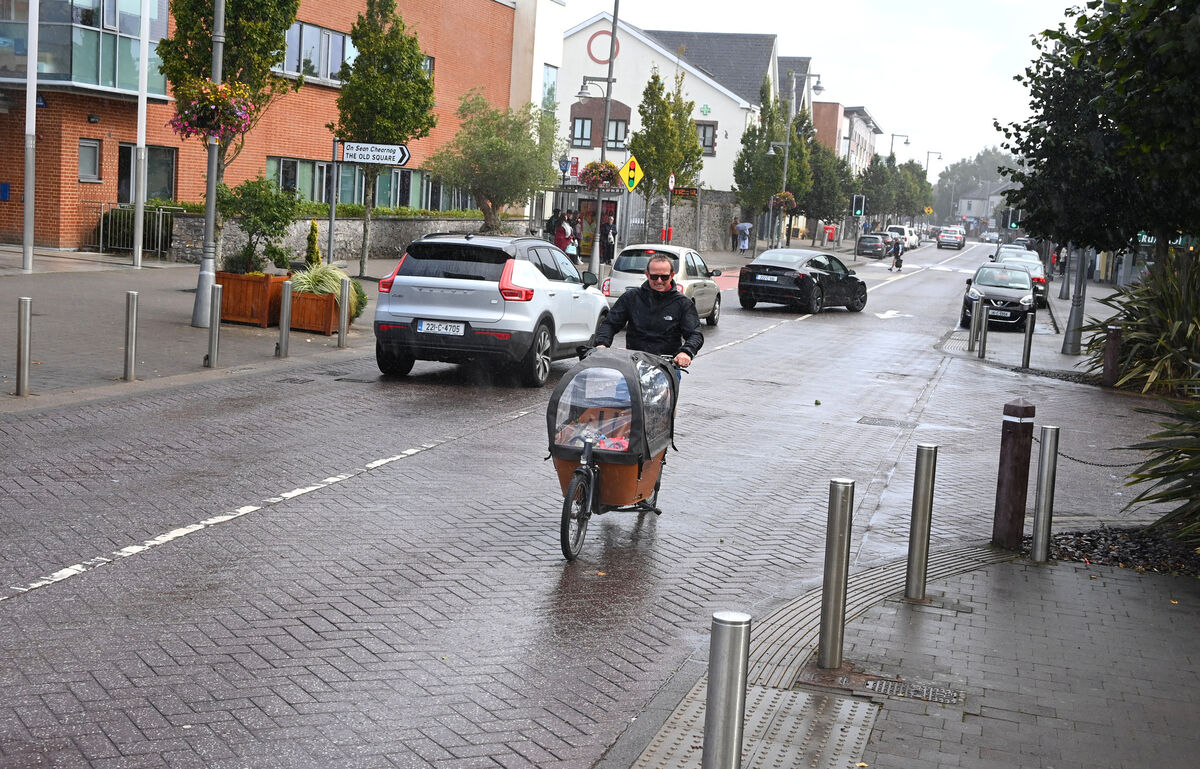
But despite the positives — reliable buses and enhanced bike and pedestrian facilities — the level of opposition to the BusConnects element is already quite significant.
Ms Cassidy said: “There are serious implications here for jobs out of this. Main Street is made up of family-run business, many of whom have been here for the last 50 years.
“They depend on people having access to their businesses.
“What is proposed is going to take the traffic away from main street.
“You don’t need to shut off the town to vehicular traffic to create a better bus service. The blockages are not in Ballincollig. The buses coming from the east are getting stuck in the city.
“We don’t have a problem with the buses coming from the west. It’s the buses coming from the city that are being blocked in the city.
“That’s why people don't use the bus service.
“We shouldn’t have to suffer to sort their problem out.
“I don’t think the NTA is listening to us at the moment.”
She insisted the business community has always been pro-public transport, and said they lobbied for several years for improvements to the 220 bus service, which led in 2019 to its launch as Ireland’s first 24-hour bus service, and also to an extension of the service westwards to the EMC plant.
“We are all for bus connectivity and public transport. We welcome this proposed investment and we look forward to the light rail system but we see a number of flaws in the current proposals for the town. The essence of what is being proposed is to cut off main street,” she says.
John Sheehan, the managing partner with Sheehan Capital, has lived on Main Street for 32 years and has substantial property interests across the town.
He is facing a double whammy — a CPO of part of a commercial premises and a CPO of part of his front garden.
“When I saw the proposals first, I didn’t think it was real. I thought it was something for 2090, something totally futuristic and all to save a few minutes off a trip to Saint Patrick’s Street?” he says.
Mr Sheehan developed the Eastside retail centre on the site of the former West Park Hotel several years ago.
“We invested in Ballincollig because the tidy towns committee has done such a good job here,” he said.
“We developed the Eastside centre on a site which was derelict for almost a decade, we approached Iceland and Costa Coffee and got them into the town, and they are doing a very good trade but now the NTA wants to take 4.5m from the front of the property, which would mean the loss of 28 of the centre’s 46 parking spaces.
“The businesses trading there are under license with me to provide so many parking spaces for them. It’s part of the contract.
“It would’ve been part of our planning too, to provide parking spaces. They are now being removed.
Mr Creed, who lives at Poulavone, said the plans have caused huge upset among his neighbours, who are all facing the loss of some of their gardens.
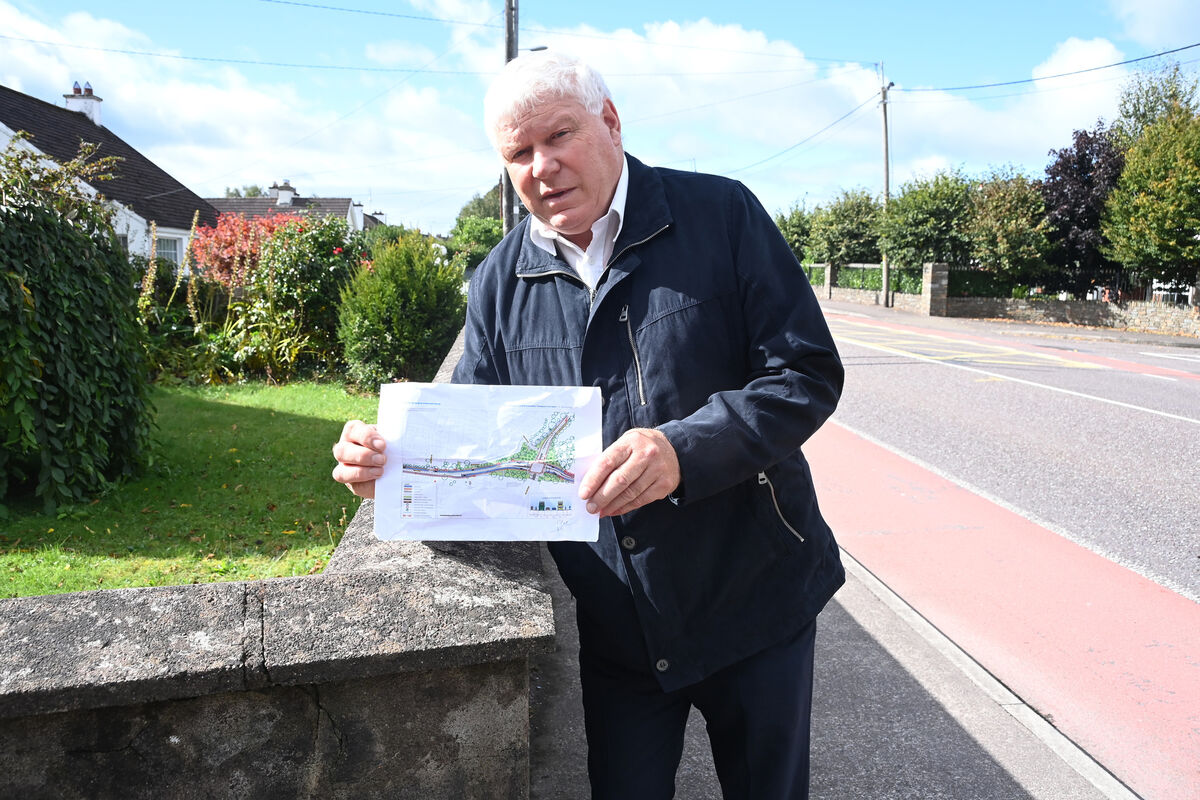
“Basically we were living a nice quiet life. I have recently spent quite a lot of money doing up the property and I was hoping to live out my years there,” he said.
“I was going to put a parking space in front of my house because I am getting older and I was hoping to be able to back in and drive. But that option looks to be gone now.
“People will look at these plans from the outside and think ‘this is great — new bus lanes and cycle lanes’ but a lot of people are suffering for the sake of a five-minute improvement on journey times.
“The whole thing is inconsiderate and disappointing and it was by pure chance that I heard about it.”
He got a one-to-one meeting with the BusConnects team but said the response left him wondering if they really get how serious the impact on his property could be.
“They did say that they were open to compromise and that this plan hasn’t been finalised yet. But I’m none the wiser. The uncertainty is all the time there,” he says.
His neighbour, Michael McCarthy, who is set to lose about 13ft from his front garden, said the plans have reduced some of his neighbours to tears.
He is also very critical of the NTA’s approach.
“It has been very impersonal, with letters to affected property owners addressed to the ‘home owners’,” he says.
“It is great to have a better bus service do we really need the extent of what they’re planning? I’m not too sure.
“We only seem to have a traffic problem for an hour in the morning and maybe an hour and a half in the evening but other than that it’s free-flowing.
“I think the proposal to replace the Poulavone roundabout with traffic lights junction will just cause another big traffic jam and back it up past our houses.
“I think there are alternatives. But closing down the heart of our village, where we go for the chemist, the little bit of shopping, that will be taken from us. I really feel for the business in the heart of a town centre.”
One of those traders, Seamus MacEoin, who has run MacEoin jewellery on Main Street for the last 20 years, said the NTA’s plans would mean “devastation” for the town.
“It would mean the ruination of the town. The proposals will prevent cars from driving past my shop,” he said.
“There used to be about 165 parking spaces on the main street years ago and it’s down now to just over 50. And we fought hard to keep those.
“I have two parking spaces outside my business and I fought to keep those too.
“My business depends on people being able to park close by and there is nobody going to come into Ballincollig on a bus to buy a diamond ring.
“I have a lease coming up soon and the question now is should I renew it?
A former sergeant in the traffic corps, he has suggested an alternative bus route along the Kilumney Road, using a strategic landbank to the rear of Muskerry Estate to facilitate bus lanes, with buses running through the village up to once an hour.
“And they don’t have to ruin Ballincollig to get it,” he said.
The traders are being supported by local Fianna Fáil councillor and former lord mayor Cllr Colm Kelleher, who runs a tyre business in the town centre.
Asked if, as a member of a Government party, he should be supporting BusConnects, he said yes, but only if it was being done on an equal basis.
“This is Government policy and I am a member of a party that is in Government but my party signed up to this — it was primarily a Green Party idea,” he said.
“I have no problem with an investment in our transport system but I want it to be done in a fair manner.
Mr Kelleher said he piloted the use of an electric car during his term as mayor last year, but he also objected to bike lane proposals in the town last month.
He insisted he supports sustainable transport plans but said a bus service, irrespective of how reliable or fast it is, will not suit everyone.
“And a bike certainly won’t either. For some people, their only form of transport is a car,” he said.
“We do need a sustainable transport system to get that model shift that is required by all European nations. But that model shift will not suit everyone. It’s not one size fits all. What has been proposed by the NTA is too excessive.
“They have a graphic of the Main Street that looks beautiful, with buses and bikes and loads of transparent figures representing people but when I saw those figures, it reminded me of ghosts — and that’s what this plan will do, it will turn the town into a ghost town.
“There are alternatives.
"We are moving towards electric cars and super hybrids but in the interim we have indigenous businesses in Ballincollig, florists, chemists, health food shops, my own business here, and they rely on people getting in and getting out by car.”
He also claimed the proposed bus gate will lead to a 90-second improvement in bus journeys through the town.
“We are all for cycle lanes and sustainable transport and understand about the service and it’s great that we have the money ringfenced from central government for BusConnects but it cannot be at the expense of everything else.
“It can’t be at the expense of those who choose to drive. That’s the way it seems — the people who choose to drive now are being victimised.
The deputy chief executive of the NTA, Hugh Creegan, said they were aware of the various concerns which have been raised in Ballincollig.
“It's important to say that what the proposal issued was seeking to do was to reduce the through traffic through Ballincollig Main Street so that it became an non congested area, so that buses and the cyclists could could use it without delay but that all businesses were accessible,” he said.
“But we’ve heard the concerns of the business groups. They have expressed those clearly and there are other alternatives available there and we will look at the end of consultation period as to what those alternatives might be and how effective those alternatives might be and come back with something as part of the second round of consultations in due course.”

CONNECT WITH US TODAY



Be the first to know the latest news and updates