'Roses for the queen. Touched by David Beckham in the queue'
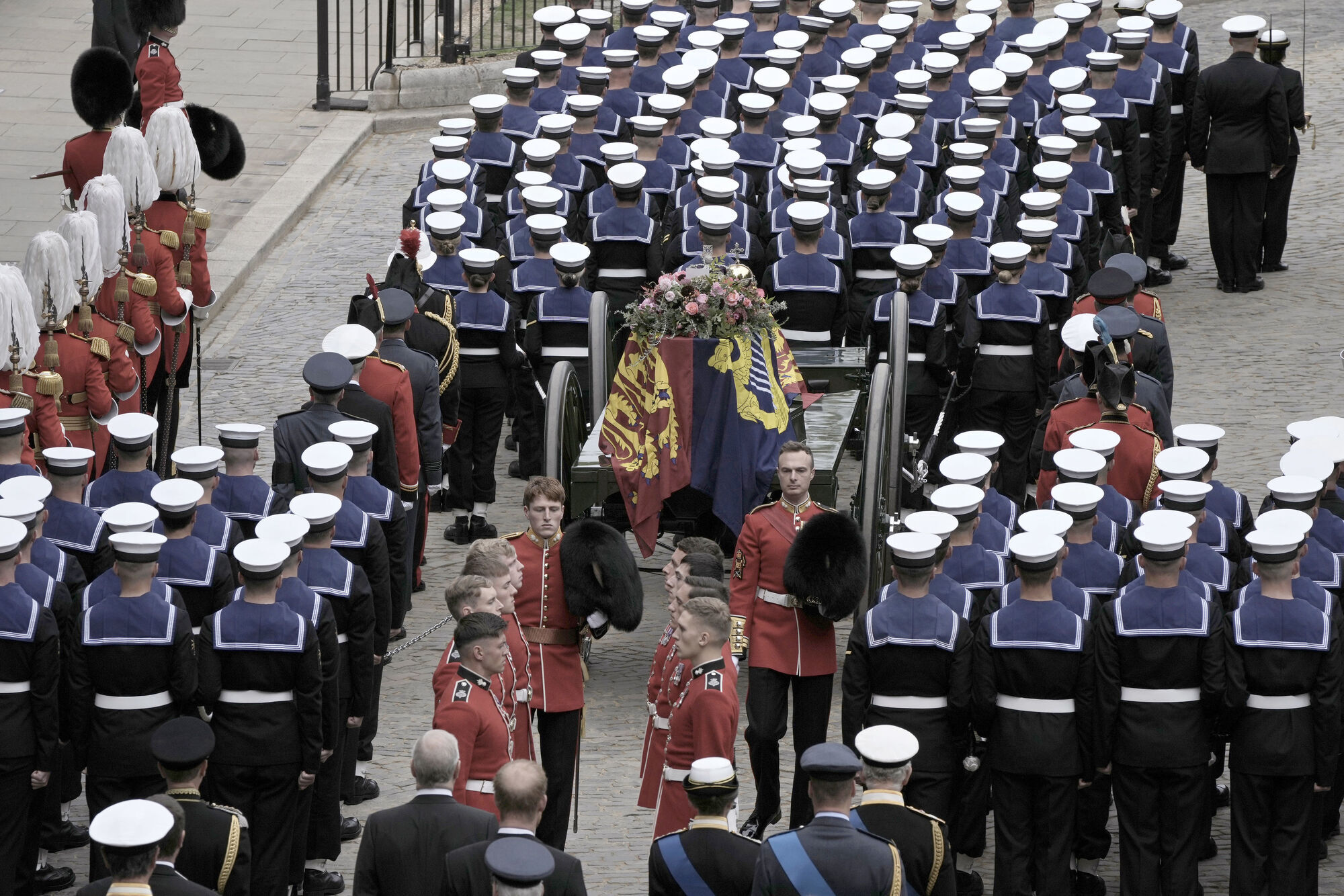
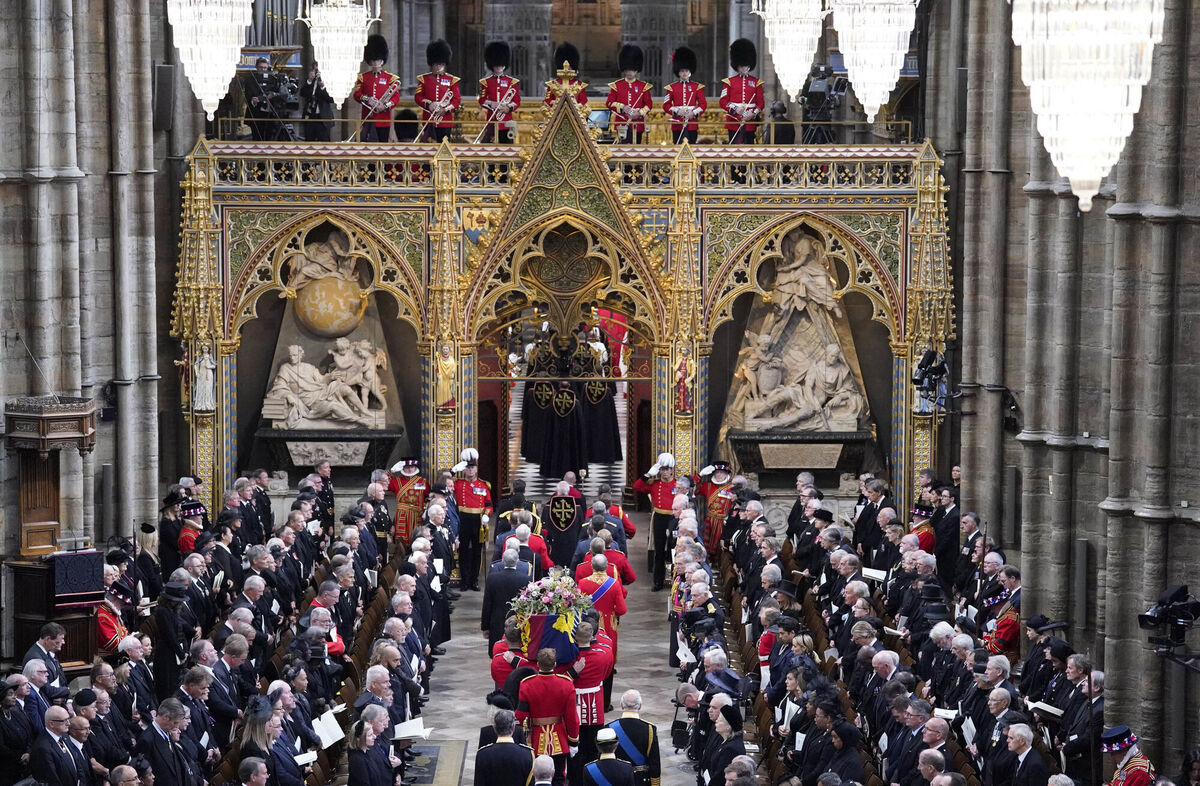
The coffin of Queen Elizabeth II is loaded on to a gun carriage pulled by Royal Navy soldiers to go. Picture: Nariman El-Mofty/PA Wire
"Roses. Roses for the queen. Touched by David Beckham in the queue."
These remarks from a street seller were a rare moment of levity on the most sombre of days in central London as the pageantry and solemnity that accompanied the death of Britain’s Queen Elizabeth II reached its zenith for her state funeral on Monday.
Dozens had camped out overnight for a prime spot at The Mall, the long stretch of road between Trafalgar Square and Buckingham Palace.
Thousands more got up as early as possible to throng the streets as the long-serving monarch made her last journey through the capital, on the way to her final resting place in Windsor.
This is different from 'The Queue', where tens of thousands waited hours on end to see the queen lying in state. That spectacle was marked by a certain camaraderie, togetherness and a shared determination to see it through to the end. This is an altogether more sombre affair.
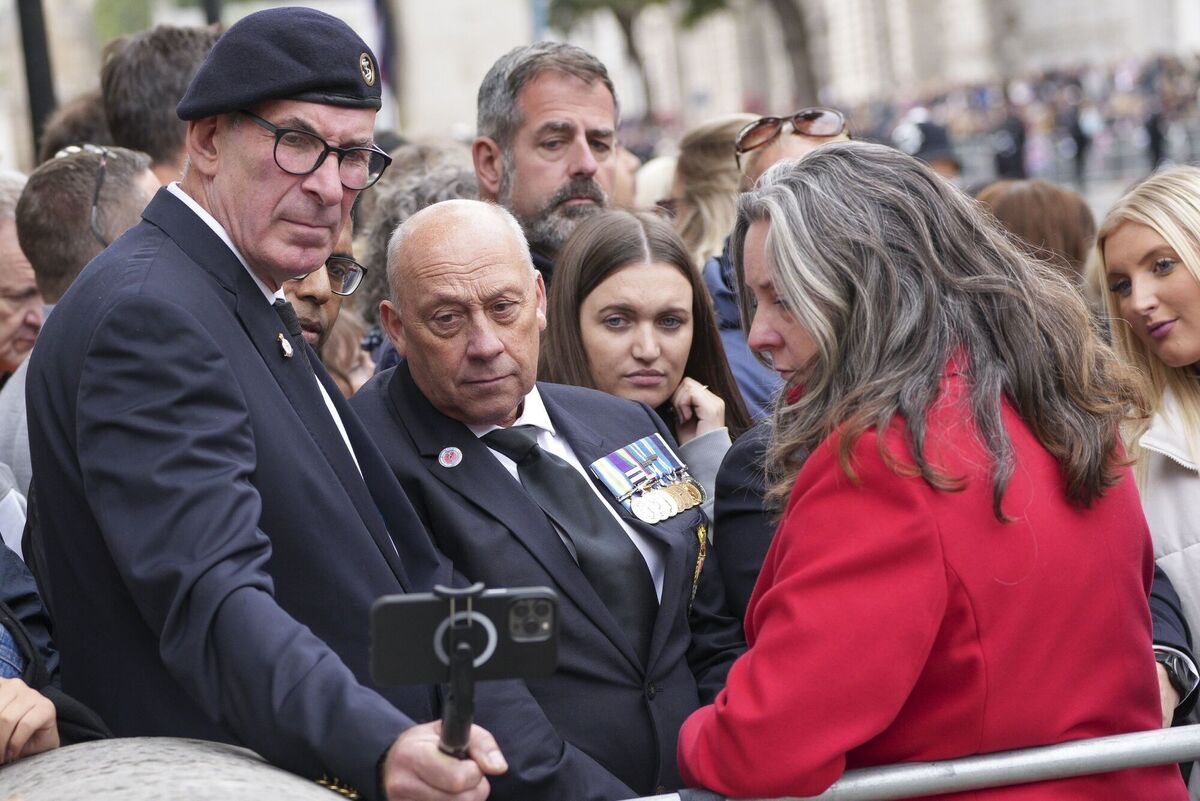
As the seller tries to offload his roses, hundreds are passing on their way to winding from Pall Mall onto St James’ Street, and then onto Picadilly. From there, they would go onto Hyde Park Corner or towards the Palace on Constitution Hill to get a glimpse of the queen’s funeral cortege as it passed after the ceremony.
Most are wearing black, while there appears to be a majority of families with children. This is in sharp contrast to the queue, where many families had opted not to bring their children in the face of wait times of as much as 24 hours at their peak on Friday.
This is different. This is a historic day that most Britons will not have seen an equivalent for in their lifetimes.
Queen Elizabeth had reigned for 70 years, following the death of her father George VI in 1952.
She was all entire generations had ever known, the matriarch of her nation. In this fractured country, her death has provoked a reaction from every person regardless of their opinion of the monarchy.
So much has been written and said about her decades of service, and the warmth and love felt for her, not just in Britain but across the world, in the last 10 days.
Her funeral service at Westminster Abbey today was a space where these themes were driven further home, during a ceremony featuring numerous hymns and the most ceremonial of rituals.
It is believed the queen herself had been consulted long in advance for how her service should be conducted.
Dozens of world leaders were in attendance, including Taoiseach Micheál Martin and President Michael D Higgins, Ireland being one of the few nations where both the head of government and head of State received an invite. The Taoiseach, himself, had yesterday pointed out her death would be acutely felt by Irish people on both sides of the Irish sea.
Delivering his sermon, the Archbishop of Canterbury Justin Welby invoked the promise made by the queen in a broadcast on her 21st birthday, where she said she would dedicate her life to serving the nation and the Commonwealth.
“Rarely has such a promise been so well kept,” he said. Mr Welby also recalled the remarks made by the queen at the onset of the Covid-19 pandemic.
He said: “Service in life, hope in death. All who follow the Queen’s example, and inspiration of trust and faith in God, can with her say: ‘We will meet again’.” At 11.57am, inside and outside Westminster Abbey, a silence descended.
After two minutes had passed, the trumpets began again and this led into a chorus of God Save The King as the camera focused on King Charles III.
The switching of the lyrics of the national anthem is a tangible example of what has changed. As Britain mourned its beloved queen and began to say their final goodbyes, a new era begins.
And, as whole generations of families turned out to witness this historic spectacle, it was tempting to believe none of them may ever see its like again.


CONNECT WITH US TODAY



Be the first to know the latest news and updates