Palestinian refugees bring dance of hope to Ireland
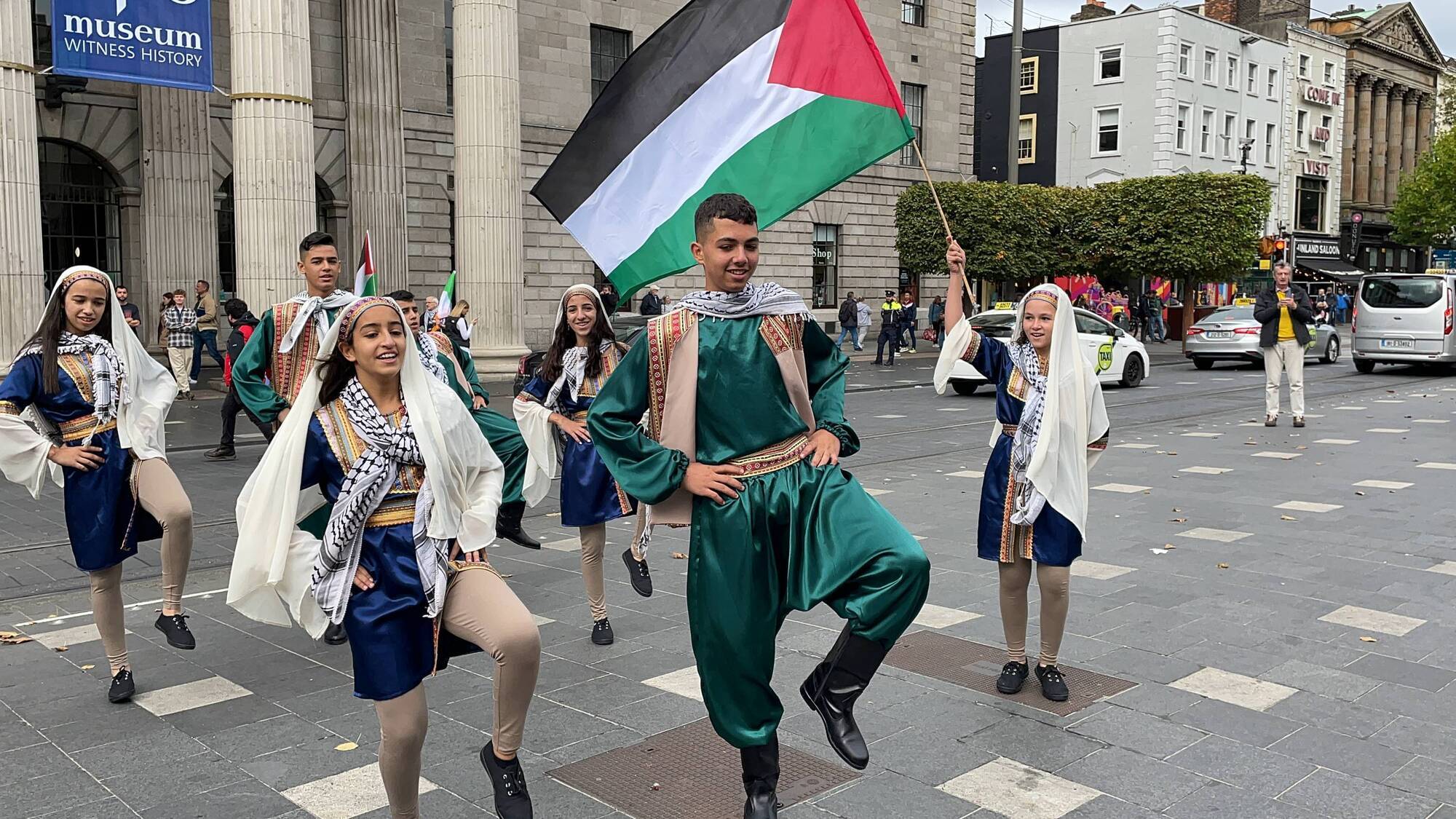
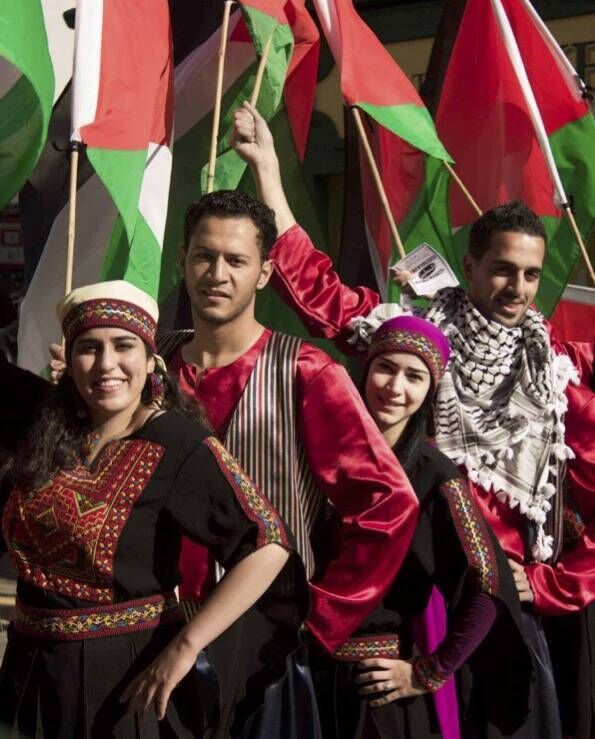
The Lajee group of Palestinian dancers in Ireland.
“In the West Bank, they are killing us slowly. Every day we hear of more Palestinians being killed. This morning, we woke to hear of the killing of two more young people.”
Mohammad Alazza's statement on what is happening in the Aida refugee camp in the Palestinian West Bank is at painful odds with the swirling, colourful clothes of the traditional Palestinian dancer he is currently touring Ireland with.
He says retaining their culture is a form of peaceful resistance to Israeli occupation. Sharing their culture and ideas with other countries such as Ireland, which also suffered under occupation for many years, is an important opportunity to build connections and learn from each other.
The tour has allowed 19 young people, aged 12–18, from the Lajee Cultural Centre in the Aida refugee camp in Bethlehem to come to Ireland to perform.
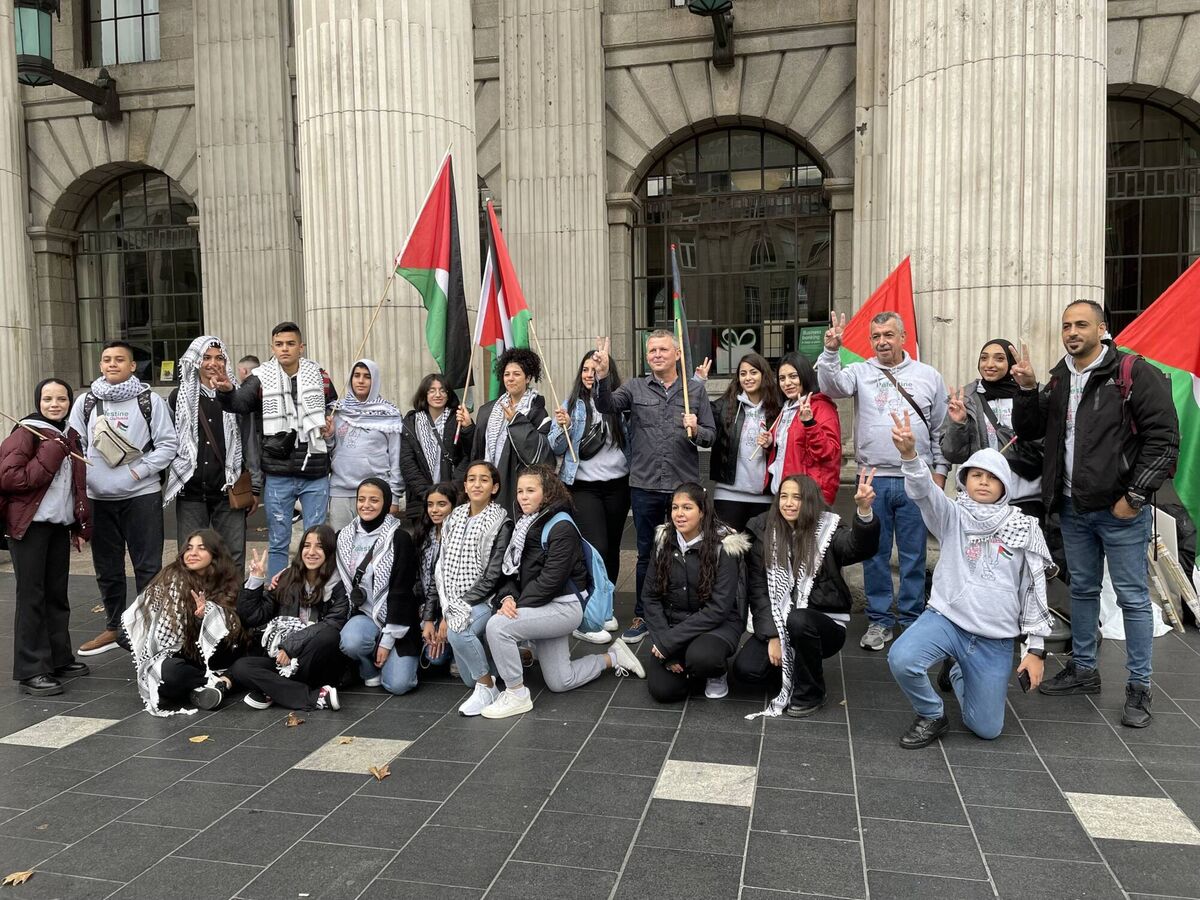
Today, they will perform in Cork in the Nano Nagle Theatre in the Presentation Secondary School at 7.30pm alongside Irish performers, including Douglas Comhaltas, Ballyphehane Pipe Band, All-Ireland Bodhran champion Séan Deasy, the Misneach & Kabin Crew rap group, and Joan Denise Moriarty School of Dance.
On Sunday, they will also perform in Fitzgerald Park at 1pm, weather permitting.
A photographic exhibition to show daily life at camp Aida is also touring.
Since it was founded in 1950, some 37 people, mostly young people and children, have been killed in the Aida refugee camp, Mr Alazza said. One boy was shot dead in front of him on the street there.
Mr Alazza was born in the refugee camp. Now he lives there with his own young family.
His grandparents were moved there “temporarily” some 70 years ago. But their home in a nearby village remained occupied, and in four generations, his family has never returned.
Aida camp is in a heavily militarised zone in Bethlehem close to the main checkpoint between Jerusalem and Bethlehem. There are six military watchtowers are dotted around it, leaving residents feeling exposed and under constant surveillance.
The contentious separation wall, or the West Bank Barrier, built by the Israeli government, also rises darkly over the camp, another constant reminder of occupation.
“All our life we are watched by these snipers," said Mr Alazza.
"The checkpoints are not about searching. They’re about reminding you every day that ‘you’re still under occupation, you still need permission from us. We control you'.
“Even in our home, lots of Israeli invasions come in the middle of the night. It’s often just training for their soldiers and to give a message to residents ‘we’re here, we can get you'.”
The small and densely populated refugee camp has long been the target of Israeli military raids.
Aida was also designated as the community most exposed to tear gas in the world in 2018 by the UN Relief and Works Agency for Palestinian Refugees.
At just 0.71km squared, it is too small to house the growing refugee population, which has reached some 5,000 people.
Residents have limited access to employment, movement, education, and healthcare but have organised a recreational space including a playground, garden, and soccer field that is covered to protect children and adults from ongoing tear gas and bullet attacks.
The Lajee Center was established in Aida Refugee Camp in April 2000 to provide refugee youth and women with cultural, educational, social, and developmental opportunities.
After Israel was established in 1948, some 750,000 Palestinians fled or were forced to leave their homes and some of them ended up in the Aida refugee camp. More then 70 years later, their descendants are still there.
“As a Palestinian refugee, we’re not allowed to take our land because it’s under Israel’s control," said Mr Alazza.
“Today, we are 74 years living under occupation. For 74 years the catastrophe is ongoing, and today we still suffer from this occupation.
"You never have your own privacy. Every year life is getting harder and harder.
“The soldiers have the power. I saw a boy killed in front of my eyes. He was doing nothing. They said it was by accident. If it was by accident, they would not have shot three live bullets — one hit a boy in the leg, one hit the street, one hit the boy in the heart. There was nothing [no protests] that day.
“But if there wer clashes, if a teenager was throwing stones, the military base is protected from heavy guns, so what will stones do to a military base? Nothing.
“They [Israeli occupation] want us to be sad, useless, not educated, not creative. But this is part of the challenge and struggle to continue our lives, to support young people in different activities, educate them on their rights, give them the opportunity to learn the music, dance, participate in summer camps, to help them continue with their lives."
“To come to Ireland is very special. Ireland, for us, is a very special country because we’ve had the same struggle.
“I hope while we’re here we can display the true nature of Palestinian life. We want to share our dancing, our music — our lives are not just about occupation."
Radhd is one of the dancers and musicians from camp Aida who has travelled with the Lejee Centre to Ireland.
She turns 18 next month, and has won a scholarship to study medicine in Cuba, which she will start next year.
She said that life at the camp is hard.
“It’s very difficult to feel comfortable there," she said. "There are six military watchtowers around. If you want to go anywhere outside the West Bank, you must ask Israeli soldiers.
“It was very difficult as a child to play on the street, suddenly an Israeli soldier would throw tear gas. There’s tear gas, guns, bombs.
Preserving their traditional music and dance is part of Palestinian resistance.
“Saving our traditional dance and bringing it around the world is part of refusing Israeli occupation,” she said.
Radhd is an A-grade student. But her 93% in final year exams is marginally below the grade for medicine in the university near her home which requires closer to 98%, so she has accepted a scholarship to Cuba.
“Cuba stands with Palestine," she said. "Cuba loves the Palestinian people. I hope to be free there, to have peace.”
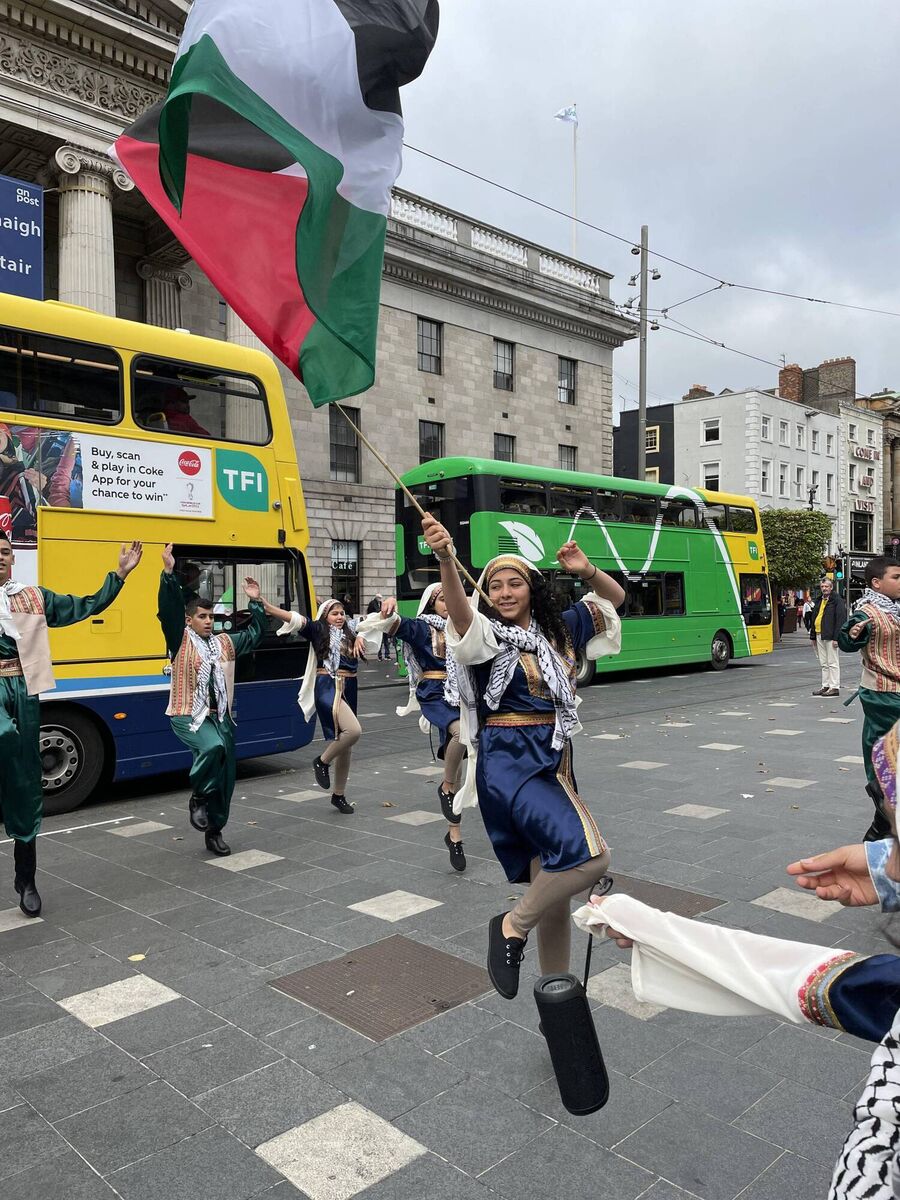
The group performs a free event at Newbridge Town Hall on Saturday at 10.30am, then at Nano Nagle Theatre, Presentation Secondary School, at 7.30pm. Tickets can be booked here.
A performance at Town Hall Theatre, Galway, follows on Wednesday.
CONNECT WITH US TODAY



Be the first to know the latest news and updates