What are other countries doing to manage the energy crisis?
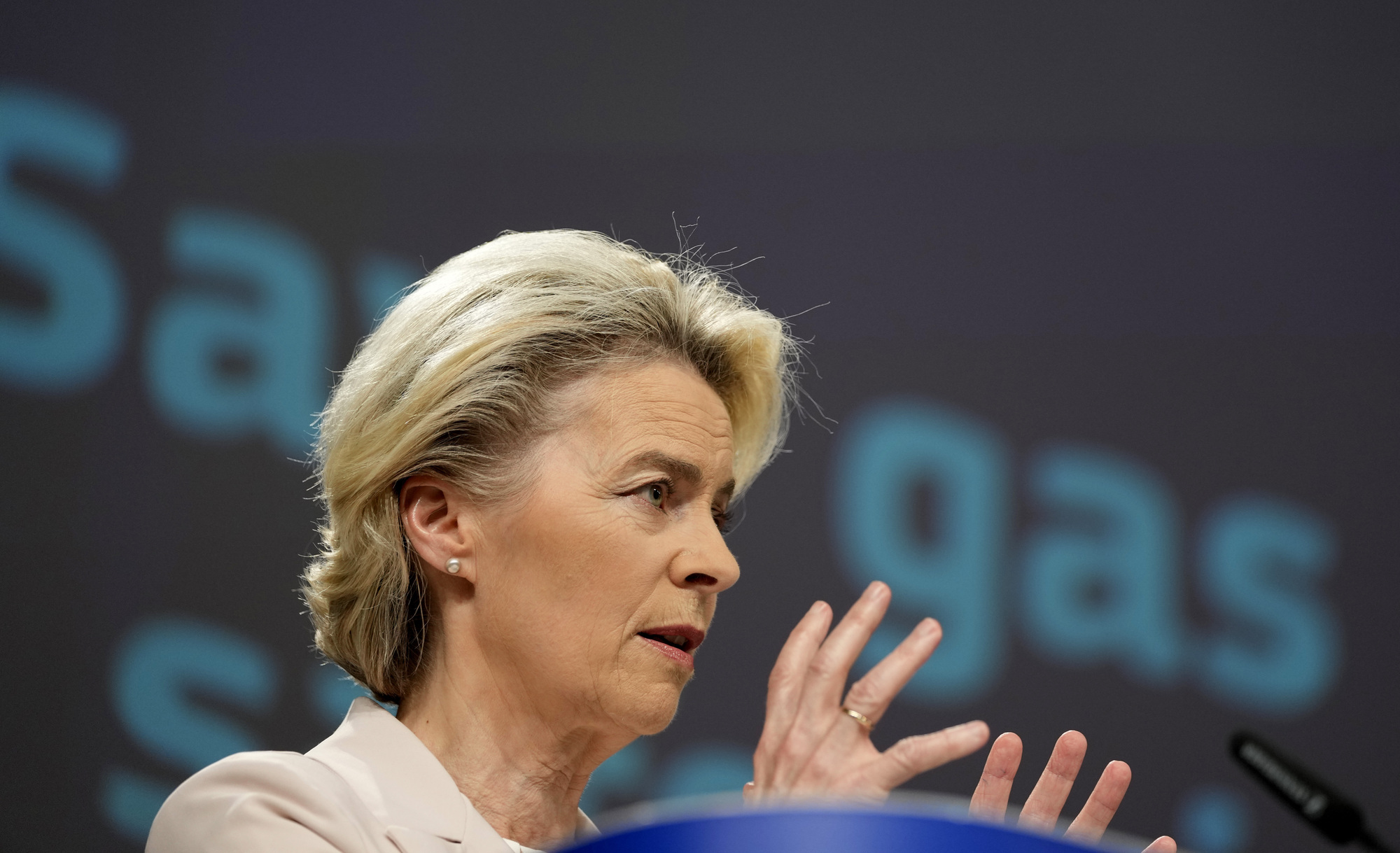
European Commission president Ursula von der Leyen: Plans to propose mandatory targets for reducing electricity at peak hours. Picture: AP Photo/Virginia Mayo
Globally, nations are scrambling to ensure energy needs are met while giving once-off payments to help those struggling with rising energy bills ahead of the winter months.
European Commission president Ursula von der Leyen said Wednesday that the EU should“rechannel” excess profits of energy companies to help vulnerable households and companies in member states.
Ms Von der Leyen also plans to propose a mandatory target for reducing the use of electricity at peak hours, which are considered to be between 5pm and 7pm in Ireland.
Nations have already taken actions to protect energy reserves and offset spiralling gas and electric bills.
In Britain, new prime minister Liz Truss said she plans to freeze energy bills.
Speaking in Parliament during her first session of Prime Minister's Questions, Ms Truss said: “I will take immediate action to help people with their energy bills but also secure our long-term energy supply.”
Previously, Britain announced an energy grant of £400 (€460) for all households, which will be paid from October.
France is warning that forced energy saving may be considered if voluntary reductions are insufficient.
President Emmanuel Macron advised that rationing plans are being prepared and that cuts are possible as a last resort.
Mr Macron said that temperatures should not be raised above 19C while urging the public to use air conditioning and heating less.
The French government pledged a freeze on gas prices in addition to a 4% cap on electricity price increases for consumers.
Spain and Italy previously imposed a windfall tax on energy companies due to the exponential profits they have made from price rises.
The funds received are to be redirected to support consumers and businesses.
Italy previously made a one-off payment of €200 to people earning up to €35,000.
Germany announced a range of measures which came into effect on September 1 in order to protect the nation’s gas reserve.
Similar to other countries, public buildings are not to be heated above 19C. Also announced was the halting of the lighting of buildings and monuments for aesthetic purposes.
The German government also announced that shop windows and billboards are not to be lit after 10pm.
Similar to other countries, an energy price allowance of €300 will be paid to all income-tax-paying workers by December 1.
Switzerland has announced a voluntary campaign to conserve energy. However, the Swiss government has strict plans under consideration should conservation efforts fail.
These include ensuring temperatures cannot be raised above a maximum of 19C, as well as banning gas for heating swimming pools, spas, and saunas while capping water heaters at 60C.
Swiss Federal Department of Economic Affairs spokesman, Markus Spoerndli said that those who violate the directives under consideration by exceeding the maximum temperature could face fines and jail time, according to Swiss newspaper .
In the US, Californian citizens have been hit with a string of conservation notices and were warned of potential blackouts due to record-breaking temperatures leading to historic power demands.
The state’s electric grid operator issued energy emergency alerts stating that imminent rolling blackouts were "very possible".
California's grid reached peak demand on Tuesday at over 52,000 megawatts, hitting a new record for the state with its maximum capacity being 56,000 megawatts.


CLIMATE & SUSTAINABILITY HUB
CONNECT WITH US TODAY



Be the first to know the latest news and updates