Exams board commissions expert research to finalise format of new Leaving Cert curriculum
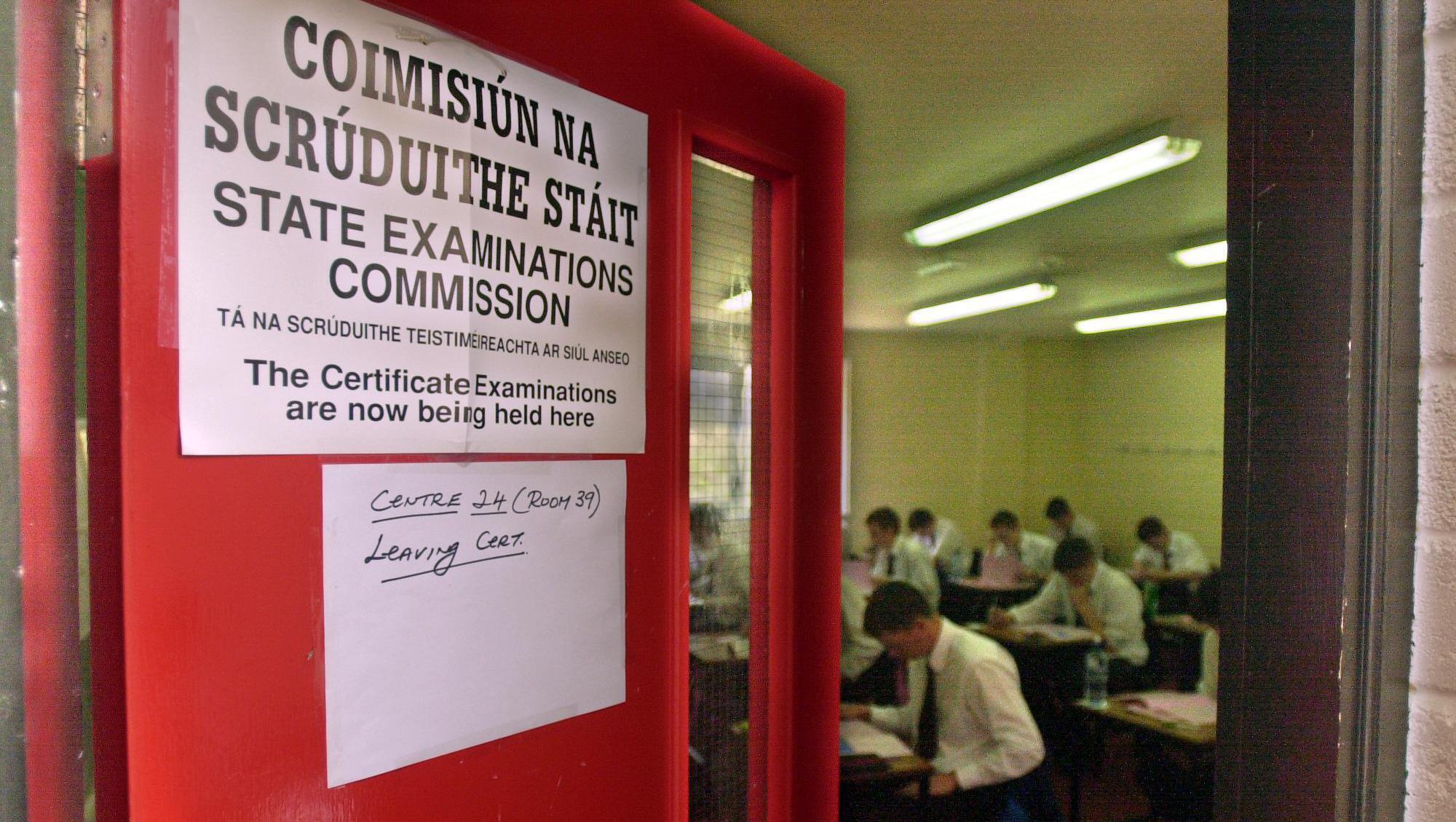
Exams board commissions expert research to finalise format of new Leaving Cert curriculum

Under the new Leaving Cert model, 60% of marks will be available through traditional written exams and the remaining 40% will come from “assessment components additional to the conventional written exam”.

Expert research has been commissioned by the State Examinations Commission (SEC) to help determine the delivery of Leaving Cert reform that will see two-fifths of a student’s grade determined outside the written exam.

The SEC wants to determine how other jurisdictions operate such exams, and what the implications are for students, teachers and schools from this new process.

The move was part of a long-awaited announcement on reforms to the Leaving Cert made by Minister for Education Norma Foley in March.

Written exams and assessments

Under the new Leaving Cert model, 60% of marks will be available through traditional written exams and the remaining 40% will come from “assessment components additional to the conventional written exam”.

Changes will also see students sit English and Irish first papers at the end of fifth year.

While the exact details of the 40% assessment had not yet been ironed out, Ms Foley emphasised this wouldn’t create a “series of mini-Leaving certs” over the two years of the senior cycle.

The minister’s announcement specified that the National Council for Curriculum and Assessment (NCCA) and the SEC would jointly “research and define how an SEC-externally moderated, school-based form of assessment would operate”.

In essence, they were tasked with establishing how to assess Leaving Cert students in school, but away from the normal written exams, that would make up 40% of their overall mark in a subject.

By next year, the timeline set out by the Department of Education would see the NCAA publish a schedule of dates for when individual subject specifications will be completed and delivered by September 2023.

Ms Foley said: “It will reduce the pressure on students that comes from final assessments based primarily on examinations. We will move to a model that uses other forms of assessment, over a less concentrated time period, in line with international best practice.” 

Union response

Teaching unions were cautious in their assessment of the reform plans.

On the subject of the assessment component outside the written exam, the Teacher’s Union of Ireland said most subjects already have additional components of assessment, such as project, oral or practical work.

TUI general secretary Michael Gillespie said: “All subjects, after a review process, will have at least one additional component of assessment. In discussions, we will insist that these be appropriate and useful in the particular subject. The TUI welcomes the value of additional components of assessment being set at a minimum of 40% of the overall grade.” 

The ASTI, meanwhile, said that the integrity of the examinations must be retained, and criticised the minister for her lack of consultation with teachers prior to the announcement.

“How precisely, adding to the number of examinations and spreading them out across a two-year period will lessen the stress, has not been explained by Minister Foley,” ASTI general secretary Kieran Christie told delegates at their annual conference.

In commissioning research on the topic, the SEC said it wants the report to address a number of issues, including:

  • “What, if any, arrangements are in place for students to appeal marks awarded by the school and for students or schools to appeal moderation decisions made by the external certifying body?” 
  • "Why is external moderation considered necessary?"
  • “What might the implications be for the supports necessary for the system, including for teachers and schools, for successful implementation?”
  • "What actions are taken to establish and maintain stakeholder support of the system?"

The SEC has set a turnaround of a final report to be delivered to it by mid-December, with an expected sign-off in early January.

x

More in this section

Lunchtime News

Newsletter

Keep up with stories of the day with our lunchtime news wrap and important breaking news alerts.

Cookie Policy Privacy Policy Brand Safety FAQ Help Contact Us Terms and Conditions

© Examiner Echo Group Limited