Calls for increases in social welfare rates to protect low-income households
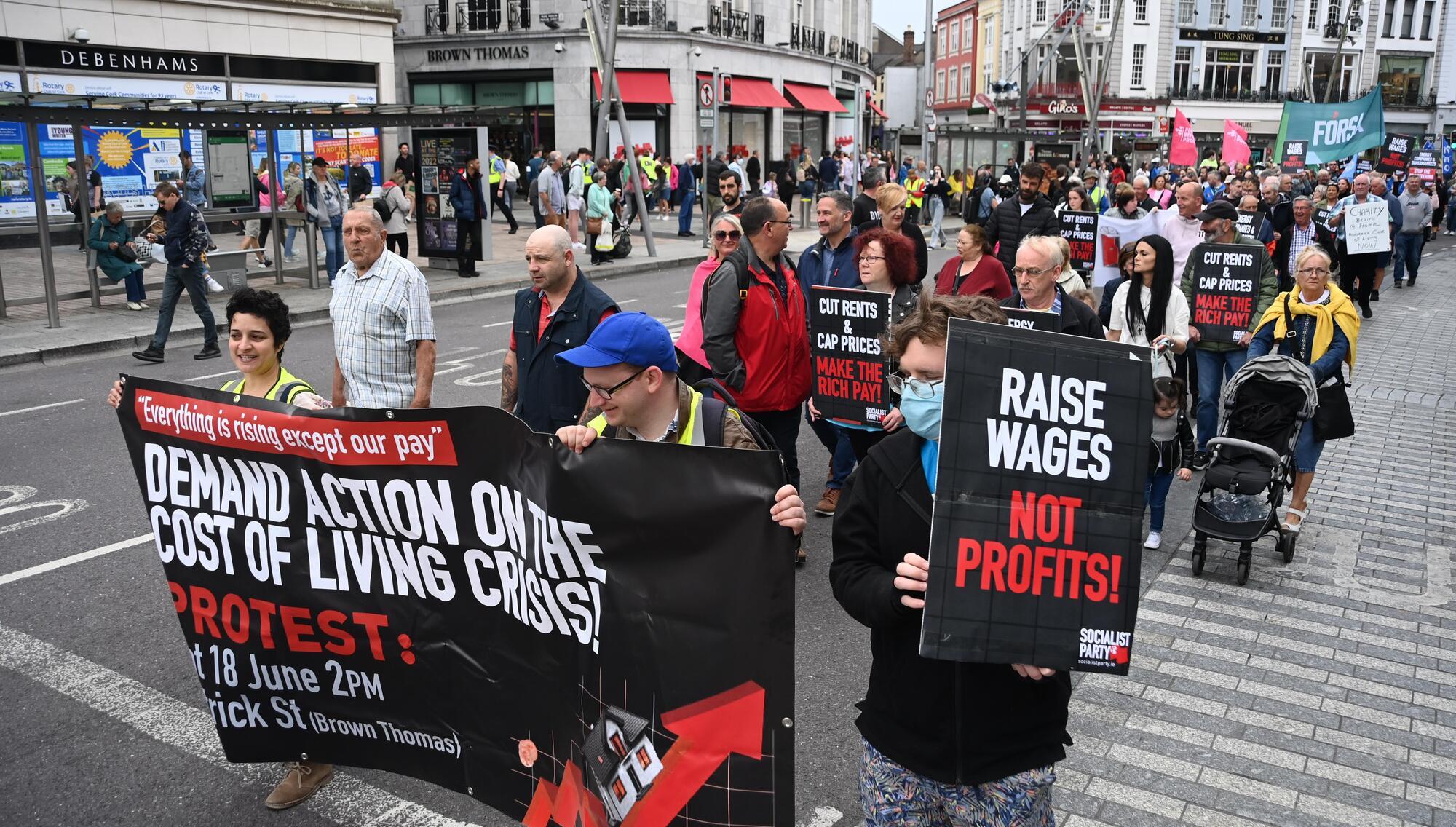
People took to the streets of Cork city for a Cost of Living protest march, part of a national series of protests, on Saturday. Picture: Larry Cummins
The government is facing calls to increase core social welfare rates by €20 a week as part of a budget package to protect low-income households.
After thousands of people took to the streets for cost of living crisis rallies over the weekend, Seán Healy, the chief executive of Social Justice Ireland, will use his address to the National Economic Dialogue at Dublin Castle today to urge the government to “do no harm” to low-income households in the October budget.
Taoiseach Micheál Martin has so far resisted calls for a mini-budget, insisting that the autumn budget will be a “cost of living budget”, stressing that the government has engaged in exploratory discussions with the social partners about the best and the most strategic way to deal with the cost of living issue.
Dr Healy said the uncertainty dominating Ireland’s social and economic outlook as Budget 2023 is being considered must not be used as an excuse to, again, leave Ireland’s poorest behind.
“There is a real danger that the cost of living crisis will be combined with extensive inflation and, possibly, recession so if government gets its choices wrong, a great many low-income, poor people in Ireland could find their already precarious situation worsened substantially,” Mr Healy said.
- Increase core social welfare rates by €20 a week;
- Replace the minimum wage with a living wage rate of €12.90 an hour;
- Further address the working poor issue by making tax credits refundable.
Cost of living rallies this weekend heard dozens of stories of increasing financial struggles, pressure and stress.
Cork Penny Dinners figurehead Caitriona Twomey asked those attending the Cork rally if the government was really aware of just difficult it has become for so many, with thousands homeless, hungry, going cold, and struggling to pay the bills, with some elderly people now afraid to turn on the lights, the heat, to buy coal or even turn on the cooker because of rising costs.
“Are you aware that we fed over 500 people today,” she said.
“I can get through everything else but when children are hungry and their parents are crying, that gets me.
“Are you aware? And if you are aware, then shame on you for what you are doing to us, the people that have votes and who can get out there and change things.”
She said she felt compelled to speak out because people are dying, people are hungry, and people are scared.
“We hear the government say they are ploughing billions into x, y and z, but where is it going? Because nobody sees it,” she said.
“Our numbers are rising, all charity’s numbers are rising.
“We are saying the same thing. Why aren’t they listening to us? And why aren’t they doing something about it.”
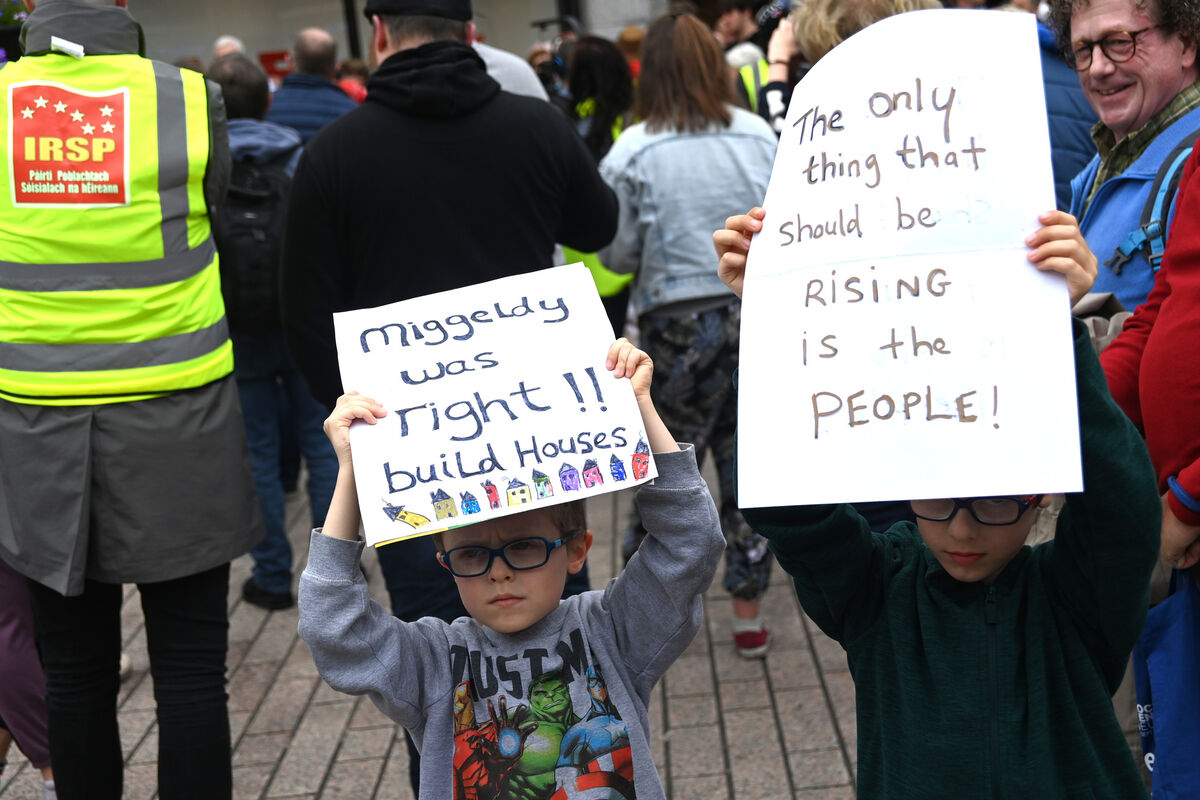
UCC student union leader, Maeve Richardson, reminded the rally that the UCC food bank served around 130 meals a week to students in need earlier this year.
With organisers claiming an attendance of around 1,000 people, Solidarity TD Mick Barry said the turnout was larger than the first anti-water charges rally, and marked just the start of the campaign.
Sinn Féin TD Thomas Gould said: “People know the government can’t do everything but we want the government to show leadership, to listen to the people, to understand.”
Taoiseach Micheál Martin told the last week that government is very conscious that lower-income groups are most at risk from the cost of living crisis that it is working on a package of measures to help.
“We want to do this as comprehensively as we possibly can. And we want to do it in the context of the budget,” he said.
CONNECT WITH US TODAY



Be the first to know the latest news and updates