Ireland vulnerable as critical 1.5°C global warming point looms within five years
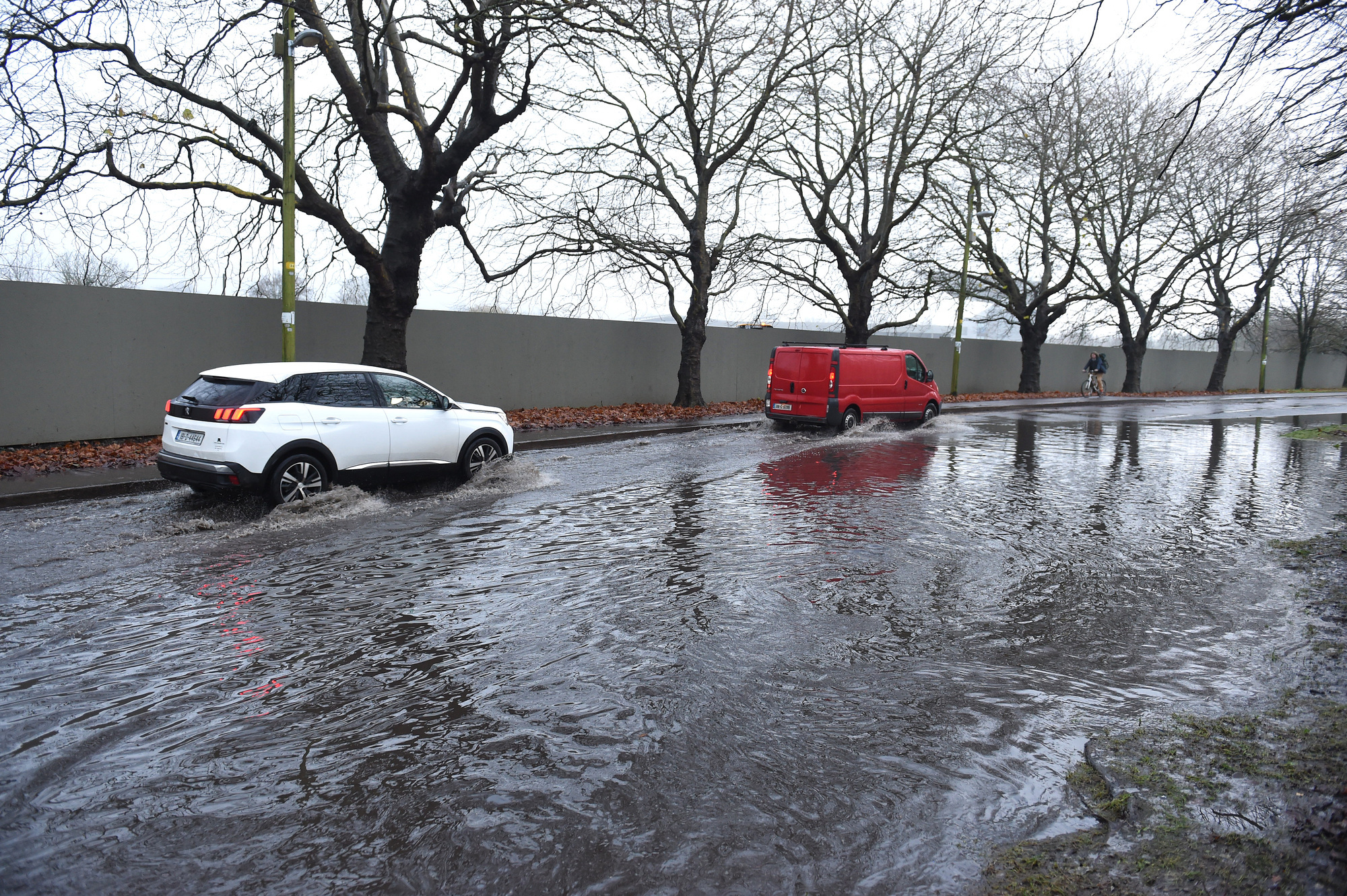
Dr Diarmuid Torney said the Global Annual to Decadal Climate Update concludes that "extremes are going to get more extreme". File photo: Larry Cummins
The planet has been given a 50% chance of hitting a key global warming mark during at least one of the next five years, with experts warning this could bring extreme weather events to Ireland.
A new report from the World Meteorological Organization (WMO) has found there is a 50/50 chance of the annual average global temperature temporarily reaching 1.5°C above pre-industrial levels during at least one of the next five years.
Dr Diarmuid Torney, a climate change expert and associate professor in the School of Law and Government at Dublin City University, said these findings are “the latest in a long line of ever-increasing alarms" about our impact on the climate system.
Dr Torney said the report is “striking” because it puts in "stark terms" how close we are to breaking the threshold set by the Paris Agreement. However, he added that it was “not particularly surprising” as the world keeps increasing emissions.
“We keep doing the wrong thing and expecting the right answer,” Mr Torney added.
The 1.5°C increase is an important milestone in terms of monitoring climate change, as it was the figure agreed upon in the Paris Agreement. However, as Dr Leon Hermanson, from the British Met Office, who led the report, said, a single year of exceedance above 1.5°C does not mean we have breached the threshold of the agreement.
However, it does show we are edging closer to a situation where 1.5°C degrees could be exceeded for an extended period. According to the report, there is a 93% chance that at least one year between 2022-2026 will become the hottest on record, and surpass 2016, which was the warmest year to date.
The chance of the five-year average for 2022-2026 being higher than the last five years (2017-2021) is also 93%, according to the Global Annual to Decadal Climate Update, produced by the United Kingdom’s Met Office, the WMO lead centre for such predictions.
Dr Torney warned that these changes in temperature will have an impact on the weather both in Ireland and around the world.
“If we're looking at Europe, it means more rain for us, and less rain or for southern Europe. We will see similar patterns replicated across the world,” he said, warning that “extremes are going to get more extreme.”
Dr Torney said that while Ireland is not as vulnerable as some other areas of the world, such as low-lying islands in the Pacific, or the Indian subcontinent, Ireland too will be affected by extreme weather events and sea-level rise. This will be especially true for those who live on the coast.
The report also shows that the chance of the world temporarily exceeding 1.5°C has risen steadily since 2015, when it was close to zero. For the years between 2017 and 2021, there was a 10% chance of exceedance. That probability has increased to nearly 50% for the 2022-2026 period.
Dr Torney warned that this trend is going to continue unless there are radical changes.
“The science of climate change is clear, as long as we keep on emitting greenhouse gases, the climate temperature is going to continue to increase. So if we want to put the brakes on warming we need to radically move away from fossil fuels,” he added.
CLIMATE & SUSTAINABILITY HUB
CONNECT WITH US TODAY



Be the first to know the latest news and updates