High level of Covid deaths 'flying under the radar', expert warns
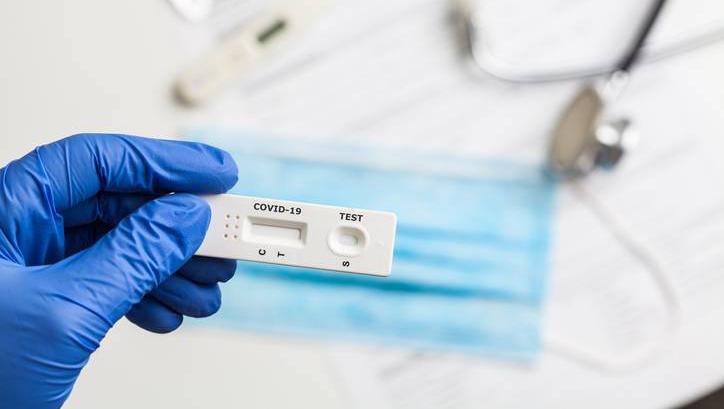
'Ten people dying a day from Covid is one and a half times the numbers of people dying from lung cancer or stroke, three times the number of deaths from flu/pneumonia, five times the number of deaths from breast cancer.'
Ireland needs to examine the true impact of Covid on families and society as the sustained high level of daily deaths from the virus is “flying under the radar” and even considered "acceptable”, a ventilation expert has warned.
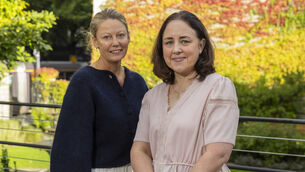
Addressing the Irish Nurses and Midwives Organisation (INMO) annual conference in Sligo on Thursday, assistant professor at the School of Architecture and Environmental Policy in UCD Orla Hegarty said: “We need to be very targeted in how we approach this. Covid hasn’t gone away but it is still having a very significant impact in terms of disease and disruption to families and income. It’s having a long-term impact on health in terms of long Covid.”
“What we have now is this sustained high level of deaths but it’s flying under the radar and in some ways even thought of as acceptable. I would contest that. Ten people dying a day from Covid is one and a half times the numbers of people dying from lung cancer or stroke, three times the number of deaths from flu/pneumonia, five times the number of deaths from breast cancer,” she said.
Prof Hegarty told the 300 delegates that masks, CO2 monitors, and mitigation measures such as ventilation and filtration are key to preventing Covid infection.
In response to question from a Cork Community hospital nurse about the lack of CO2 monitors, Prof Hegarty said she believed there was greater emphasis by politicians to have such monitors in place in schools. “I think we need to step up and see where we’ll be three or four months from now,” she said. She said a filter for a normal room in a nursing home would cost €150, and maybe €400-€500 for a larger hospital room.
She pointed out that Covid is concentrated in certain geographical areas, with 40% of nursing homes currently experiencing a Covid outbreak. Hospitals currently have 113 Covid outbreaks.
Meanwhile, the wide disparity across the country of home care supports for patients leaving hospital was described as “a huge problem” by delegates, who said the level of support depended on a geographical lottery.
INMO National Executive Council member Mary Dunne told the conference that addressing “failed discharges”, where a patient could not leave hospital because of a lack of home care support, was “vital to stop overcrowding in our emergency departments”.
Delegates called on the HSE to address the inconsistency of home care supports for patients being discharged from hospital to the community. One nurse told the conference that when she tried to get home care support for a patient on a weekend, she was told she was “in competition with the dole and the Covid payment”.
Other nurses called for the home care agencies to be paid more in order to attract healthcare workers.
Delegates also heard the level of aggression facing nurses in hospitals was “out of control.” That was according to the testimony of several female nurses.
One junior nurse who was verbally abused by a woman while trying to assess a child said the level of verbal aggression in the emergency department has “increased significantly” and she was afraid to make eye contact with people now.
“One incident that stood out for me was when I was triaging a child. A second female adult followed in and I asked her to stay outside.
"My voice was shaking but I kept going with my triage. I thought what did I do to deserve that? I thought was I safe here?”
She said similar incidents happening to junior staff is leading to their departure from Irish hospitals.
Another nurse spoke about being grabbed from behind while she was tending to an elderly patient. “I kicked the paper bin on my way into a room and people came running. It took five people to drag him off me,” delegates heard.
“Next thing I was on the ground, he was on the ground, my glasses went flying,” she said.
That nurse went on to develop post-traumatic stress disorder. “I asked could I leave A&E and I found that suited me grand. I went up one day and my heart just took off, I couldn’t deal with it,” she said.
The nurses' testimony followed a motion by the Cork voluntary branch of the INMO calling on the Department of Health/Oireachtas health committee to re-examine the roles of Hiqa, the Health and Safety Authority and the HSE in relation to their working conditions and the dangers for staff working in overcrowded healthcare settings.
Earlier, delegates passed a motion put forward by the Clonakilty/Skibbereen branch of the INMO calling for the protection of nurses and midwives suffering mentally and physically from long Covid.
The INMO has launched a claim calling on the Government to extend the special sick leave scheme for nurses and midwives beyond June 30, when it is due to finish.
CONNECT WITH US TODAY



Be the first to know the latest news and updates