Taoiseach: 'Probability' that Ukrainian refugees will be housed in tents in short term
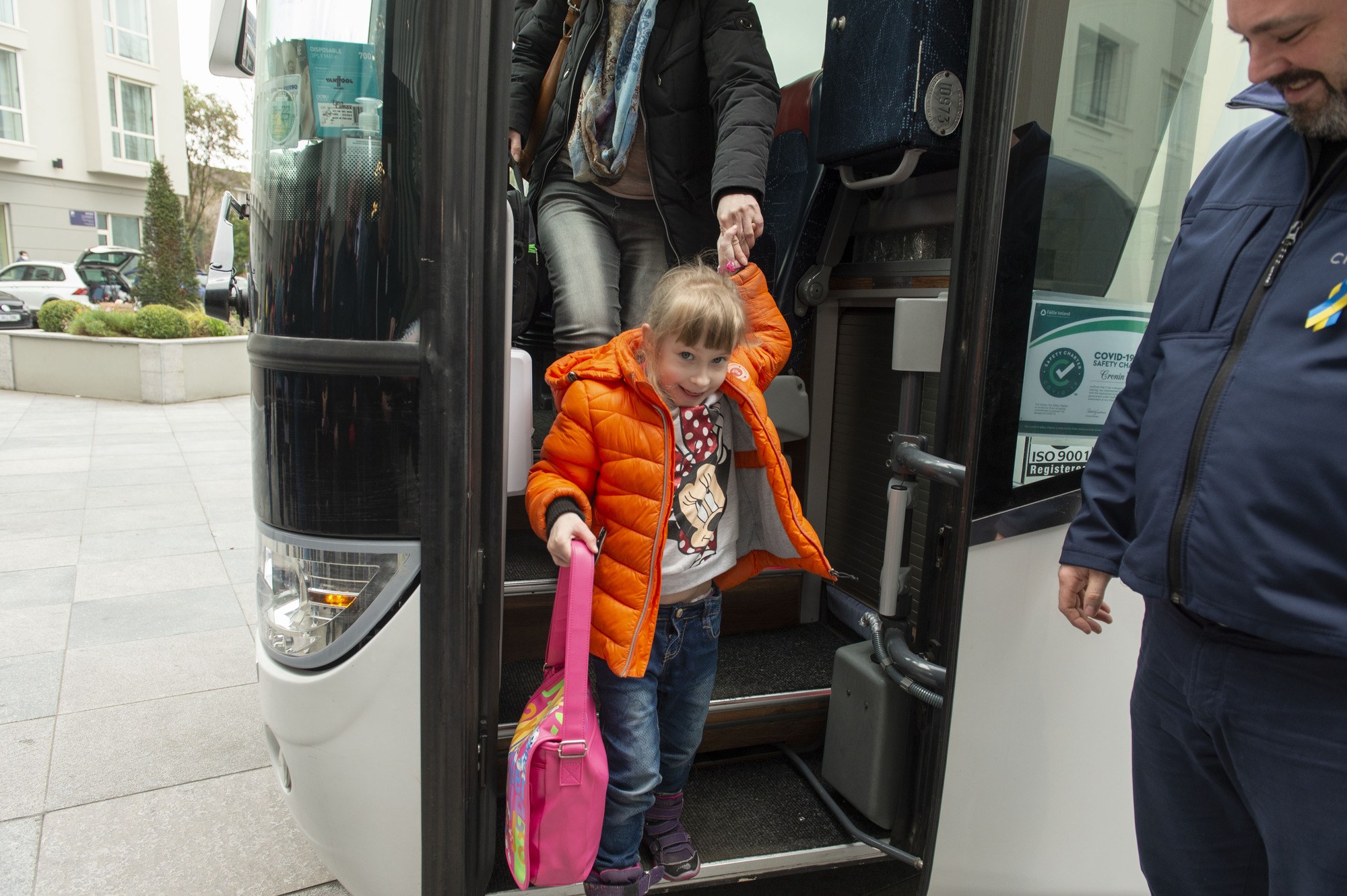
Diana Petrovsky, 5, arrives in Cork on a bus full of refugees fleeing Ukraine. Picture: Michael Mac Sweeney/Provision
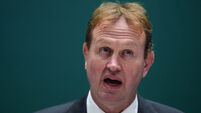
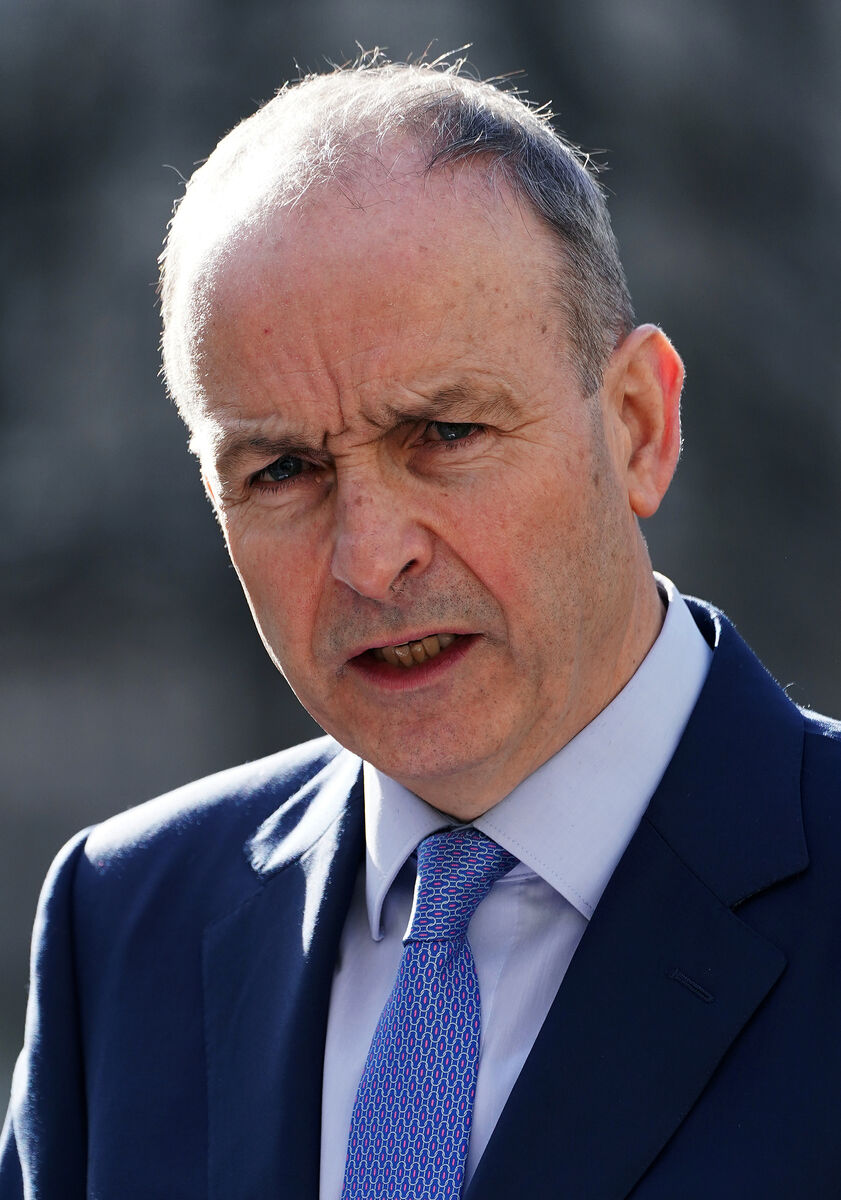
Micheál Martin said the war on Ukraine has generated an extraordinary response from the Irish people.
Irish people and people in wider Europe are shocked at the inhumanity of the war and at the pictures "we're witnessing that we thought we would never witness again in Europe".
There is no limit to the number of Ukrainian refugees Ireland will take in as we are part of a Europe-wide protective measure, but Mr Martin acknowledged that it was the largest crisis the country had ever responded to in terms of refugees.
Some 15,000-16,000 people fleeing Ukraine have arrived in Ireland and around two-thirds of those are seeking accommodation.
Contingency plans to use tents in Gormanstown Camp for those arriving is not a possibility but a probability in the short term, the Taoiseach told RTÉ Radio One's .
While the Government is hopeful it will not come to this, they must plan for it as the number of Ukrainians being forced to leave their homes fluctuates as the war progresses.
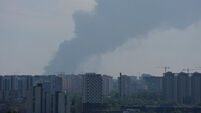
"Take, for example, the Russian strategy in the last two days, pretending they were going to pull back and reduce the intensity of the war and actually the opposite happened in terms of the bombing of Kyiv and neighbourhoods around Kyiv," Mr Martin said.
"Putin wants to create this migrationary flow and migration pressure on Europe. We have to be clear to President Putin that we will not buckle under that."
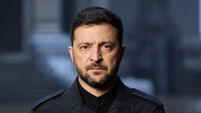
Mr Martin said he did not trust anything that Russia said and repeated the sentiments of Ukrainian President Volodymyr Zelenskyy that actions would speak louder than words when it came to Russian promises.
Responding to concerns about the future of Irish neutrality, the Fianna Fáil leader said he was against any knee-jerk response on the matter.
Ireland's military neutrality has not impaired our own response nor the European Union's response to the events in Ukraine.
While the EU allocated lethal weapons to Ukraine, Ireland's per capita financial contribution was made for the non-lethal dimension of the EU response.
"The point I would make is over the years we have evolved our security and defence policies. We are part of the European security and defense discussions and policy," the Taoiseach said.
"Just last week the Strategic Compass was approved by the European Council, which is a key pillar of European Union security and defence policy.
"Sometimes people, I think, take the view that military neutrality means that we can't take part in any of that. That is not the case.
"That is why it doesn't make sense to put general provisions into the Constitution which could unintendedly reduce your capacity for manoeuvring into the future."
In terms of the triple-lock system — which prevents Irish troops from serving in peace-keeping missions without authorisation from the government, the Dáil and the United Nations — Mr Martin said there needed to be an informed debate.
He said that lessons need to be learned from the Ukrainian crisis.
"The Russian invasion of Ukraine illustrates the vulnerability of European security and that's something we cannot ignore."
Mr Martin said he had put forth the idea of a Citizen's Assembly as it would offer an informed, evidence-based approach.
Looking ahead to the end of this year when Leo Varadkar will be taking over the role of taoiseach, Mr Martin said he was focusing on the job at hand rather than thinking about his legacy.
While dealing with the ongoing pandemic and now a war, Mr Martin said his Government were still governing on key issues such as housing and health.
He would not be drawn on what portfolio he might like to take on when his term as Taoiseach comes to an end.
He dismissed talk that he would not lead Fianna Fáil into the next election and spoke of similar talk as long ago as 2012.
"You will read about all sorts of machinations of coups... We have a Programme for Government and I've always said this is about policy not personalities.
"It has to be about the party responding to the needs of the people."
When asked directly if he would lead Fianna Fáil into the next election, the Taoiseach said: "Yes, yes."


CONNECT WITH US TODAY



Be the first to know the latest news and updates