Teachers oppose assessment of own students under Leaving Cert overhaul
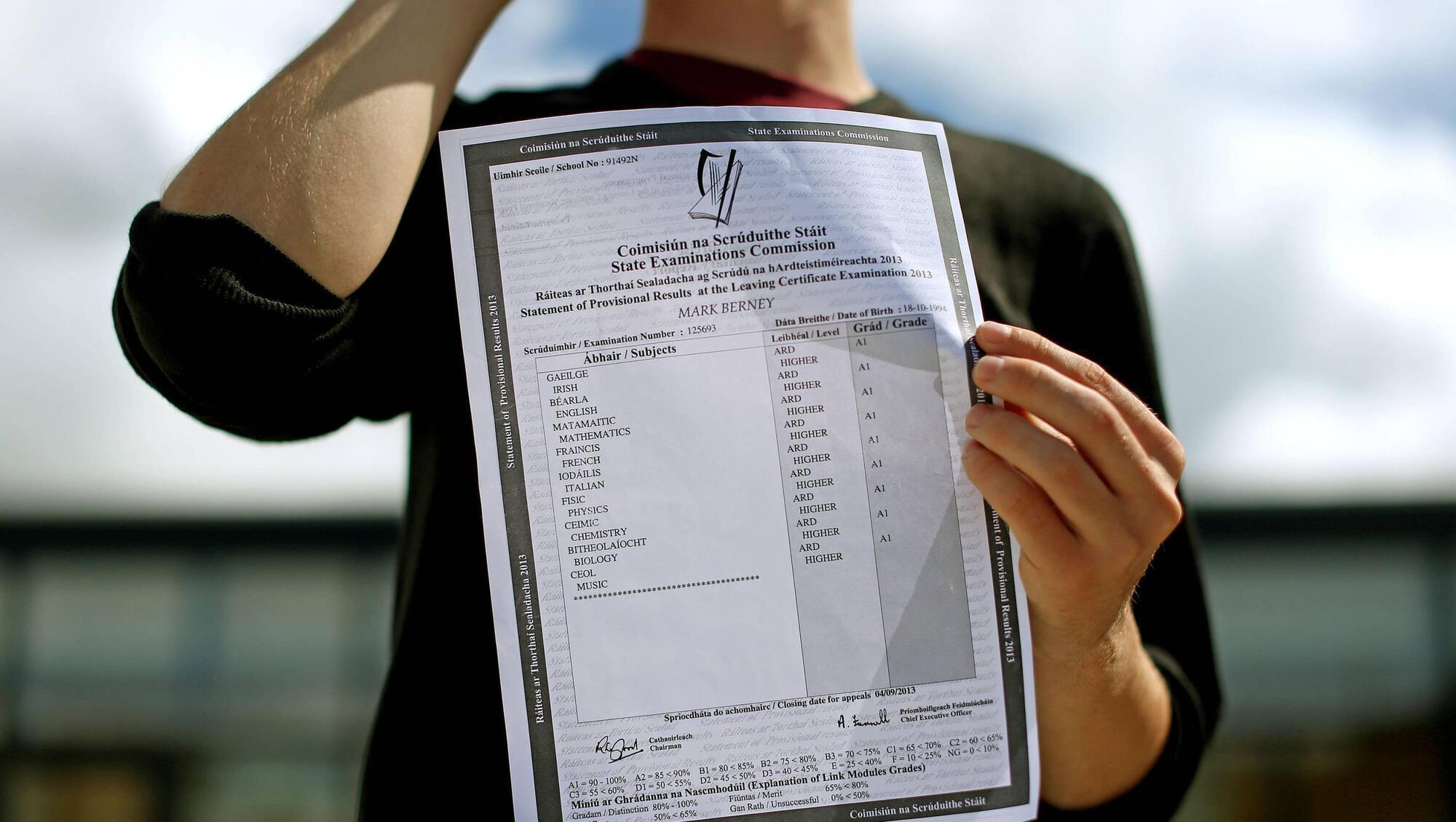
Changes to senior cycle include the introduction of two new subjects, drama, film and theatre studies, and climate action and sustainable development. Curricula for all existing subjects will also be revised.
A move to 40% of final mark based on continuous assessment, the sitting of some exams in fifth year and the introduction of two new subjects are among the radical changes planned for the Leaving Certificate.
Already, however, the changes to the Leaving Certificate announced by the Department of Education are facing opposition from teachers who are not prepared to assess their own students.
The changes to senior cycle include:
- The introduction of two new subjects, drama, film and theatre studies, and climate action and sustainable development. Curricula for all existing subjects will also be revised.
- The traditional written Leaving Cert examination will now be worth only 60% in every subject, with the other 40% coming from teacher-based continuous assessment, moderated by the State Examinations Commission.
- Students will sit English and Irish paper one at the end of fifth year, and the oral examinations and music practicals have been permanently moved to take place over the Easter break of sixth year.
- A new qualification will be introduced for students with special educational needs.
The reform programme follows the publication of a Senior Cycle Review Advisory Report by the National Council for Curriculum Assessment (NCCA) following a four-year review.
Education Minister Norma Foley said the reform had also been influenced by learnings from the pandemic, as well as input from students, teachers, business experts, and international best practice. The OECD recently described the current Leaving Certificate as "too narrow and rigid" and too focused on being a filter for entry into higher education.
The NCCA will soon invite a selection of schools to become “network schools” and pilot the new senior cycle curriculum and assessment arrangements in September 2024.
However, some reforms are to be introduced in all schools earlier, such as options for Leaving Certificate Applied students this September, and new senior cycle students in September 2023 sitting their first English and Irish papers at the end of fifth year.
Ms Foley said the three core aims of the reformed senior cycle were to equip students for the 21st century, enrich the student experience, and embed wellbeing and reduce student stress levels.
"This is an ambitious programme of reform,” she said. "It will reduce the pressure on students that comes from final assessments based primarily on examinations.
"We will move to a model that uses other forms of assessment, over a less-concentrated time period, in line with international best practice. It will enable us to maintain the high standards and quality that we need to continue to achieve in our schools to serve our students well and support them to take the next steps in their career journey, whatever that may be."
However, Teacher’s Union of Ireland (TUI) general secretary Michael Gillespie said State certification of all assessments must be maintained.
“TUI members are fundamentally opposed to assessing their own students for State certificate purposes and therefore external assessment and State certification — which retain significant public trust — are essential for all written examinations and all additional components of assessment,” he said.
The Association of Secondary Teachers in Ireland also said external assessment of State exams must be retained in all aspects of the Leaving Cert.
ASTI president Eamon Dennehy also warned “the mistakes made in the introduction of the Framework for junior cycle in recent years, which sidelined the voice of teachers, must not be repeated".
Mr Gillespie said a review of the effectiveness of junior cycle reform was “essential” to inform an overhaul of senior cycle, and agreed “it would be foolhardy to embark on another a series of reforms without first taking stock of the effects, whether positive or negative, of the revised junior cycle programme on teaching and learning”.